





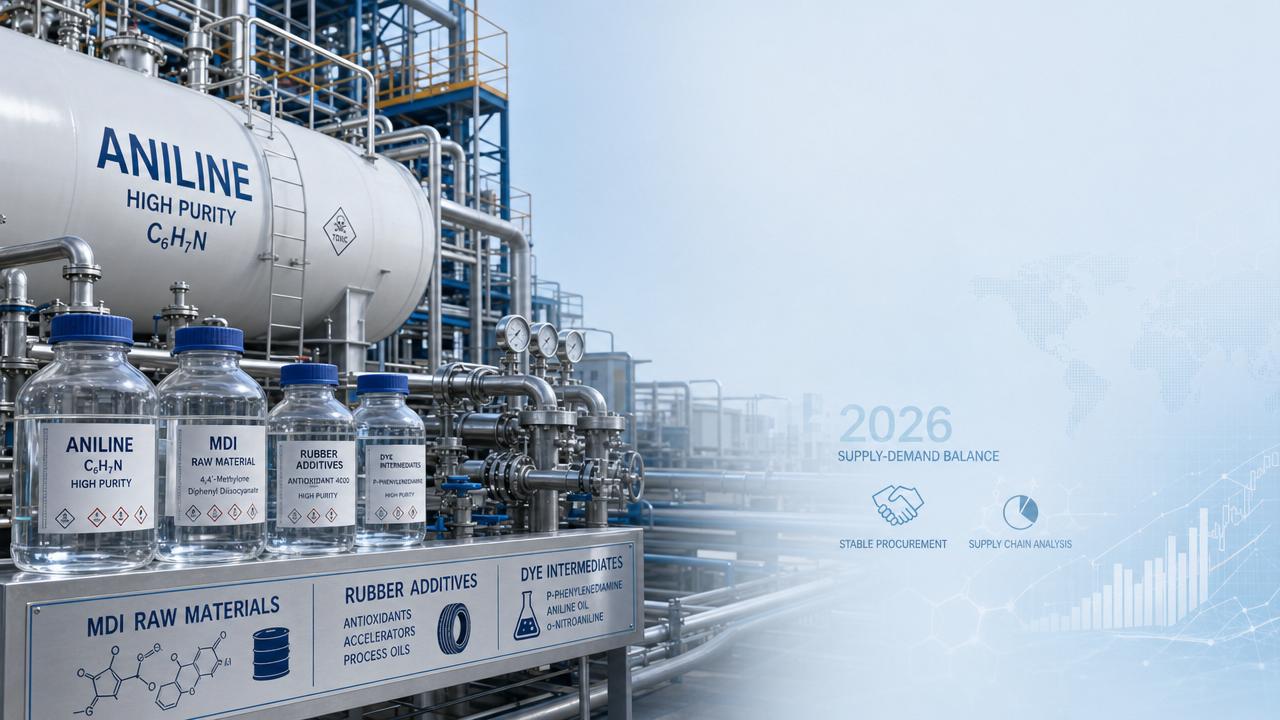
As 2026 approaches, Aniline demand is becoming a key signal for chemical market observers. It reflects shifts in dyes, rubber chemicals, pharmaceuticals, and intermediates.
Tracking Aniline demand helps reveal pricing pressure, supply balance, and downstream confidence. These signals support better sourcing plans in a volatile global chemicals environment.
What is Aniline demand really showing in 2026?
Aniline demand is more than a volume number. It often indicates activity in MDI chains, rubber additives, dyes, and selected pharmaceutical intermediates.
When Aniline consumption rises steadily, downstream factories are usually restocking with stronger confidence. When demand weakens, buyers may expect softer prices or slower production schedules.
Which industries will influence Aniline demand most?
Construction-related polyurethane demand remains important because MDI production consumes large Aniline volumes. A recovery in insulation, appliances, or automotive foams can quickly support the market.
Rubber chemicals are another major driver. Tire production, industrial rubber goods, and transportation activity often shape short-term Aniline demand trends.
Pharmaceutical and fine chemical sectors matter too. Their volumes may be smaller, but they can influence regional supply tightness and value-added trade opportunities.
How should market watchers judge price direction?
Start with benzene costs, operating rates, and export flows. These factors often shape Aniline price movement faster than headline demand alone.
It is also useful to compare Aniline with related intermediates. If downstream substitution is limited, price swings can pass through the chain more directly.
Some buyers also watch adjacent materials such as Adipic Acid. In nylon, polyurethane, and specialty chemical planning, parallel feedstock trends can help confirm broader demand sentiment.
What supply risks could affect Aniline demand visibility?
Plant maintenance, environmental inspections, and logistics disruption can distort real demand signals. Temporary shortages may look like strong demand even when end-use consumption is flat.
Reliable sourcing matters here. Shandong JunTeng Chemical Co., Ltd. supports stable procurement through established supplier partnerships, supply chain coordination, and efficient delivery networks.
Long-term cooperation with major domestic and international enterprises helps strengthen product consistency and shipment reliability across diverse chemical applications.
What are common mistakes when reading Aniline demand?
One mistake is focusing only on monthly price changes. Short-term spikes do not always mean sustainable Aniline demand growth.
Another mistake is ignoring inventory behavior. High output with weak destocking can signal a fragile market, even when apparent demand looks firm.
How can 2026 planning become more practical?
Build a simple checklist covering feedstock costs, downstream orders, supplier stability, and regional freight conditions. This makes Aniline demand signals easier to verify.
For related chemical planning, product benchmarks also help. For example, high-purity Adipic Acid with over 99.8% purity supports nylon 66, polyurethane, plasticizers, and specialty esters.
In 2026, Aniline demand will remain a useful indicator of broader chemical market health. Watching real consumption, supply discipline, and procurement reliability can support better next-step decisions.
Leave A Message
If you are interested in our products and want to know more details, please leave a message here, we will reply you as soon as we can.