





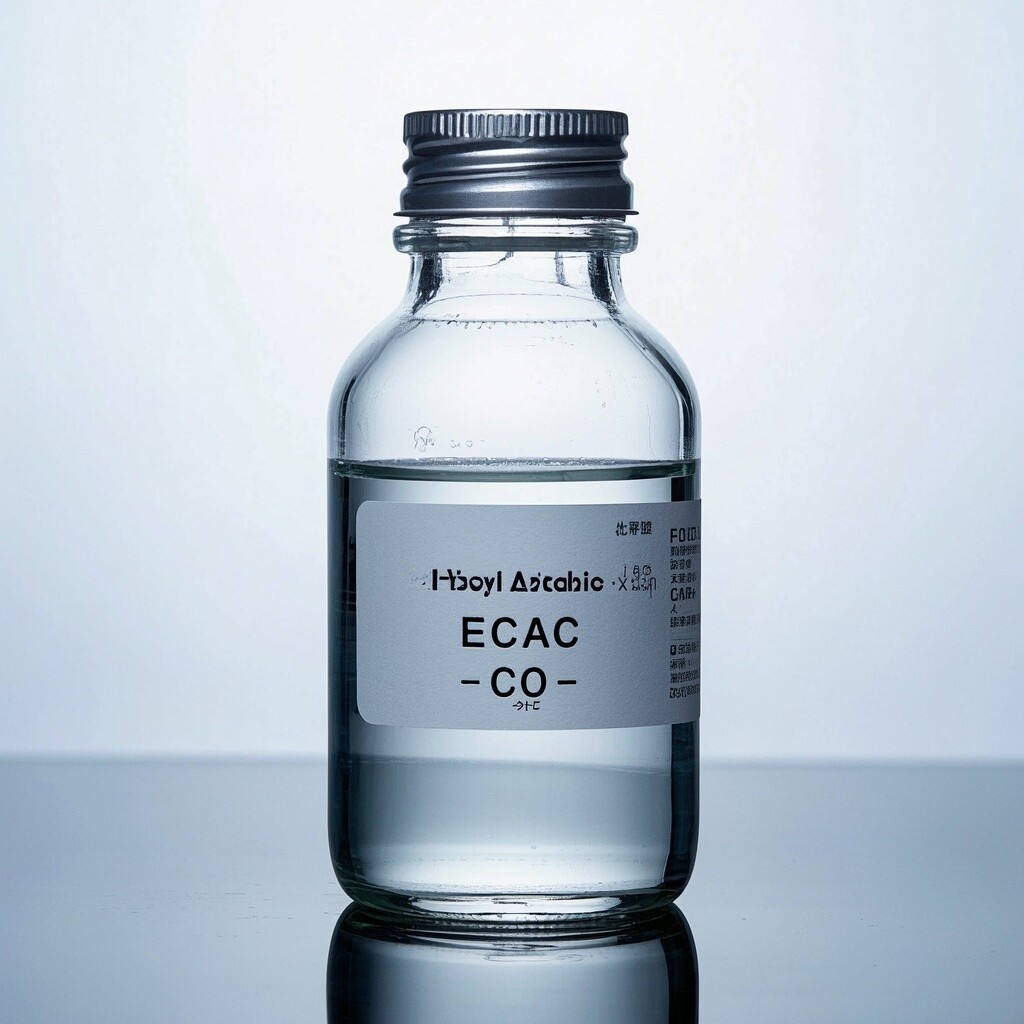
When evaluating Arcosolv TPM for production or formulation budgets, unit price alone rarely tells the full story. For financial decision-makers, true value depends on supply stability, quality consistency, logistics efficiency, and the hidden costs of disruption or rework. Understanding the broader budget impact of Arcosolv TPM helps turn purchasing from a cost comparison exercise into a smarter risk-and-return decision.
Why finance teams should use a checklist instead of a price-only view
In chemical procurement, the lowest quotation can become the highest total cost within 30 to 90 days if deliveries slip, batch performance varies, or storage and handling conditions are not aligned with plant requirements. For Arcosolv TPM, budget approval should therefore begin with a short list of decision points that connect purchasing cost to operating reliability.
This checklist approach is especially important for finance approvers overseeing coatings, inks, cleaning agents, water-based systems, or pesticide formulations, where solvent behavior affects both production throughput and finished-product consistency. Even a 1% to 3% variation in effective use rate or reject rate can outweigh a small difference in unit price.
For import-substitute, multi-site, or contract-manufacturing environments, the right question is not “Which supplier is cheapest today?” but “Which supply option protects the next 3 to 6 months of production most effectively?” That is the practical lens for judging Arcosolv TPM value beyond price per drum.
- Check whether the quoted cost includes logistics, packaging, lead time, and document support.
- Confirm whether the material is suitable for the target process, not just chemically similar on paper.
- Estimate the financial impact of one delayed delivery, one off-spec batch, and one extra production adjustment.
- Compare suppliers on 4 to 6 approval dimensions rather than on a single ex-works price.
Core approval checklist for Arcosolv TPM budget decisions
Priority checks before sign-off
A practical approval flow starts with technical fit, then moves to supply assurance, and only then compares commercial terms. In many chemical categories, a 5 to 10 day delay in replenishment can stop blending, filling, or packaging schedules. That operational risk should be priced into the decision.
For solvent procurement, finance teams should ask procurement and production to jointly validate whether the material supports current viscosity targets, drying behavior, compatibility, and storage conditions. If the solvent is used across 2 or more product lines, the approval standard should be stricter because disruption spreads faster.
One relevant benchmark product in this category is Dipropylene Glycol Monomethyl Ether (DPM), a colorless transparent liquid commonly used in coatings, inks, cleaning agents, latex paints, process solvent systems, cosmetics, and personal care formulations. With purity of at least 99.5%, boiling point around 190°C, flash point of 75°C, and water content at or below 0.1%, it illustrates the kind of technical clarity finance teams should request when reviewing Arcosolv TPM alternatives or adjacent solvent options.
Before approving a purchase plan, use the following checklist table to align technical and financial review.
This type of review helps finance teams see Arcosolv TPM as a total-cost item rather than a line-item price only. In most chemical purchasing decisions, one missed factor in logistics or quality control can erase the savings from a lower quote within a single purchasing cycle.
How to compare hidden cost drivers across suppliers
Look beyond invoice price
When comparing Arcosolv TPM offers, financial reviewers should separate quoted price from effective landed cost. A supplier with a slightly higher price may still produce lower annual spend if the material arrives on schedule, reduces trial frequency, and avoids expedited replenishment. This matters most in plants running weekly or biweekly procurement cycles.
In chemical trading, logistics capability is a real cost variable. Packaging such as 200 KG drums, storage compatibility, route stability, and delivery coordination all affect receiving efficiency and warehouse planning. If your site handles 10 to 20 drums per cycle, a small delay may be manageable; if it handles 100 drums or more, the cash and schedule exposure rises quickly.
Shandong JunTeng Chemical Co., Ltd., based in Jinan, Shandong Province, supports this type of budget-sensitive procurement through a supply chain management system built over 10 years in chemical trading. With long-term cooperation across major domestic and international suppliers and an efficient logistics network, the company focuses on stable quality, sufficient supply, and timely delivery for industries ranging from pharmaceuticals and petrochemicals to adhesives, detergents, and agricultural chemicals.
The table below can be used as a supplier comparison tool during Arcosolv TPM approval.
For finance approvers, the key takeaway is simple: Arcosolv TPM value should be judged on supply risk, quality repeatability, and process fit at the same time. A balanced scorecard usually produces a more reliable annual budget outcome than a lowest-bid method.
Scenario-based checks for different chemical applications
Different use cases change the approval logic
Arcosolv TPM is not evaluated the same way in every plant. In coatings and inks, solvency behavior and drying balance may carry more weight. In cleaning agents or water-based systems, compatibility and residue control may matter more. In pesticide or process-solvent use, handling stability and delivery reliability may drive the decision.
That means finance should request a short application note before approval, especially if the material serves 2 or more departments. A solvent that works well in one line may require extra process adjustment in another, which changes real budget impact over a quarter or a fiscal year.
Where technical alternatives are being assessed, products such as Dipropylene Glycol Monomethyl Ether (DPM) are often reviewed for their low volatility, high boiling point, excellent solvency power, good coupling ability, and broad miscibility with water and organic solvents. These property-based comparisons can help finance teams understand why two solvents with similar pricing may deliver different operating outcomes.
Quick scenario checklist
- For coatings and latex paints, confirm solvency performance, evaporation profile, and impact on final appearance.
- For cleaning agents, check residue behavior, dilution compatibility, and storage turnover cycle.
- For water-based systems, review miscibility, process stability, and whether extra additives are needed.
- For pesticide and intermediate use, confirm handling safety, delivery continuity, and batch documentation requirements.
Common oversights that inflate the Arcosolv TPM budget
One common mistake is approving based on a nominal per-ton or per-drum figure without accounting for payment terms, freight timing, and warehouse receiving constraints. If a lower-price supplier causes even one urgent shipment in a 60-day period, the annual savings assumption may no longer hold.
Another oversight is treating all technical specifications as equal. In solvent purchasing, purity, water content, and handling stability may affect downstream consistency more than buyers expect. If formulation teams need repeated adjustment, labor time and line occupancy become hidden costs that do not appear in the initial quotation.
A third issue is weak cross-functional review. Procurement may focus on price, operations on availability, and finance on budget cap. Without a shared checklist, Arcosolv TPM approval can miss 3 critical questions: how many days of safety stock are needed, what batch variability is acceptable, and what is the cost of one failed delivery window?
- Do not approve without a realistic lead-time range and replenishment plan.
- Do not compare quotations unless packaging and delivery terms are aligned.
- Do not ignore the cost of internal trials, line cleaning, or formulation correction.
- Do not treat source stability as optional in industries with continuous production schedules.
What to prepare next and why choose us
If your team is reviewing Arcosolv TPM for upcoming purchasing cycles, the fastest way to improve decision quality is to prepare five items in advance: annual demand estimate, application scenario, required packaging, acceptable lead time, and key quality thresholds. With those 5 inputs, suppliers can respond with more accurate pricing and more realistic delivery commitments.
At Shandong JunTeng Chemical, we support finance-driven procurement decisions with one-stop chemical sourcing, stable upstream resources, and coordinated logistics planning. Our long-term cooperation network helps customers reduce sourcing uncertainty while maintaining practical control over delivery schedule, product quality, and supply continuity across multiple chemical sectors.
If you need to evaluate Arcosolv TPM beyond unit price, contact us to discuss parameter confirmation, product selection, delivery cycle, packaging options, sample support, document requirements, or quotation planning. We can help you compare supply options in a way that fits both technical use and financial approval standards.
Leave A Message
If you are interested in our products and want to know more details, please leave a message here, we will reply you as soon as we can.