





Chlorinated Rubber in Coatings: Where It Still Delivers Value
Chlorinated Rubber remains a practical choice in selected coating applications where fast drying, chemical resistance, and reliable adhesion still matter.
It is not the newest resin system. Still, in the right job, it solves real performance and application problems without adding unnecessary complexity.
In industrial maintenance, operators often need coatings that are easy to apply, tolerant of site conditions, and quick to return to service.
That is where Chlorinated Rubber coatings continue to hold value, especially for steel, concrete, marine structures, and older protective systems.
From a procurement angle, understanding these use cases helps improve coating selection, reduce downtime, and avoid overengineering a basic protection job.
Why Chlorinated Rubber Still Matters
Chlorinated Rubber is valued for a balanced combination of speed, durability, and application convenience.
It dries fast. It adheres well to properly prepared substrates. It also performs reliably in many splash, weathering, and mild chemical environments.
More importantly, it supports practical maintenance work. Many teams need a coating that can be applied with common equipment and straightforward procedures.
- Fast surface drying and recoating
- Good resistance to water and industrial atmosphere
- Useful adhesion on steel and mineral substrates
- Simple maintenance repainting in compatible systems
- Dependable performance for cost-sensitive protection work
These benefits do not make it universal. They do explain why Chlorinated Rubber still appears in specifications where workability and service speed come first.
Best-Fit Applications for Chlorinated Rubber Coatings
The best results come from matching Chlorinated Rubber to the right environment, rather than forcing it into every protective coating decision.
Industrial maintenance painting
For plant structures, storage areas, and utility equipment, Chlorinated Rubber can provide a practical maintenance solution with efficient turnaround.
It is often selected when the goal is dependable barrier protection rather than high-build, long-cycle offshore performance.
Marine and waterfront structures
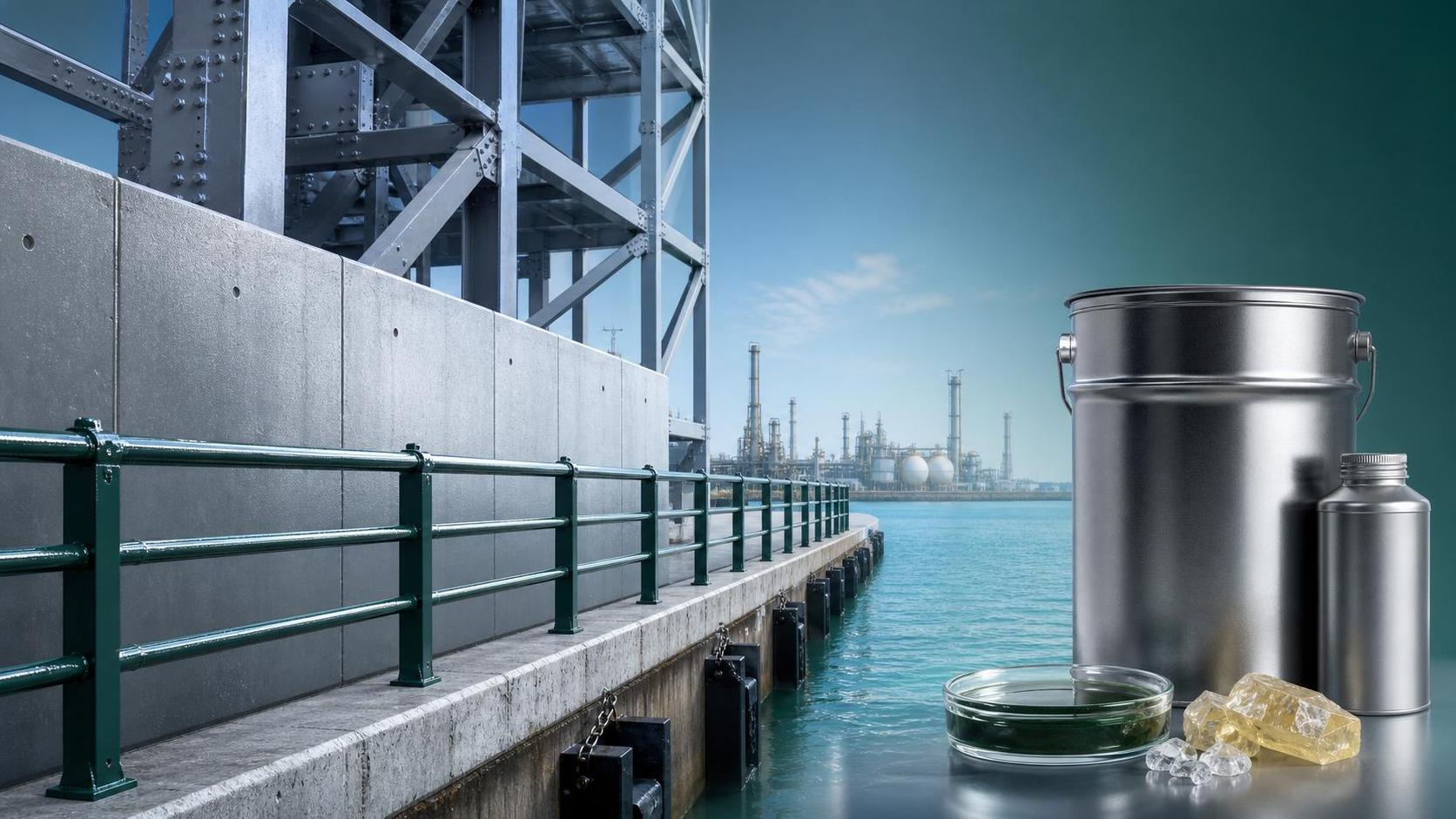
Piers, docks, railings, and coastal steelwork often benefit from the water resistance and maintenance flexibility of Chlorinated Rubber systems.
In these settings, quick recoating and acceptable tolerance for field application can outweigh the need for more complex resin technologies.
Concrete protection
Concrete walls, channels, and secondary containment zones may use Chlorinated Rubber where chemical splash and moisture exposure require practical sealing.
This is especially relevant when operators need an easy-to-maintain coating with familiar site application behavior.
Road marking and specialty protective use
Some specialty formulations still rely on Chlorinated Rubber for fast drying and practical film formation in demanding outdoor conditions.
Where project timing is tight, this can be a clear operational advantage.
Where It Makes Less Sense
A good coating choice depends on limitations as much as strengths. Chlorinated Rubber is not ideal for every aggressive service condition.
- Continuous exposure to strong solvents or harsh chemicals
- Very high temperature environments
- Projects requiring very low VOC solutions
- Systems needing long-term heavy-duty immersion resistance
In these cases, epoxy, polyurethane, vinyl ester, or other modern systems may offer a better lifecycle result.
That said, replacing Chlorinated Rubber automatically is not always the smartest move. The service environment should decide, not product fashion.
How to Improve Coating Performance in Practice
Most field issues come from preparation, compatibility, or formulation details. The resin alone rarely determines the final result.
- Prepare the substrate correctly. Remove rust, salts, loose material, oil, and moisture before coating.
- Check system compatibility. Overcoating old films without testing can cause lifting, poor adhesion, or early failure.
- Control dry film thickness. Too thin reduces protection. Too thick may affect drying and finish quality.
- Watch the solvent package. Application behavior, leveling, and drying depend heavily on balanced formulation.
- Match additives to the end use. Flame resistance, flexibility, and processing stability may need additional formulation support.
In some coatings and plastics formulations, additives also shape safety and processing outcomes.
For example, Butylated Triphenyl Phosphate is used as a halogen-free flame retardant plasticizer.
It offers high thermal stability, low volatility, and good compatibility in coatings, PVC resins, polyurethane foam plastics, and engineering plastics.
This kind of formulation support can be useful when performance requirements go beyond basic protection and start involving broader material behavior.
What Buyers Should Evaluate Before Ordering
A coating purchase should connect technical need with supply reliability. Both affect project success.
This is where experienced chemical suppliers add value. Strong upstream partnerships and dependable logistics reduce risk for coating users and project teams.
Shandong JunTeng Chemical Co., Ltd. supports this process through integrated supply chain management, qualified supplier resources, and timely delivery capacity.
Its long-term cooperation with major domestic and international enterprises helps ensure product authenticity, stable quality, and dependable procurement support.
Final Takeaway
Chlorinated Rubber still delivers value when the application calls for fast drying, reliable adhesion, and practical protective performance.
It works best in selected maintenance, marine, concrete, and specialty coating systems where efficiency and serviceability are priorities.
The key is disciplined selection. Evaluate exposure conditions, coating compatibility, formulation needs, and supply reliability before making the final choice.
When used in the right place, Chlorinated Rubber remains a practical solution rather than a legacy material waiting to be replaced.
Leave A Message
If you are interested in our products and want to know more details, please leave a message here, we will reply you as soon as we can.