





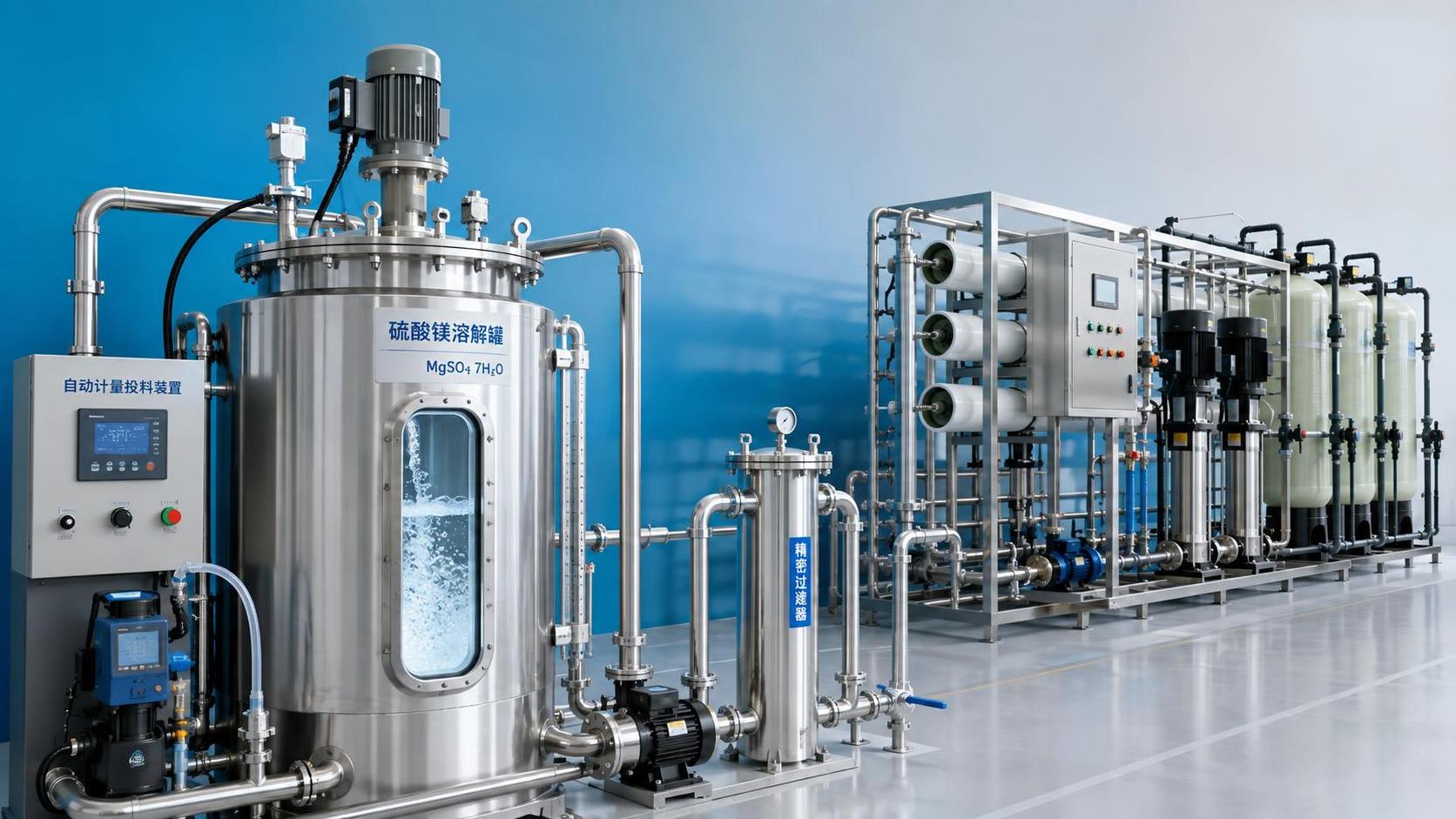
Selecting the correct Magnesium Sulfate grade is not simply a purchasing decision. It affects treatment performance, operating stability, compliance exposure, maintenance requirements, and project lifecycle costs.
For project managers, the best grade is the one that meets verified process requirements consistently, rather than the product with the highest stated purity or lowest quoted price.
Start With the Application, Not the Supplier Datasheet
Magnesium Sulfate is used across wastewater treatment, nutrient dosing, chemical manufacturing, agriculture, construction chemicals, and specialty processing operations with substantially different specification needs.
In water treatment, magnesium may support nutrient balance for biological systems, correct deficiencies, assist sludge conditioning, or serve as a component in process-specific formulations.
Industrial users may require Magnesium Sulfate for reaction control, formulation consistency, mineral supplementation, or raw-material blending, where contaminants can affect downstream product quality.
Before requesting quotations, define the intended function, daily consumption, dosing method, storage conditions, equipment materials, and acceptable quality variation for the specific project.
This initial definition prevents an expensive mistake: purchasing a technically acceptable material that performs poorly because its physical form or impurity profile conflicts with operations.
Match Purity to Process Risk
Purity is important, but it should be evaluated alongside the actual consequences of impurities. Different water systems and industrial processes tolerate different contaminant levels.
For standard wastewater applications, a dependable industrial-grade Magnesium Sulfate may provide the required performance when its composition remains stable between delivered batches.
However, projects involving sensitive biological treatment, high-value formulations, food-related processing, pharmaceuticals, or discharge restrictions may require tighter impurity controls and documented analysis.
Ask suppliers for a current certificate of analysis covering magnesium sulfate content, insoluble matter, chloride, iron, heavy metals, moisture, and other application-relevant indicators.
Project teams should specify maximum contaminant limits, rather than relying on general labels such as “high purity,” which can mean different things across suppliers and markets.
Higher purity should be justified by measurable project value, including reduced treatment risk, improved product yield, lower cleaning frequency, or easier regulatory approval.
Choose the Right Physical Form for Dosing and Handling
Magnesium Sulfate is commonly supplied as powder, granules, crystals, or heptahydrate material. Physical form has direct consequences for dissolution speed and handling efficiency.
Fine powder may dissolve quickly, but it can generate dust, bridge in hoppers, absorb moisture, and require stronger worker-protection measures during receiving and transfer.
Granular or crystalline material often produces less dust and may flow more reliably, although it can require longer mixing time or optimized tank agitation.
For automated dosing systems, evaluate particle-size distribution, bulk density, flow behavior, caking tendency, and compatibility with conveyors, feeders, dissolvers, and metering equipment.
For manual batch preparation, rapid solubility may matter most. For continuous operations, predictable feed behavior and low maintenance can create greater long-term value.
Request representative samples before final approval, especially when changing suppliers, material form, packaging type, or feeding equipment. Laboratory solubility tests alone are insufficient.
Verify Solubility Under Actual Site Conditions
Solubility claims should be tested using the project’s real water quality, temperature range, mixing intensity, and target concentration rather than ideal laboratory conditions.
Hard water, cold temperatures, suspended solids, and limited agitation can slow dissolution or create undissolved residues that interfere with pumps, filters, and dosing lines.
Determine whether the system will prepare a stock solution or feed dry material directly. Each method creates different requirements for particle size and dissolution control.
Calculate the achievable stock concentration with a practical safety margin. Overconcentrated solution tanks can crystallize, clog outlets, and disrupt dosing during colder operating periods.
Site trials should record dissolution time, sediment formation, solution clarity, pump performance, and changes in pH or conductivity where those variables affect process control.
A lower-cost material that requires extended mixing, frequent flushing, or repeated line cleaning can quickly exceed the delivered cost of a better-suited grade.
Assess Supply Reliability as a Technical Requirement
Water treatment and continuous industrial plants cannot treat raw-material continuity as an administrative issue. An interruption can affect compliance, production output, and customer commitments.
Evaluate the supplier’s capacity, source relationships, warehouse coverage, packaging options, lead times, transport arrangements, and ability to maintain consistency during market volatility.
Project managers should also confirm whether the supplier can provide batch traceability, routine quality documents, retained samples, and a clear nonconformance response process.
A dependable procurement partner should communicate anticipated shortages early, support realistic inventory planning, and offer specifications that remain stable across recurring shipments.
For critical treatment systems, establish minimum on-site inventory based on consumption rate, replenishment lead time, delivery uncertainty, and the operational impact of stockouts.
Shandong JunTeng Chemical supports one-stop chemical sourcing through established supplier relationships, supply-chain coordination, and logistics capabilities designed to support stable industrial procurement.
Compare Total Cost, Not Only the Unit Price
The purchase price per tonne is visible, but it does not represent the complete cost of Magnesium Sulfate in a water treatment or industrial process.
Calculate usable active content, dissolution losses, labor requirements, freight, storage needs, packaging waste, cleaning time, analytical testing, and the consequences of rejected batches.
A less concentrated or more variable product may require higher dosage rates, creating hidden costs in transportation, inventory space, dosing capacity, and operator intervention.
Packaging should align with site logistics. Small bags may suit lower consumption, while bulk or larger packages can reduce handling costs for qualified facilities.
Do not overlook moisture uptake. In humid storage areas, insufficient packaging protection can cause caking and materially reduce the productivity of receiving and dosing operations.
Use a weighted supplier evaluation that includes quality consistency, technical suitability, documentation, delivery reliability, responsiveness, and total landed cost rather than price alone.
Build Specifications That Suppliers Can Quote Accurately
A practical procurement specification should identify the required chemical form, assay range, moisture limit, insoluble matter limit, relevant impurity limits, particle-size expectations, and packaging.
It should also state required documentation, sampling rules, acceptance criteria, delivery schedule, shelf-life expectations, and the procedure for handling material that fails inspection.
Where project requirements are still developing, separate mandatory limits from preferred targets. This allows suppliers to offer technically sound alternatives without creating specification ambiguity.
Request a certificate of analysis for each batch and compare it against agreed limits. Trend the results over time to identify gradual quality drift early.
For large projects, include trial lots or pre-shipment samples in the procurement plan. This reduces commissioning risk before the full delivery schedule begins.
Clear specifications also make supplier comparisons fairer, helping project managers distinguish genuine technical differences from quotations that omit important quality or service assumptions.
Avoid Cross-Product Specification Confusion
Chemical procurement portfolios often include products with very different functions, grades, handling needs, and compliance obligations. Each product must be assessed against its own application.
For example, Antioxidant JHSANOX-264(T-501) is a hindered phenolic antioxidant used in fuels, lubricants, plastics, rubber, and selected food-related applications.
Its high-purity and thermal-stability characteristics do not make it interchangeable with Magnesium Sulfate. Similar procurement disciplines apply, but functional chemistry and acceptance criteria remain distinct.
Project documentation should therefore identify product name, CAS number where relevant, intended use, grade, approved supplier, and required test parameters without relying on informal descriptions.
Make the Final Grade Decision Through a Controlled Trial
Before committing to a long-term supply arrangement, validate the selected Magnesium Sulfate grade under normal operating conditions and realistic production loading.
Measure dosage accuracy, dissolution behavior, process response, equipment cleanliness, operator effort, and batch-to-batch consistency across sufficient time to reveal practical variability.
In wastewater treatment, track biological indicators, effluent quality, sludge behavior, and chemical consumption. In industrial processes, measure yield, stability, and downstream product impacts.
Document results in a simple approval report that links material specifications to observed outcomes. This becomes a useful baseline for future supplier qualification and change control.
When a supplier proposes an alternative grade, repeat the same evaluation framework. Avoid approving substitutions only because the nominal chemical name appears identical.
Conclusion
The right Magnesium Sulfate grade is defined by process fit, not by a generic label. Purity, physical form, solubility, impurities, documentation, and logistics must work together.
Project managers should begin with operating requirements, convert them into measurable specifications, validate materials through site trials, and evaluate suppliers on total delivered performance.
That approach reduces commissioning uncertainty, protects treatment reliability, controls lifecycle costs, and creates a stronger basis for dependable long-term chemical procurement decisions.
Leave A Message
If you are interested in our products and want to know more details, please leave a message here, we will reply you as soon as we can.