





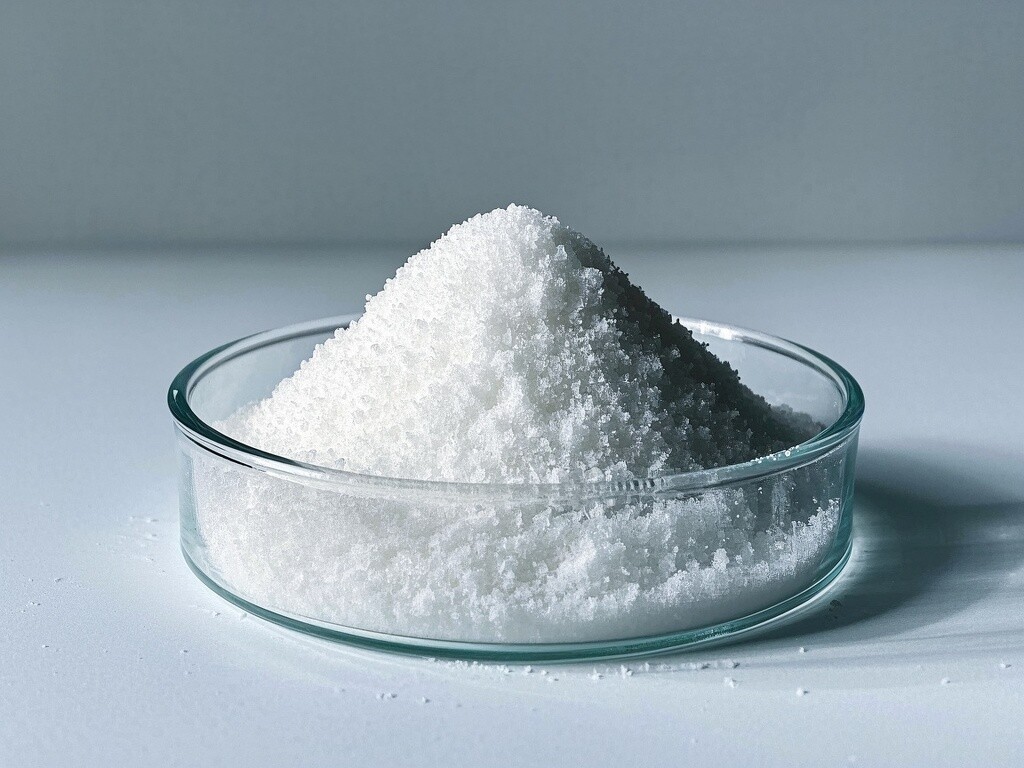
Choosing between ground and precipitated Calcium Carbonate can directly affect product performance, processing efficiency, and cost control. For buyers, project managers, and distributors in the chemical industry, understanding the key differences is essential for making the right sourcing decision. This article explores how each type fits specific industrial applications and helps you identify the better option for your business needs.
What is the real difference between GCC and PCC?
In industrial sourcing, Ground Calcium Carbonate, often called GCC, and Precipitated Calcium Carbonate, known as PCC, are not interchangeable by default. Both are calcium carbonate products, but they are produced through different routes, and that changes particle shape, particle size distribution, brightness, purity profile, and end-use performance. For procurement teams, this means the choice should be based on application requirements rather than price alone.
GCC is produced by mechanically crushing and classifying naturally occurring limestone, marble, or chalk. Because the process is physical, GCC usually offers a broader particle size range and lower processing cost. PCC is produced through a chemical precipitation process, which allows tighter control over particle morphology and size, often in the micron or sub-micron range. That controlled structure can improve reinforcement, opacity, dispersion, or surface finish in selected systems.
For chemical buyers, the first 3 indicators to compare are particle size, whiteness, and consistency between batches. For project managers, the next 3 indicators are process compatibility, loading level, and effect on downstream quality. For distributors, the most practical question is whether customers need a cost-efficient filler or a performance-engineered additive. These 6 checkpoints usually narrow the decision quickly.
In sectors such as plastics, rubber, adhesives, coatings, paper, and construction chemicals, both forms are widely used. However, GCC is often preferred when large-volume filling, stable supply, and budget control are dominant. PCC becomes more attractive when the formulation requires higher precision, smoother finish, improved optical properties, or better control in sensitive applications.
The comparison below helps identify the most relevant procurement differences between ground and precipitated Calcium Carbonate in B2B chemical purchasing.
This table shows why product selection should not stop at the chemical name. In many tenders, GCC wins on delivered cost per ton, while PCC wins on value created per formulation. The better choice depends on whether your target is lower raw material spend, improved product performance, or more stable processing over repeated production cycles.
Which applications are better suited for each type?
When GCC makes more sense
Ground Calcium Carbonate is widely selected in applications where loading level can be relatively high and the formulation can tolerate a broader particle distribution. In plastic compounding, cable filler, sealants, mortar, and some adhesive systems, GCC is often favored because it supports volume production and predictable cost planning. For manufacturers operating monthly or quarterly procurement cycles, this matters more than laboratory-level optimization.
GCC also fits projects with time-sensitive delivery. Because the raw material chain is generally straightforward, supply planning may be easier when compared with highly customized grades. In many bulk chemical purchases, the main objective is to secure stable whiteness, acceptable fineness, and consistent moisture control over 2–4 delivery batches rather than extreme particle engineering.
Construction chemicals are a clear example. Tile adhesive, dry mortar, putty, and filler formulations often value workability, bulk density balance, and manageable cost. In these cases, the purchasing team may focus on 4 practical items: sieve residue, whiteness, moisture, and packaging stability during transport. If the application does not demand specialty morphology, GCC is usually the efficient choice.
When PCC delivers better value
Precipitated Calcium Carbonate is more suitable when the manufacturer needs fine control over optical properties, surface texture, reinforcement behavior, or rheology. In higher-grade paper, premium coatings, engineered plastics, rubber products, and some sealant or ink systems, PCC can provide advantages that justify a higher unit price. This is especially true when the downstream product is sold on performance rather than commodity price.
In projects where appearance is critical, such as high-whiteness compounds or smooth-finish coatings, PCC may improve opacity and surface uniformity. In polymer processing, a controlled particle structure can also influence dispersion and mechanical balance. That becomes important when the finished part must perform consistently across 3 stages: compounding, molding, and end-use service.
For distributors serving multiple industries, PCC is often the better fit for customers who ask for targeted functional performance rather than a generic mineral filler. Such customers may accept a higher cost if it helps reduce reformulation time, lower defect rates, or improve final product acceptance in their own customer audits.
Typical industry fit by scenario
- Choose GCC for large-volume plastics, construction chemicals, and general rubber compounds where cost per ton and filling efficiency are primary decision factors.
- Choose PCC for specialty paper, premium coatings, fine polymer formulations, and applications requiring tighter particle control or surface quality.
- For mixed portfolios, maintain 2 sourcing paths: one for commodity-grade volume needs and one for performance-driven grades with narrower specification windows.
A structured application review helps avoid a common mistake: buying PCC for a process that only needs GCC, or buying GCC where precision and finish are commercially important. That mismatch often increases total cost even if the purchase price looked attractive at the start.
How should buyers compare technical performance and total cost?
The best way to compare ground and precipitated Calcium Carbonate is to use total cost of use rather than invoice price alone. In chemical purchasing, the lowest price per metric ton does not always mean the lowest cost in production. Loading rate, scrap risk, processing speed, and quality variation can change the economics over 7–30 days of continuous manufacturing.
For project managers, a practical review should include 5 dimensions: raw material price, dosage efficiency, machine compatibility, defect impact, and customer acceptance of the final product. If a lower-cost GCC grade requires higher dosage or creates more rework, the cost advantage may shrink. If a PCC grade improves performance enough to reduce additives elsewhere, its higher purchase price may be justified.
This logic is common across the chemical industry. For example, polymer or lubricant systems often rely on supporting additives to protect stability and service life. In such formulations, buyers may also assess antioxidants and stabilizers alongside mineral fillers. A relevant example is Antioxidant JHSANOX-264(T-501), which is used in lubricating oils and greases, plastics and rubber, the food industry, and fuels where oxidation resistance and thermal stability matter.
When selecting calcium carbonate grades for a broader formulation package, buyers should think in systems. A filler affects loading and processing, while an antioxidant or stabilizer affects service life and thermal behavior. Reviewing these materials together often gives a clearer picture of the final production cost and performance window.
The table below provides a practical total-cost comparison framework for procurement teams evaluating GCC and PCC in chemical applications.
Using this framework keeps sourcing decisions practical. Instead of debating which calcium carbonate is universally better, your team can identify which option reduces cost at plant level, which improves specification compliance, and which aligns with your customer contract requirements.
What should procurement teams and project managers check before ordering?
A 6-point sourcing checklist
In the chemical trade, the most expensive mistake is often not the material itself but the lack of pre-purchase verification. Before confirming a GCC or PCC order, buyers should align technical, commercial, and logistics details. This is especially important when the material will be used in adhesives, wastewater treatment chemicals, plastics, rubber, or food-related formulations where consistency and documentation standards may differ.
- Confirm the target specification range, including particle size grade, whiteness target, moisture limit, and packaging format.
- Request batch-level documents for at least 1 recent production period to review consistency rather than a single typical value.
- Check whether the product is intended for plastics, coatings, rubber, construction chemicals, or other sectors, because one grade may not serve all uses equally well.
- Clarify lead time, especially if your project has a 7–15 day launch window or staged delivery schedule.
- Evaluate transport and storage conditions to reduce caking, contamination, or moisture pickup during handling.
- Plan a plant trial using a small batch before moving to monthly or annual purchasing contracts.
This checklist is useful for both direct end users and distributors. End users reduce process risk, while distributors protect margin by avoiding complaints and returns. In either case, specification alignment before shipment is far cheaper than corrective action after production has started.
How supply reliability affects the final decision
For many buyers, a technically suitable grade is not enough. Reliable sourcing also requires stable upstream channels, responsive communication, and delivery execution that matches plant schedules. Shandong JunTeng Chemical Co., Ltd., based in Jinan, Shandong Province, has focused on chemical trading for 10 years and supports customers through integrated supply chain management, qualified supplier resources, and efficient logistics coordination.
This matters when a project involves multiple chemical inputs, not only calcium carbonate. Many manufacturers prefer one-stop procurement to reduce supplier fragmentation, shorten communication loops, and improve delivery planning across 2–3 material categories. JunTeng Chemical works with long-term upstream partners such as Luxi Chemical, Binzhou Petrochemical, Yanshan Petrochemical, BASF Germany, Qilu Petrochemical, and Sinopec, which helps support source-based product assurance and stable supply arrangements.
For project managers handling deadlines, one dependable trading partner can simplify vendor coordination, document follow-up, and shipment visibility. For distributors, it can also improve stock planning and response time when customers ask for fast quotation updates, sample arrangements, or split deliveries.
Common mistakes, FAQ, and a smarter way to decide
Is PCC always better because it is more controlled?
No. PCC offers tighter control and can improve performance in selected formulations, but that does not make it automatically better for every industrial use. If your application is cost-sensitive, tolerant of broader particle distribution, and based on high loading levels, GCC may deliver a better business result. The right question is not which product is more advanced, but which one fits the process, specification, and budget at the same time.
How many trials should a factory run before switching grades?
A practical approach is to run at least 2–3 controlled production trials. The first trial checks process compatibility, the second checks repeatability, and the third confirms finished-product quality. If the material is used in critical applications such as food additives, high-grade plastics, or customer-audited construction chemicals, an additional verification stage may be reasonable before full-scale conversion.
What if customers need more than just calcium carbonate?
This is common in chemical procurement. Buyers often need a combination of fillers, solvents, processing aids, stabilizers, and antioxidants. For example, in plastics, rubber, lubricants, or fuel-related formulations, oxidative stability can be as important as filler performance. In those situations, a coordinated supply discussion may also include Antioxidant JHSANOX-264(T-501), a hindered phenolic antioxidant with a CAS Number of 128-37-0, purity above 99.5%, moisture not more than 0.10%, and packaging options such as 25 KG/carton or 20 KG/fiber drum.
What is the most common purchasing mistake?
The most common mistake is selecting by quotation only. A low price can become expensive if it causes poor dispersion, inconsistent appearance, reduced throughput, or customer complaints. Another frequent error is skipping logistics review. Even a suitable material can create trouble if delivery timing, packaging integrity, or warehouse conditions are not aligned with plant needs.
Decision summary for busy buyers
- Select GCC when your priority is bulk usage, simpler processing, and lower delivered cost.
- Select PCC when your priority is controlled particle design, appearance, or specialty performance.
- Evaluate total cost across at least 4 areas: purchase price, production efficiency, quality stability, and customer acceptance.
- Use trial data, not assumptions, before finalizing long-term contracts.
A smarter sourcing decision comes from matching material characteristics with production reality. In the chemical industry, that means looking beyond product labels and comparing how GCC or PCC performs in your exact application, plant conditions, and commercial model.
Why work with us for chemical sourcing and project support?
For buyers, project leaders, and distributors, the real challenge is rarely limited to one product. It usually involves specification matching, supplier coordination, lead time control, packaging selection, and risk reduction across multiple chemical categories. Shandong JunTeng Chemical provides one-stop chemical product procurement support backed by 10 years of trading experience, established upstream partnerships, and an organized supply chain and logistics network.
If you are comparing ground and precipitated Calcium Carbonate, we can support the practical questions that determine project success: which grade better matches your application, what documentation should be checked, what delivery cycle is realistic, whether sample testing is appropriate, and how to coordinate related materials for the same production line. This is especially useful for industries such as pharmaceuticals, pesticide production, petrochemicals, adhesives, wastewater treatment, construction chemicals, food additives, detergents, fertilizers, plastics, and rubber.
You can contact us for 6 specific topics: parameter confirmation, product selection, sample support, packaging and logistics planning, delivery schedule discussion, and quotation communication. If your project also involves stabilizers, antioxidants, or other supporting chemicals, we can help review the sourcing package in a more integrated way so your team saves time and reduces coordination pressure.
When your next purchase depends on balancing performance, cost, and supply reliability, a detailed discussion before ordering is the safest path. Share your application, annual or monthly volume, required specification range, and project timeline, and we can help you evaluate whether GCC or PCC is the better fit for your business.
Leave A Message
If you are interested in our products and want to know more details, please leave a message here, we will reply you as soon as we can.