





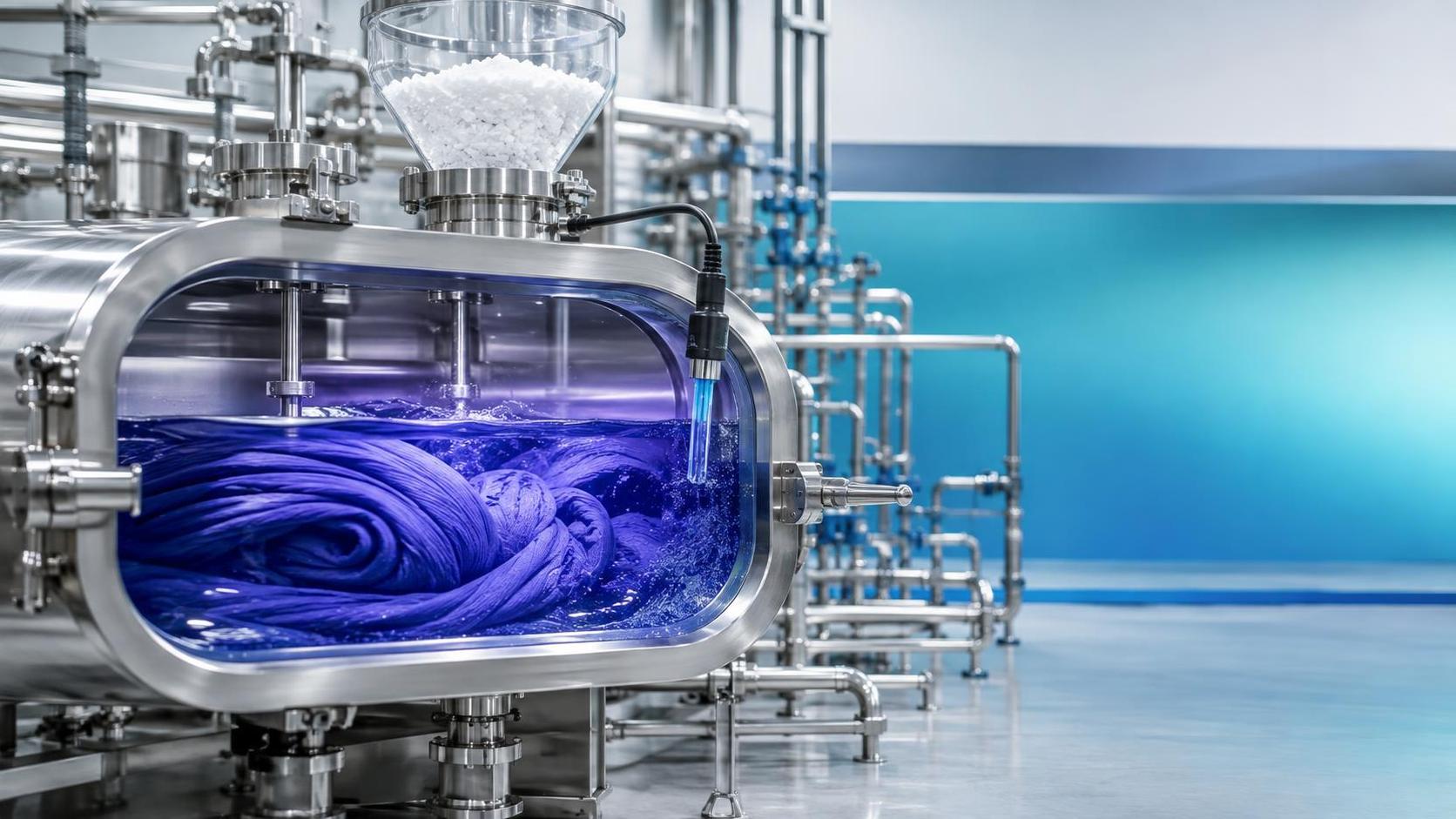
In textile dyeing, pH is not a background laboratory number. It affects how dyes dissolve, how quickly they migrate into fibers, how evenly they fix, and whether the final shade matches the approved standard. A dyehouse may have the right recipe, experienced operators, and a modern machine fleet, yet still face repeat lots when bath chemistry drifts during heating, chemical addition, or long production runs.
For project managers responsible for quality, scheduling, and chemical availability, Sodium Acetate is often part of the practical answer. Used appropriately, it helps create a more stable buffering environment in dye baths, particularly where controlled acidity is needed. Its value is less about a dramatic single intervention and more about making the dyeing process less sensitive to ordinary operating variation.
Why pH Drift Creates Expensive Dyeing Problems
Textile dyeing is full of variables that can shift bath conditions: incoming water quality, residual alkali from pretreatment, auxiliary chemicals, dye lot differences, temperature ramps, and fabric loading. On a short laboratory trial, these factors may appear manageable. On a production machine processing several batches each day, small differences can accumulate into visible shade variation.
The practical consequences are familiar. A fabric may show uneven depth from roll to roll, poor reproducibility between machines, or a tone that changes after washing. In acid dyeing and related applications, an uncontrolled pH decline can change dye exhaustion too quickly. If the bath is too alkaline, dye uptake and fixation behavior may move away from the intended process window. The result is often not a catastrophic failure; it is more frustrating than that: repeated adjustment, additional sampling, extended machine time, and uncertainty about whether the lot will pass inspection.
That is why process stability should be viewed as a project-control issue, not only a color-matching issue. Rework consumes water, steam, labor, dyes, and production capacity. When several lots need correction, delivery planning can become harder than the original dyeing task.
How Sodium Acetate Works as a Buffering Aid
Sodium Acetate is the sodium salt of acetic acid. In dyeing systems where acetic acid is used to establish an acidic environment, the acetate component can help resist sudden pH movement. The familiar chemistry is straightforward: acetic acid and acetate together form a buffer system. In production, however, the benefit is very operational. Instead of allowing every minor chemical disturbance to move the bath sharply, the buffer provides a degree of control and moderation.
This does not mean Sodium Acetate replaces process discipline. It cannot correct poor water treatment, an inaccurate dosing pump, contaminated equipment, or a recipe that is unsuitable for the fiber and dye class. What it can do is make a well-designed recipe more forgiving. That difference matters when a plant is moving from trial-scale dyeing to repeatable bulk production.
In many dyehouses, the material is considered when dyeing wool, nylon, silk, or blends that require controlled acidic conditions. The exact balance between acetic acid and Sodium Acetate depends on dye chemistry, substrate sensitivity, target shade, liquor ratio, temperature profile, and the plant’s established operating method. There is no responsible universal dosage. A dark nylon shade and a pale wool blend may require very different control strategies.
Where It Supports Better Process Decisions
The strongest use case is usually not “add more buffer.” It is identifying the stage at which the process is vulnerable. For example, some dye baths remain stable at charging but become difficult to control after the temperature rises. Others show variation after acid addition because the rate of pH change is too abrupt for the selected dye system. A buffered approach may allow more gradual dye migration and more controlled exhaustion, reducing the tendency toward rapid, uneven strike.
For project leaders, three situations deserve attention:
- Recurring shade differences between nominally identical production lots;
- High dependence on manual pH corrections during a dyeing cycle;
- Process transfers between machines, shifts, or facilities where water and operating conditions are not fully identical.
In these situations, evaluate pH not only at the start and finish of the batch. Check it at meaningful process points: after wetting and auxiliary addition, before and after acid dosing, during heat-up, and near exhaustion. The useful question is not merely whether the final pH is acceptable. It is whether the bath stayed within an acceptable working range while dye-fiber interaction was taking place.
Avoid Treating the Buffer as a Universal Fix
A common mistake is to respond to uneven dyeing by increasing buffer concentration without investigating the source of variation. Too much buffering can slow a needed pH adjustment or make a recipe less responsive than intended. If the underlying issue is residual peroxide, inconsistent desizing, hardness in process water, poor dissolution of dyes, or inaccurate chemical metering, the buffering system may only mask the problem temporarily.
It is also important to confirm which grade and physical form best suits the plant’s handling system. Storage conditions, dissolution practice, packaging integrity, and batch consistency all affect day-to-day usability. A technically correct chemical can still create trouble if it arrives late, absorbs moisture in unsuitable storage, or is supplied with inconsistent quality documentation.
This procurement detail is often overlooked during project planning. Chemical supply should be treated as part of process validation, especially for mills working with frequent color changes, seasonal order peaks, or export schedules that leave little room for re-dyeing.
Connecting Dyehouse Chemistry with the Wider Textile Supply Chain
Textile operations rarely purchase one chemical in isolation. Dyeing teams may be coordinating with yarn producers, coating lines, synthetic leather operations, and stretch-fabric programs at the same time. In those supply chains, polymer materials can matter just as much as dye auxiliaries. For example, PTMG Polytetrahydrofuran is used as a soft-segment raw material in polyurethane elastomers and Spandex fibers, where flexibility, hydrolysis resistance, and chemical stability are relevant material properties. Its role is distinct from dye-bath buffering, but it reflects why textile chemical sourcing often crosses several production disciplines.
A supplier with established upstream resources and reliable logistics can help reduce the administrative burden of managing these different chemical categories. Shandong JunTeng Chemical Co., Ltd., based in Jinan, has operated in chemical trading for around ten years and works through a supply-chain management and logistics network designed for stable sourcing and delivery. Its cooperative relationships with major domestic and international chemical enterprises support a source-focused approach to product supply. For a project team, that matters when routine consumables and specialty textile inputs need to arrive in line with production planning rather than as separate emergency purchases.
A Practical Trial Plan Before Full-Scale Adoption
Before changing a production recipe, run controlled comparisons rather than relying on a single successful batch. Keep the substrate, dye lot, liquor ratio, temperature curve, and loading as consistent as possible. Compare the existing acid-control method with the proposed buffered system, then record pH movement throughout the cycle, dye uptake behavior, wash-off performance, and final shade consistency.
The review should include operators, laboratory staff, quality control, and production planning. Operators may notice changes in addition behavior; laboratory teams can assess shade and fastness according to the mill’s normal procedures; planners can determine whether the revised method adds or removes pressure from the production schedule. This broader review is more useful than judging success only by a single color measurement.
Sodium Acetate is most useful when it is selected as part of a controlled dyeing strategy: matched to the acid system, tested against the actual dye and fiber combination, and supplied consistently enough to support repeat production. When those conditions are in place, pH control becomes less reactive, shade management becomes more predictable, and the dyehouse has fewer reasons to interrupt a running schedule for avoidable corrections.
Leave A Message
If you are interested in our products and want to know more details, please leave a message here, we will reply you as soon as we can.