





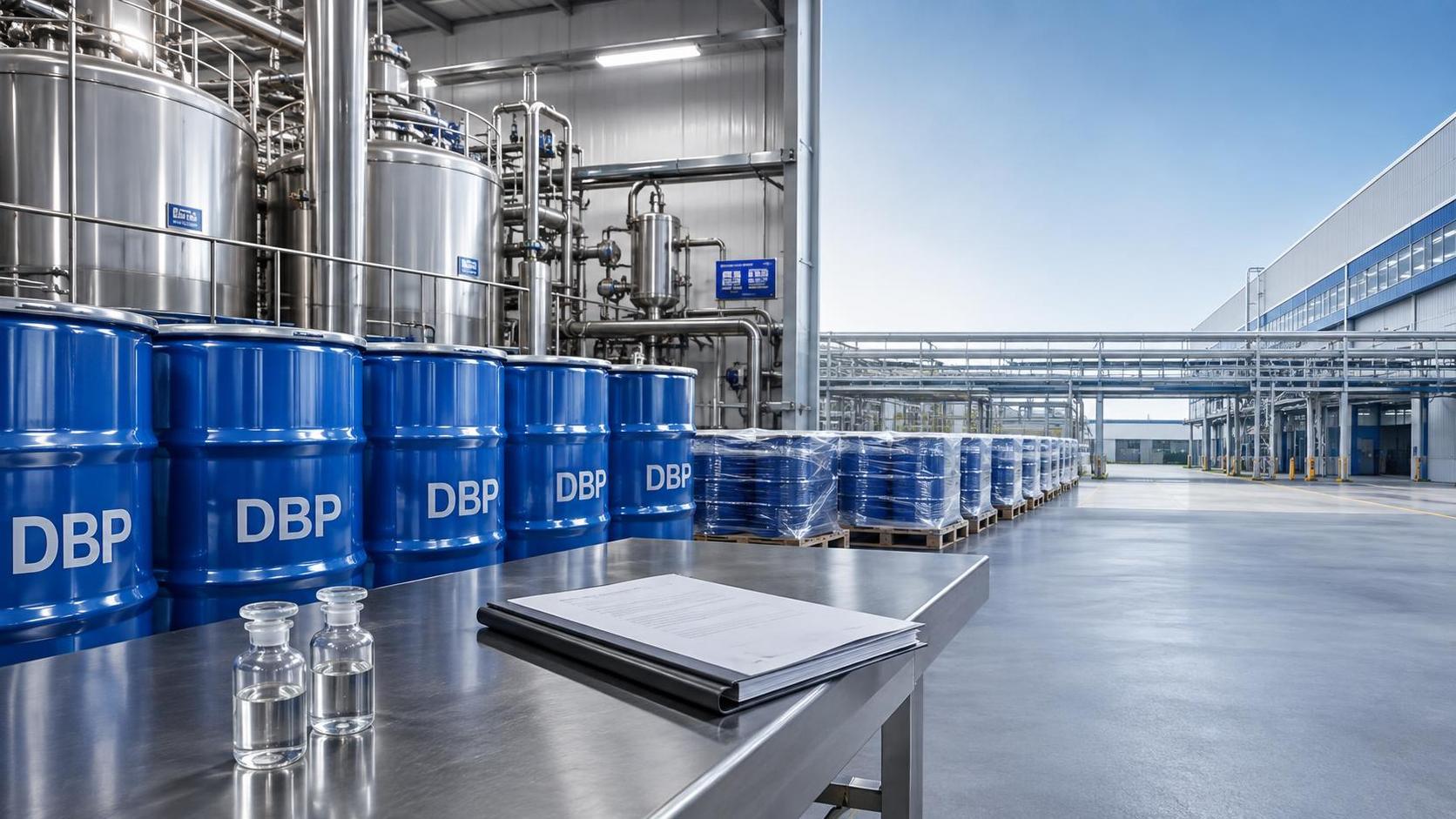
How to Assess a Dibutyl Phthalate Manufacturer Beyond Product Specifications
A specification sheet is necessary when sourcing dibutyl phthalate (DBP), but it is not enough to make a sound purchasing decision. Purity, color, acid value, moisture, packaging, and price tell a buyer whether a material may fit a formulation on paper. They do not show whether the supplier can keep that material available when demand tightens, investigate a quality deviation quickly, or arrange safe delivery when a production line is waiting.
For DBP buyers, the real cost of a poor supplier decision is rarely limited to the purchase price. It may appear as an unplanned reformulation check, a delayed plasticizer shipment, inconsistent processing behavior, incomplete documentation, or a batch that cannot be traced back with confidence. Assessing a Dibutyl Phthalate manufacturer therefore means looking at the operating system behind the product, not just the product specification itself.
Start With the Actual Use Case, Not a Generic Grade Request
DBP is commonly evaluated as a plasticizer and processing aid in applications where compatibility, handling behavior, and batch consistency matter. Yet purchasing teams often send the same inquiry to every supplier: requested quantity, drum type, target purity, and destination port. That approach can miss the details that determine whether the material works reliably in production.
A more useful inquiry explains the intended process. Is DBP being used in plastics and rubber, an adhesive system, a coating-related formulation, or a chemical intermediate process? Is the operation sensitive to moisture, odor, color drift, or residue? Will the material be consumed steadily or purchased for project-based demand? A capable supplier should ask enough technical and logistical questions to understand the order, rather than simply quote the lowest available grade.
This also matters when one purchasing team sources several solvents and additives from the same channel. For example, a buyer handling coating or ink raw materials may also review 2-Ethoxyethyl Acetate, a solvent used in coatings, inks, cleaning formulations, adhesives, and chemical synthesis. Although it is not a substitute for DBP, this kind of mixed purchasing requirement tests whether a supplier can distinguish product-specific technical needs instead of treating every liquid chemical as a standard drum shipment.
Check Traceability Before You Need It
The most revealing question for a Dibutyl Phthalate manufacturer is often simple: “If we report an issue with this batch, what information can you provide?” The answer should go beyond sending another copy of a certificate of analysis. Buyers should understand how the supplier connects the delivered batch to its production source, quality release records, storage history, packaging date, and shipment documents.
A COA should correspond clearly to the supplied lot, but procurement should also ask what happens if the result needs verification. Can the supplier retain reference samples? Who handles a claim? Is there a defined route for reviewing a discrepancy between incoming inspection and the supplier’s reported values? These questions are not confrontational. They establish whether the supplier has a workable quality process or merely provides paperwork at dispatch.
Traceability becomes especially important when material passes through trading, warehousing, or multiple logistics handoffs. A trading company can still be a strong supply partner, provided it is transparent about sourcing and maintains control over documentation, batch identification, and storage conditions. What creates risk is not the business model itself; it is an unclear chain of responsibility.
Look at Supply Chain Depth, Not Just Claimed Capacity
Manufacturing capacity is often presented as a headline figure, but buyers should focus on available supply under normal and disrupted conditions. Ask whether the quoted material comes from a regular production source, whether alternative qualified sources exist, and how the supplier manages allocation during periods of tighter supply. A supplier may have access to a large nominal volume while still being unable to support a recurring purchase schedule.
For recurring DBP demand, it is worth discussing practical points early: expected monthly consumption, minimum lead time, preferred packaging, safety stock expectations, and whether the supplier can provide a rolling delivery plan. This is more useful than asking for an unconditional promise of “stable supply,” because real stability is demonstrated through planning, communication, and source visibility.
Shandong JunTeng Chemical Co., Ltd., based in Jinan, has operated in chemical trading for ten years and positions its service around supply chain management and one-stop chemical procurement. Its long-term cooperative relationships with suppliers and enterprises including Luxi Chemical, Binzhou Petrochemical, Yanshan Petrochemical, Lihuayi Group, Weiyuan Chemical, BASF Germany, Qilu Petrochemical, and Sinopec are relevant to buyers because supplier access can affect continuity and source traceability. Even so, procurement teams should confirm the source and availability for the specific DBP grade and order period rather than assume that a broad supplier network automatically applies to every item.
Assess Logistics as Part of Product Quality
For liquid chemicals, delivery is not separate from quality. Packaging integrity, vehicle suitability, loading controls, labeling, and delivery scheduling all influence what arrives at the plant. A DBP supplier should be able to explain the available packaging formats, confirm compatibility with the customer’s unloading process, and provide the documents required for transport and receiving.
The practical questions are often straightforward. Are drums checked before dispatch? How are damaged packages handled? Can the supplier coordinate delivery appointments? What is the escalation route if a vehicle is delayed? These details matter more than they appear. A factory may be able to tolerate a modest price difference; it may not be able to tolerate a delivery arriving after its storage window or a shipment that cannot be unloaded safely.
An efficient logistics network is particularly valuable when procurement consolidates materials for pharmaceuticals, pesticide production, petrochemicals, adhesives, construction chemicals, detergents, plastics, or rubber operations. Consolidation can reduce administrative work, but only when the supplier maintains clear separation of product documents, packaging requirements, and delivery instructions for each chemical.
Do Not Treat Regulatory Questions as an Afterthought
DBP-related restrictions and customer acceptance requirements can vary by end use and destination market. A material suitable for one industrial application may require additional review for another. Procurement should not rely on broad statements such as “export compliant” or “suitable for all applications.” Instead, provide the destination, downstream use, and any customer-controlled substance requirements, then request supporting documentation relevant to that transaction.
The right supplier will be careful here. They should distinguish between product data they can document and regulatory conclusions that require the buyer’s own application-specific assessment. Overconfident answers are not always reassuring; a supplier that identifies what needs confirmation is usually easier to work with over the long term.
Use a Trial Order to Test the Relationship
Before committing substantial volume, a controlled first order can reveal more than a presentation or quotation. Review how quickly the supplier answers technical questions, whether documents arrive before delivery, whether the batch and labels match the paperwork, and how accurately the logistics team communicates. If sampling is needed, assess whether the sample is properly identified and representative of the proposed supply source.
Price still belongs in the decision, of course. But compare it against the complete procurement burden: inspection effort, payment terms, freight reliability, claim handling, lead time, and the likelihood of needing emergency replacement supply. The cheapest DBP offer can become expensive when these factors are weak.
A dependable Dibutyl Phthalate manufacturer or supply partner should make the buyer’s process calmer, not more complicated. When source information is clear, quality records are traceable, logistics are managed deliberately, and communication remains consistent after the purchase order is issued, the supplier is offering something more valuable than a compliant batch: a supply arrangement that procurement can plan around.
Leave A Message
If you are interested in our products and want to know more details, please leave a message here, we will reply you as soon as we can.