





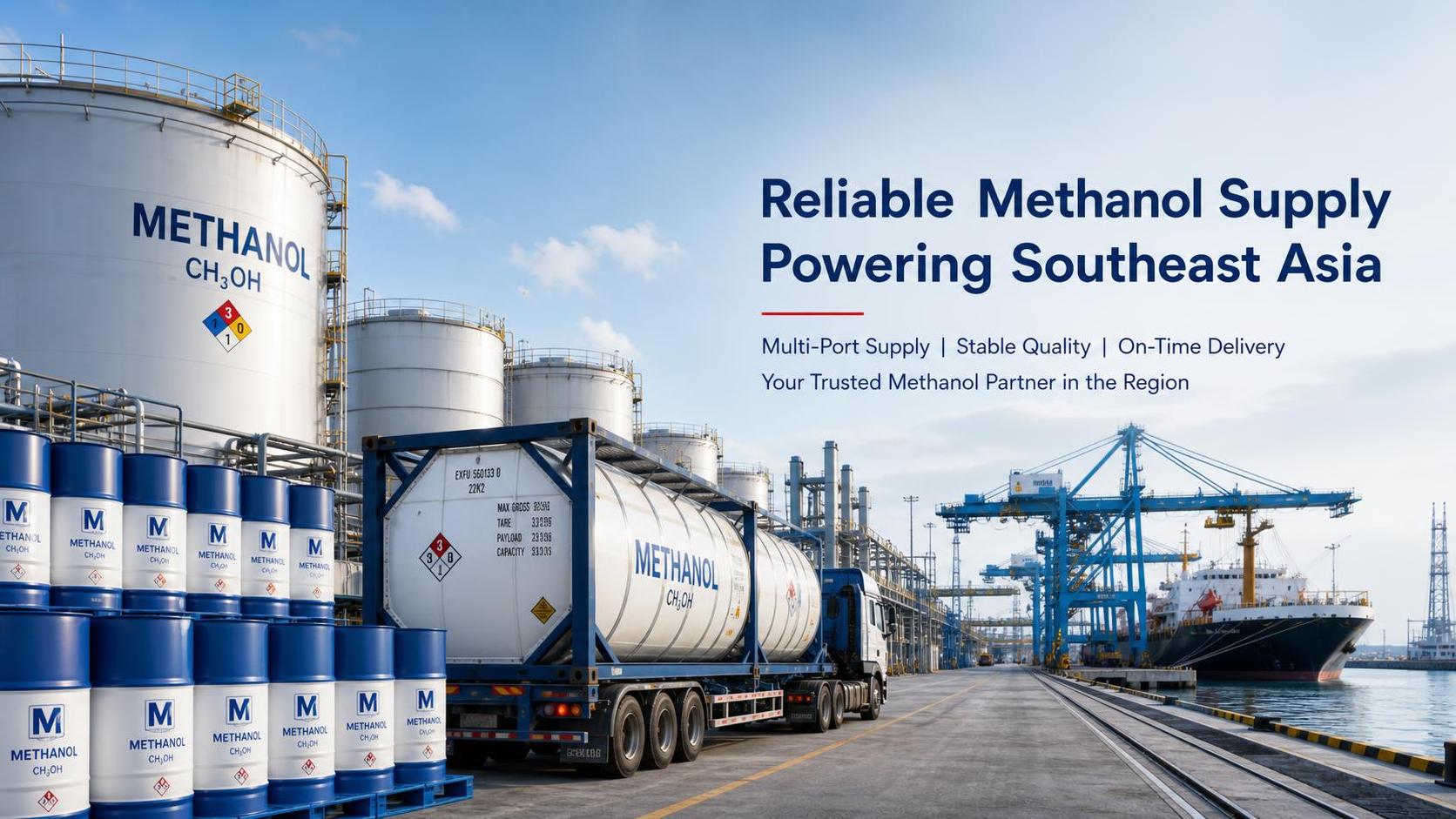
Start with reach, not price
When you are comparing a Methanol distributor Southeast Asia buyers may work with, the first question is simple: how far can this supplier really deliver without adding fragility into your schedule? A low offer means very little if cargo has to change hands too many times, sit too long at a port, or depend on one storage point for several countries. In regional chemical purchasing, supply reach is not a map on a sales deck. It is the distributor’s actual ability to move product into your destination market on time, with consistent paperwork and predictable lead times.
For business evaluators, that usually means treating the distributor as part of your supply chain, not just a trading contact. The stronger candidates tend to have stable producer relationships, an organized logistics network, and enough operational discipline to keep product quality and delivery performance aligned.
What to check before you shortlist anyone
- Countries actually served: Ask where they have recent delivery experience, not where they “can export.” Southeast Asia is not one lane. Indonesia, Vietnam, Thailand, Malaysia, and the Philippines can each create different documentation, port handling, and inland delivery issues.
- Loading points and route options: A distributor with more than one reliable loading source is usually better protected against plant maintenance, vessel delay, or local stock tightness.
- Volume flexibility: Check whether they can support both contract volume and urgent spot demand. Some suppliers look strong on paper but only perform well when volumes are small and timing is loose.
- Document control: You want to see whether they handle COA, SDS, packing list, invoice, and shipment records cleanly and consistently. Repeated paperwork errors are an early warning sign.
Check the source behind the quote
A common mistake is evaluating only the distributor’s commercial response speed. Fast replies do not tell you much about supply security. You need to know whether the supplier is working from direct producer relationships, stable upstream allocations, or purely opportunistic market purchases.
That distinction matters when the market tightens. A trader who buys cargo case by case can still be useful, but they are more exposed to substitution, delayed allocation, and sudden repricing. A distributor backed by established producer connections is usually in a better position to keep quality consistent and delivery dates realistic. This is one reason experienced chemical buyers pay attention to supply-chain depth, not just the face value of the quotation.
Judge supply reach through operational questions
If you want a useful comparison, ask each supplier the same practical questions and compare the answers side by side.
Do not separate logistics from product quality
Methanol sourcing is often discussed as a volume and freight issue, but quality control still sits in the middle of the decision. The distributor should be able to explain how product identity is preserved from source to delivery, especially if cargo is transferred, stored, or repacked anywhere in the route. For evaluation purposes, ask which documents travel with the shipment and how lot traceability is maintained.
This matters across chemical categories, not only methanol. For example, if a supplier also handles products such as Diethanolamine (DEA), the handling requirements are different: DEA is hygroscopic, absorbs CO2 from air, and is commonly supplied at purity of at least 98.5%, often in 200 KG drums. A distributor that can explain packaging, storage, and contamination control across products usually has a more mature operating system than one that talks only about price and shipment date.
Look for delivery stability under pressure
Anyone can look reliable in an easy month. The better test is how the distributor behaves when supply tightens, freight moves suddenly, or a plant goes into maintenance. Ask what happened on previous disrupted shipments in general operational terms: Was cargo reallocated? Was the customer informed early? Were alternate loadings offered? You are not looking for a polished story. You are looking for signs of process.
A useful red flag: when a distributor gives fixed confidence on delivery but cannot explain the route, source, or backup plan. In chemical trade, certainty without operating detail usually does not hold up.
Use the buyer’s checklist at bid stage
- Request the offered origin, loading port, packaging mode, and estimated lead time in one sheet.
- Match that against your actual receiving location, not just the country name.
- Ask whether the quote depends on one producer, one vessel window, or one stock position.
- Review document samples for consistency before the first order, especially COA and SDS format.
- Check how the supplier handles urgent demand, split shipments, and delivery changes after booking.
- Compare payment terms only after the supply route and source are understood. Cheap terms from a weak route can become expensive very quickly.
Where a capable distributor adds value
For evaluators buying across several chemical lines, it helps when a distributor can support one-stop procurement rather than isolated single-product trades. A company with established supplier resources, organized supply-chain management, and efficient logistics is often easier to work with over time because internal approval, scheduling, and communication become simpler. That is especially relevant when your team sources methanol alongside other industrial inputs used in petrochemicals, wastewater treatment, adhesives, agrochemicals, detergents, or plastics and rubber.
The point is not to choose the biggest catalog. It is to choose a partner whose network is deep enough to support continuity.
Make the final decision in the right order
When two offers are close, decide in this order: source reliability, route coverage, document discipline, response quality, then price. That sequence filters out most avoidable procurement risk. If a distributor can show stable producer access, practical reach into your target Southeast Asian market, and a repeatable delivery process, you are usually looking at a stronger long-term choice than the supplier with the sharpest first quote.
In other words, choose the Methanol distributor Southeast Asia operations can keep working with when conditions are normal and when they are not. That is the difference between buying product and securing supply.
Leave A Message
If you are interested in our products and want to know more details, please leave a message here, we will reply you as soon as we can.