





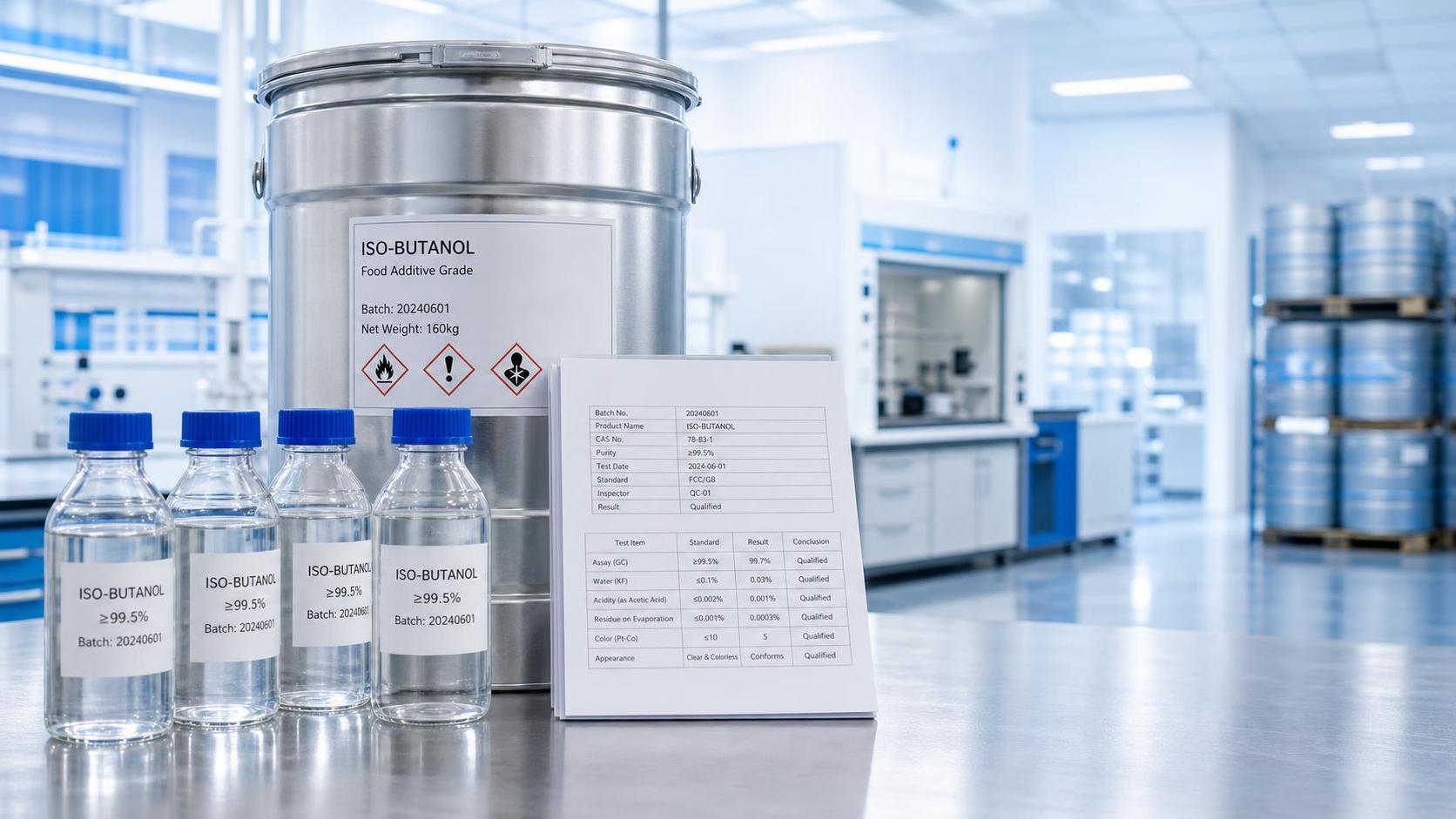
Why is isobutanol for food additives reviewed so carefully before approval?
Before approving isobutanol for food additives, the real question is not only purity. It is whether the full supply, handling, and compliance chain can stand up to inspection.
In regulated food-related use, small gaps create large risks. A correct assay value does not compensate for poor traceability, unclear origin, damaged packaging, or uncontrolled transport conditions.
That is why isobutanol for food additives is usually reviewed through documents, site-level controls, and batch evidence together, rather than by specification sheet alone.
In practical sourcing, companies with stable upstream relationships and organized logistics tend to reduce approval friction. Shandong JunTeng Chemical, based in Jinan, has built long-term supply cooperation with major domestic and international producers, which matters when source consistency is part of the decision.
What documents should be checked first for isobutanol for food additives?
A common mistake is starting with price or lead time. For technical review, documentation should come first, because it tells you whether the material is even suitable for a regulated route.
The essential document set usually includes:
- Certificate of analysis for the actual batch, not a generic template.
- Safety data sheet aligned with the current transport and hazard classification.
- Statement of intended food-related compliance or applicable standard basis.
- Manufacturing source, plant name, and lot traceability record.
- Impurity profile or control statement for critical residues.
Need attention here: “food use” wording in sales communication is not enough. The approval file should show which standard, jurisdiction, or permitted use basis is being claimed.
If the supplier cannot connect each lot to a plant, production date, and release record, isobutanol for food additives becomes much harder to defend during an audit.
Which quality indicators matter beyond basic purity?
Purity is important, but it is only the entry point. The more useful question is whether the full quality profile matches the intended food additive process.
In many reviews, the following points deserve closer attention than teams initially expect:
A useful comparison method is to request trend data, not one passing lot. Stable batches often tell you more than an impressive single certificate.
How do packaging, storage, and transport affect compliance?
This part is often underestimated. Yet for isobutanol for food additives, post-production control can change the risk profile even when manufacturing quality is acceptable.
Start with the container. Confirm material compatibility, seal integrity, labeling accuracy, and whether the packaging has remained intact through loading and unloading.
Then review transport records. A flammable chemical needs controlled logistics, trained handling, and documented transfer conditions. Delays, relabeling, or mixed storage should trigger questions.
Some buyers also compare similar solvents used in foods or flavors. For example, Butyl Acetate is known in flavor and food-related processing, but it remains a flammable liquid with its own storage and transport controls. The point is simple: compliance is never only about chemistry; it is also about logistics discipline.
Where suppliers maintain a complete supply chain management system and efficient delivery network, receiving checks become easier to standardize and less dependent on exceptions.
What supplier questions reveal whether the source is actually reliable?
The best screening questions are specific enough that weak suppliers struggle to answer them clearly. Broad promises usually sound good but prove very little.
- Can each batch of isobutanol for food additives be traced to the original production plant?
- What is the change-control process for raw materials, production route, or packaging?
- How are nonconforming lots isolated, investigated, and communicated?
- Is there retained sample management for complaint investigation?
- Can the supplier provide multiple recent COAs showing batch consistency?
More often than not, dependable performance comes from source control. A trader with long-standing links to recognized producers and a record of genuine supply can be easier to qualify than a low-price source with incomplete batch history.
Where do audits usually find problems with isobutanol for food additives?
Audit issues are rarely dramatic. They usually appear as small mismatches between records, labels, and actual handling.
Typical weak points include outdated SDS versions, inconsistent lot numbers, unclear repacking history, and missing evidence for transport cleanliness or storage segregation.
Another common issue is assuming one approved batch means the whole source is approved. In reality, isobutanol for food additives should remain under ongoing supplier and batch review, especially after process or plant changes.
It also helps to look at how a supplier manages adjacent solvent categories. A product such as Butyl Acetate, typically supplied as a colorless flammable liquid with purity above 99.5%, shows how technical data, packaging format, and application boundaries should be documented clearly across solvent portfolios.
So what is the sensible approval path before use?
A workable approval path is usually staged. First, verify regulatory basis and source traceability. Next, review batch-level quality data and impurity control. Then confirm packaging, transport, and receiving inspection rules.
If the material will enter a sensitive food additive process, add a trial evaluation with retained samples and written release criteria. That step often prevents larger deviations later.
In short, isobutanol for food additives should be approved as a controlled supply system, not just a purchased solvent. When the source is stable, documents are current, and logistics are disciplined, audit readiness becomes much easier to maintain.
The next move is practical: map your required standard, define lot acceptance checkpoints, and compare suppliers on traceability, consistency, and delivery control before final release.
Leave A Message
If you are interested in our products and want to know more details, please leave a message here, we will reply you as soon as we can.