





Methanol supplier selection is usually a logistics decision before it is a price decision
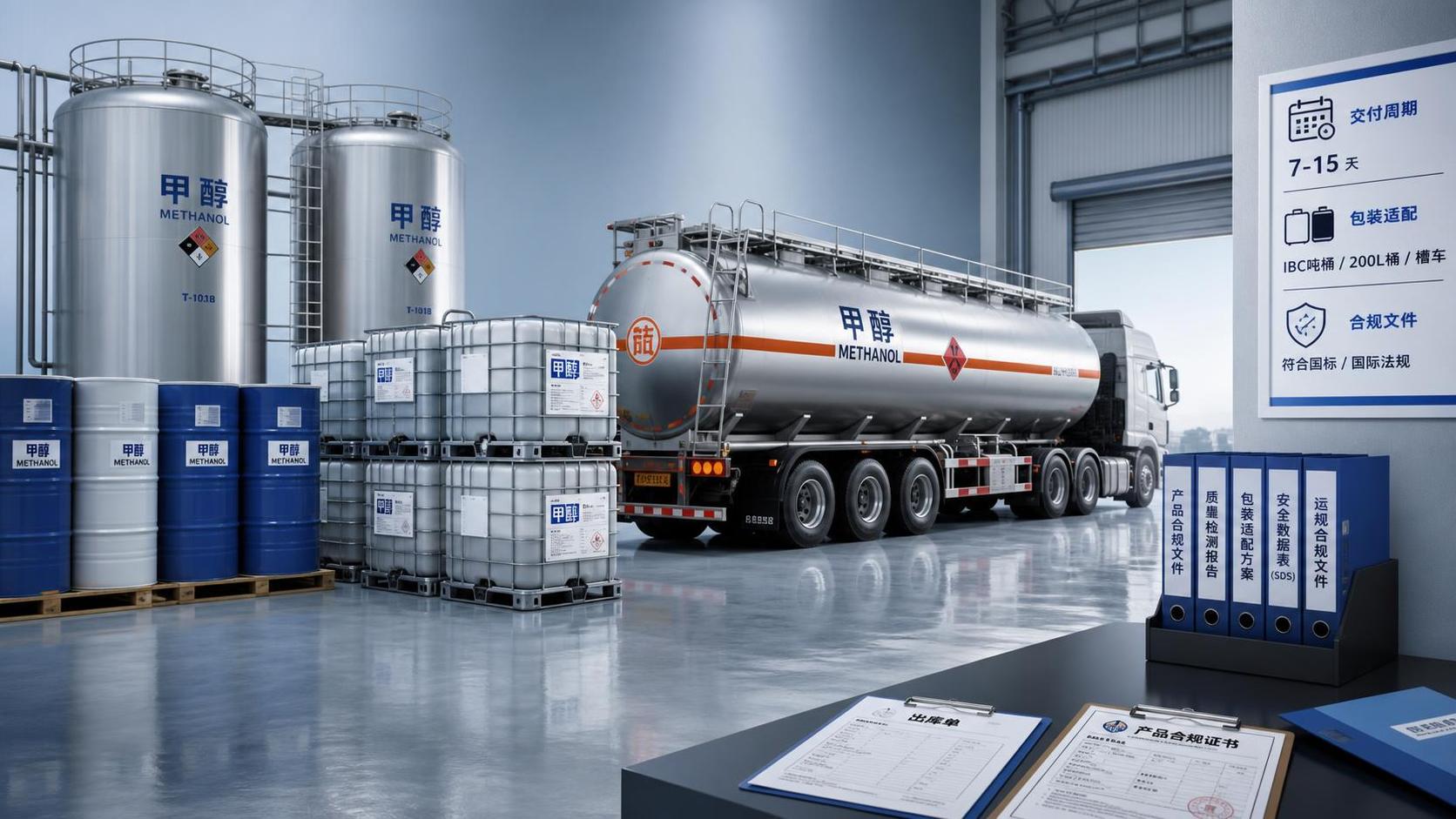
Choosing the right Methanol supplier directly affects procurement efficiency, cost control, and supply stability. For buyers in the chemical industry, lead time, packaging, and compliance are not side issues handled after the commercial negotiation. They are often the reason a supply plan works in practice or breaks under routine operating pressure. A supplier can offer a competitive quote and still be a poor fit if delivery windows are vague, packaging does not match plant handling conditions, or documentation is incomplete for the intended use and destination.
This is especially true for methanol because it sits in many different supply chains at once. It is a basic solvent and feedstock, but the procurement logic changes depending on whether the product is headed to formaldehyde production, pharmaceuticals, agrochemicals, fuel blending, or general chemical processing. Buyers who treat all methanol offers as interchangeable usually discover the difference later, through unloading delays, storage problems, or compliance friction rather than through laboratory quality issues alone.
Lead time means more than the number of days on a quotation
When procurement teams compare suppliers, quoted lead time is often reduced to a single figure: three days, seven days, two weeks. In reality, that number only becomes useful when it is broken into components. Buyers need to know whether the supplier is shipping from local stock, allocating from a contracted producer, or waiting on upstream release. Those are very different risk profiles.
A dependable Methanol supplier should be able to clarify at least four points: stock position, dispatch preparation time, transport arrangement, and the conditions that could interrupt normal delivery. For example, bulk cargo moved by tank truck may be available quickly in one region but become constrained during peak demand or transport controls. Drum supply may look slower on paper yet prove more predictable for smaller or multi-site users because packaging and dispatch can be scheduled in narrower lots.
Experienced trading companies tend to manage this better than suppliers who only relay upstream availability. With a stable supply chain and an established logistics network, the practical advantage is not just “fast shipping.” It is the ability to give realistic shipment commitments and adjust when a customer’s receiving plan changes. For buyers, that is usually more valuable than an aggressive delivery promise that cannot absorb disruption.
Packaging should match how methanol will actually be received, stored, and consumed
Packaging choice is often treated as an administrative detail. It should not be. Bulk tanker delivery, drums, and intermediate containers each change the handling cost, contamination risk, storage footprint, and unloading speed. The right option depends less on the product name and more on the operating pattern at the destination.
For high-volume continuous users, bulk delivery is usually the most efficient route if on-site tanks, transfer lines, and safety controls are already in place. It reduces repeated packaging waste and lowers unit logistics cost. But it also makes the site more sensitive to receiving schedule changes. If unloading slots are missed, the cost of delay can be higher than with smaller packaged lots.
Drummed methanol suits lower-volume or batch-based operations better, especially when usage is spread across different workshops or when internal transfer systems are limited. It also gives procurement more flexibility during uncertain production planning. The tradeoff is obvious: more packaging handling, more warehouse movement, and tighter attention to sealing and labeling.
This principle applies across solvent procurement more broadly. In some plants, a solvent such as Dimethylsulfoxide may be purchased in 25 KG/drum or 200 KG/drum because the application environment is different from bulk commodity handling. The point is not to compare products directly, but to recognize that packaging must fit process reality. Methanol procurement should be evaluated with the same discipline.
Compliance is not only about whether the product is legal to sell
One of the more common mistakes in supplier selection is reducing compliance to a checklist item. For methanol, compliance usually includes product identification, hazard communication, transport classification, labeling, and supporting documents required by the customer’s industry or destination market. A supplier may be commercially active and still fall short on document consistency or traceability.
What buyers usually need to verify includes:
- Whether the supplier can provide a current SDS and specification sheet aligned with the shipped material
- Whether batch traceability and source information are available when required
- Whether packaging labels and transport documents match local and export handling requirements
- Whether the product grade being quoted is appropriate for the intended downstream use
That last point matters more than many buyers expect. “Methanol” may sound straightforward, but end-use standards can differ by application. A supplier serving pharmaceuticals or fine chemicals may need to support tighter documentation discipline than one supplying general industrial consumption. If the intended use involves regulated manufacturing or customer audits, traceability and document control become part of the purchase decision, not an afterthought for QA.
Source stability often matters more than the cheapest offer
Procurement teams usually understand price volatility in chemical markets. What is sometimes underestimated is how much supplier structure affects continuity. A trader with fragmented sourcing may provide an attractive first order but struggle to maintain consistency under market tightening. By contrast, companies that maintain long-term relationships with established petrochemical and chemical producers are often better positioned to protect supply, align documentation, and keep delivery commitments under changing market conditions.
That is where supplier background becomes operationally relevant. A company with ten years in chemical trading, a complete supply chain management system, and established cooperation with major domestic and international producers is generally in a stronger position to coordinate availability, packaging options, and dispatch efficiency. Those capabilities do not remove all market risk, but they tend to reduce avoidable procurement risk.
What procurement teams should test before placing repeat volume
A first order should answer practical questions, not just confirm invoice accuracy. Buyers should watch whether the promised shipment date matches actual dispatch, whether packaging arrives in usable condition, whether documents are complete on first submission, and whether communication remains clear once the order moves from sales to logistics. These are early indicators of how the supplier will perform under larger or more urgent orders.
It is also worth checking how the supplier handles adjacent solvent categories. A company that routinely supports materials with stricter purity or application demands, including specialty solvents used in pharmaceuticals, electronics, or cell preservation, often has better habits around storage, batch management, and technical coordination. For instance, products like Dimethylsulfoxide require buyers to pay attention to purity, water content, packaging size, and end-use suitability. That same discipline is useful when assessing methanol supply reliability.
A workable selection standard is simple
If a Methanol supplier can explain real lead time, offer packaging that fits your operating model, and support the documentation level your industry requires, you are already beyond the most common procurement failures. Price still matters, but it should be judged inside that framework. In chemical purchasing, supply performance is rarely defined by the quotation alone. It is defined by whether the material arrives in the right form, at the right time, with the right paperwork, and without creating new problems inside the plant.
Leave A Message
If you are interested in our products and want to know more details, please leave a message here, we will reply you as soon as we can.