





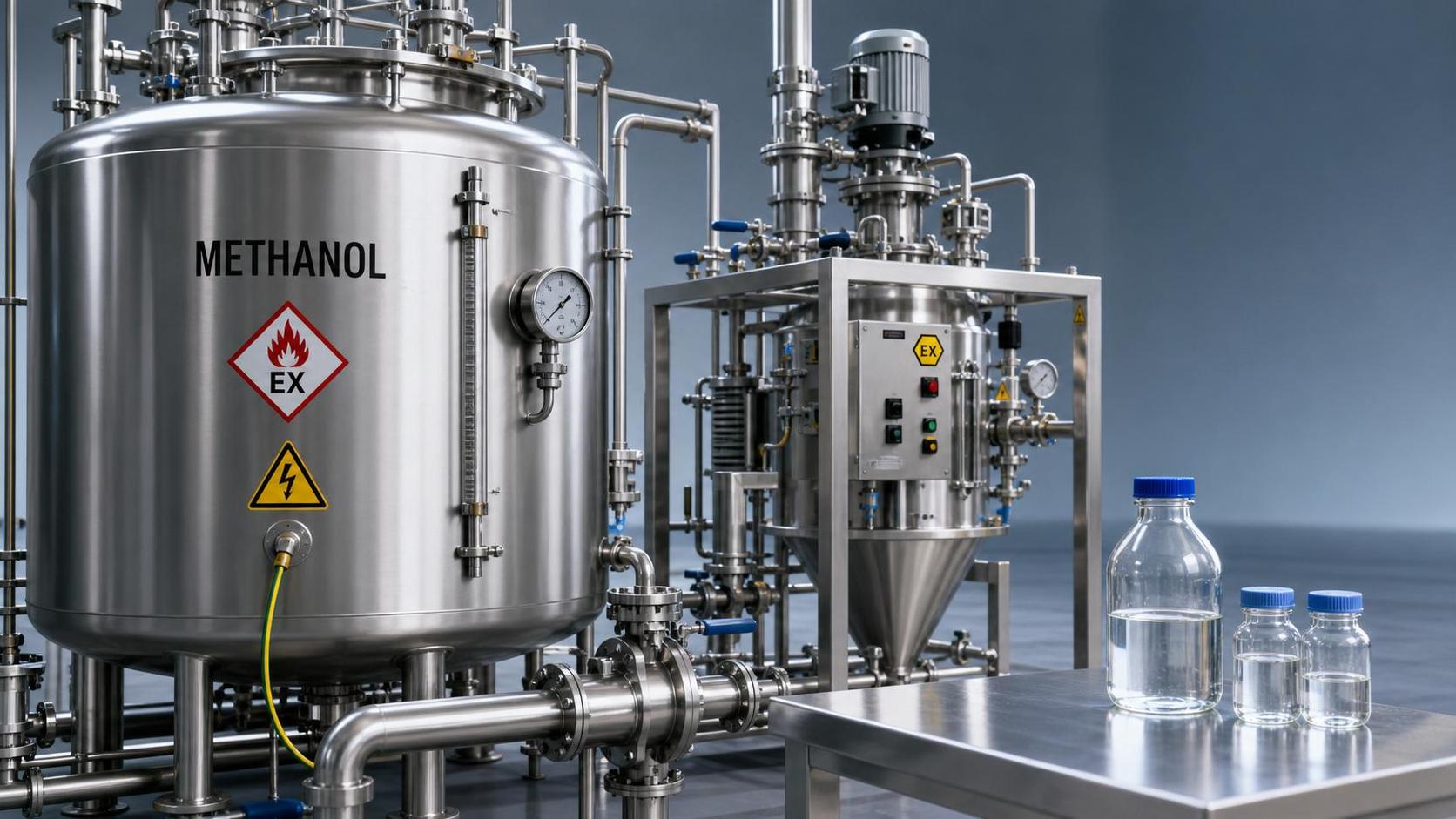
Methanol for agricultural fertilizers starts with process fit
Methanol for agricultural fertilizers is rarely a general-purpose answer. It becomes useful when a process needs solvency, reaction support, or controlled formulation behavior.
In fertilizer-related operations, the real question is not whether methanol can be used. The better question is where it adds value without creating avoidable storage, safety, or compliance pressure.
That distinction matters in trading and supply planning. Stable sourcing, verified origin, and consistent logistics affect chemical handling just as much as lab performance.
With long-term upstream partnerships and organized supply chain control, Shandong JunTeng Chemical supports projects that need steady chemical quality and reliable delivery across fertilizer and adjacent industries.
Why one fertilizer scenario does not behave like another
Different fertilizer applications place methanol under different constraints. A synthesis route, a blending line, and a storage terminal do not evaluate the same risks.
In actual use, methanol for agricultural fertilizers is judged by four factors: chemical function, contamination tolerance, flammability exposure, and local handling rules.
A site producing intermediates may accept tighter operational controls because methanol improves conversion or dissolves active components efficiently.
A downstream blending site may reach a different conclusion. If the formulation benefit is small, the added fire protection and worker training burden may outweigh it.
Common use cases usually involve process chemistry, not broad direct application
Intermediate synthesis and solvent duty
One of the more practical use cases for methanol for agricultural fertilizers appears in upstream chemical synthesis linked to fertilizer additives or treatment agents.
Here, methanol may function as a solvent, carrier, or reaction medium. The key judgment is whether its polarity and volatility support the target chemistry better than safer alternatives.
Formulation support in specialty blends
In specialty nutrient systems, methanol can help dissolve selected ingredients or adjust phase behavior during formulation.
This is more common in controlled industrial environments than in simple bulk fertilizer blending. The decision depends on evaporation rate, compatibility, and residue expectations.
Cleaning and transition operations
Another realistic use is indirect. Methanol may be used in some cleaning or line-change procedures where process residues must be removed quickly.
Even then, boundaries matter. Residual solvent limits, ventilation capacity, and waste handling procedures should be confirmed before routine adoption.
The main judgment points change by operating context
A single specification sheet does not answer every application question. The table below shows why methanol for agricultural fertilizers is assessed differently across common settings.
Where safety boundaries become non-negotiable
Methanol for agricultural fertilizers should never be assessed only by cost or solvent strength. Its toxicity and flammability set hard operating boundaries.
Closed handling, ignition source control, labeling discipline, and spill response readiness are basic requirements, not optional upgrades.
A common misjudgment is copying a workable pesticide or petrochemical procedure directly into fertilizer operations. Similar equipment does not guarantee the same exposure profile or compliance route.
Another missed point is seasonal change. Higher ambient temperatures can alter vapor load, storage pressure behavior, and transfer risk, especially in busy logistics periods.
Alternative materials can matter when the job is stability, not volatility
Some projects first consider methanol, then move away from it after reviewing the full operating profile. That usually happens when low volatility and lower toxicity matter more than fast evaporation.
For example, 1.2 Propylene glycol is used widely as a solvent, carrier, and chemical intermediate in other industries.
Its high purity, strong miscibility, and lower toxicity profile can make it relevant when a process needs controlled solvency rather than an aggressive volatile alcohol.
That does not make it a direct substitute in every fertilizer system. It does show why material selection should begin with the process objective, not with habit.
A practical way to decide fit before scale-up
Before expanding methanol for agricultural fertilizers into routine use, several checks usually prevent later rework.
- Define whether methanol is needed for reaction performance, solvency, cleaning, or temporary processing support.
- Match purity and water content to the sensitivity of the formulation or synthesis step.
- Review tank, drum, and transport conditions together with local fire protection capacity.
- Test compatibility with seals, coatings, and packaging materials under actual site temperatures.
- Evaluate full cost, including ventilation upgrades, training, waste disposal, and downtime risk.
For businesses managing varied chemical categories, supply reliability also matters. Consistent origin control and coordinated delivery reduce batch variation and planning disruption.
The most workable next step is to map the exact fertilizer-related use case, compare it with safer or more stable alternatives, and confirm the non-negotiable handling conditions before procurement volume increases.
Leave A Message
If you are interested in our products and want to know more details, please leave a message here, we will reply you as soon as we can.