





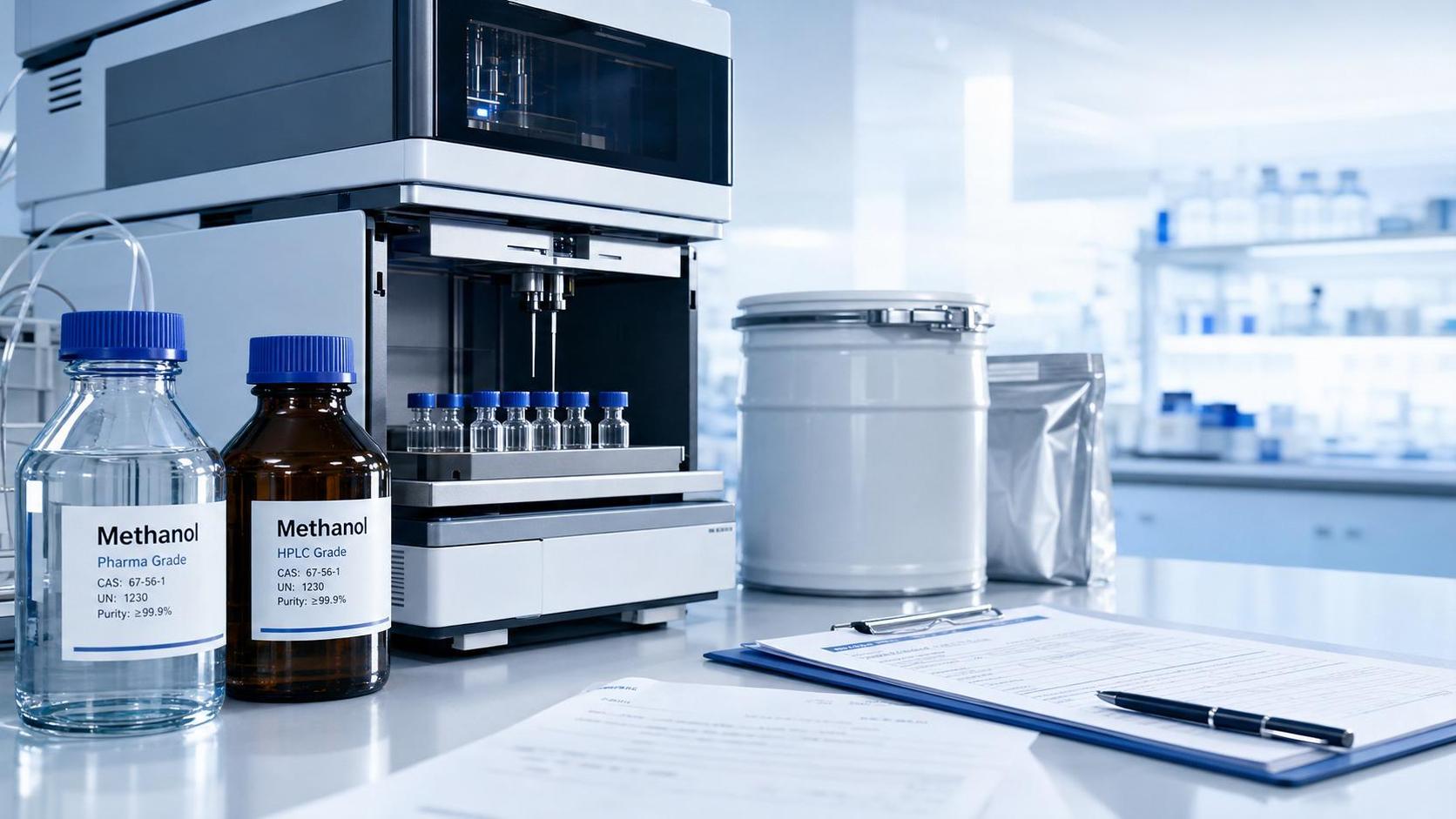
Methanol for Pharmaceutical Use: Which Grade Is Fit for Validation
When selecting Methanol for pharmaceutical use, technical evaluators must look beyond basic purity.
The right grade affects method validation, process repeatability, safety control, and audit readiness.
In practice, a low-price option can create hidden costs through failed runs, out-of-spec results, or extra investigations.
That is why Methanol for pharmaceutical use should be assessed against application risk, not only a certificate headline.
This article explains how to choose a suitable grade and support better validation-focused purchasing decisions.
Why Grade Selection Matters in Validation
Validation is sensitive to variation.
Even when methanol meets general purity targets, trace water, non-volatile residue, and UV-absorbing impurities may still affect results.
This becomes more visible in HPLC, GC sample preparation, cleaning validation, and reference standard handling.
For regulated environments, consistency between lots often matters as much as nominal assay.
A grade mismatch can delay method transfer, trigger deviation reviews, or require partial revalidation.
Common Methanol Grades for Pharmaceutical Use
Not every pharmaceutical task needs the same methanol grade.
The key is matching grade to analytical sensitivity and regulatory exposure.
- Analytical reagent grade: suitable for routine laboratory work with moderate sensitivity.
- HPLC grade: preferred for chromatography because of low residue and low UV interference.
- LC-MS grade: used when extremely low background and trace impurity control are required.
- Pharmacopeia-compliant grade: selected when direct alignment with USP, EP, or other standards is needed.
- Industrial grade: usually not appropriate for validation-critical pharmaceutical use.
For most validation activities, HPLC or pharmacopeia-compliant Methanol for pharmaceutical use is the safer baseline.
What to Check Beyond Purity
Purity alone does not define fitness for validation.
A technical review should focus on attributes that influence reproducibility and compliance records.
- Water content, especially for moisture-sensitive methods.
- Non-volatile residue, which can affect baseline and contamination risk.
- UV absorbance profile for detector compatibility.
- Specified impurity limits, including aldehydes or ketones.
- Lot-to-lot consistency and change control history.
- Packaging integrity and contamination prevention during transport.
- Supporting documents such as COA, SDS, TDS, and compliance statements.
In real procurement workflows, document completeness often becomes the deciding factor during qualification.
How to Match Grade to the Actual Application
Application context should guide selection.
Using an excessively high grade for every step increases cost without adding control where it matters.
Using an insufficient grade creates a larger downstream burden.
This approach keeps Methanol for pharmaceutical use aligned with both validation goals and operating budgets.
Supplier Qualification Is Part of the Grade Decision
A good grade on paper is still not enough without a dependable supplier.
Supply continuity, source transparency, and response speed matter when validation timelines are fixed.
Shandong JunTeng Chemical Co., Ltd. has ten years of trading experience in the chemical industry.
Its supply chain management system, supplier resources, and logistics network support stable quality and timely delivery.
Long-term cooperation with recognized producers helps strengthen source-level quality assurance and procurement reliability.
This matters when qualification packages, traceability records, or replacement lots are needed quickly.
In broader sourcing programs, buyers may also compare specialty materials such as Red Phosphorus to evaluate supplier control across regulated and industrial applications.
A Practical Validation-Focused Checklist
Before approving Methanol for pharmaceutical use, run a short qualification checklist.
- Define the exact use case and analytical sensitivity.
- Match the grade to detector, method, and compliance expectations.
- Review COA limits for water, residue, assay, and critical impurities.
- Confirm pharmacopeia claims only when documentation supports them.
- Assess lot consistency and supplier change notification practices.
- Check packaging suitability for storage, dispensing, and contamination control.
- Approve at least one backup source when the method is business-critical.
These steps reduce avoidable risk during method validation and later commercial operations.
They also make technical decisions easier to defend during internal review or external audit.
Final Decision Guidance
The best Methanol for pharmaceutical use is the grade that fits the method, not the one with the broadest marketing claim.
For validation-heavy applications, HPLC grade, LC-MS grade, or pharmacopeia-aligned material usually offers the strongest path.
The final choice should combine technical data, document quality, supplier stability, and lot consistency.
That combination supports reliable validation, smoother audits, and fewer disruptions after approval.
A disciplined review now will usually save far more time and cost than a corrective action later.
Leave A Message
If you are interested in our products and want to know more details, please leave a message here, we will reply you as soon as we can.