





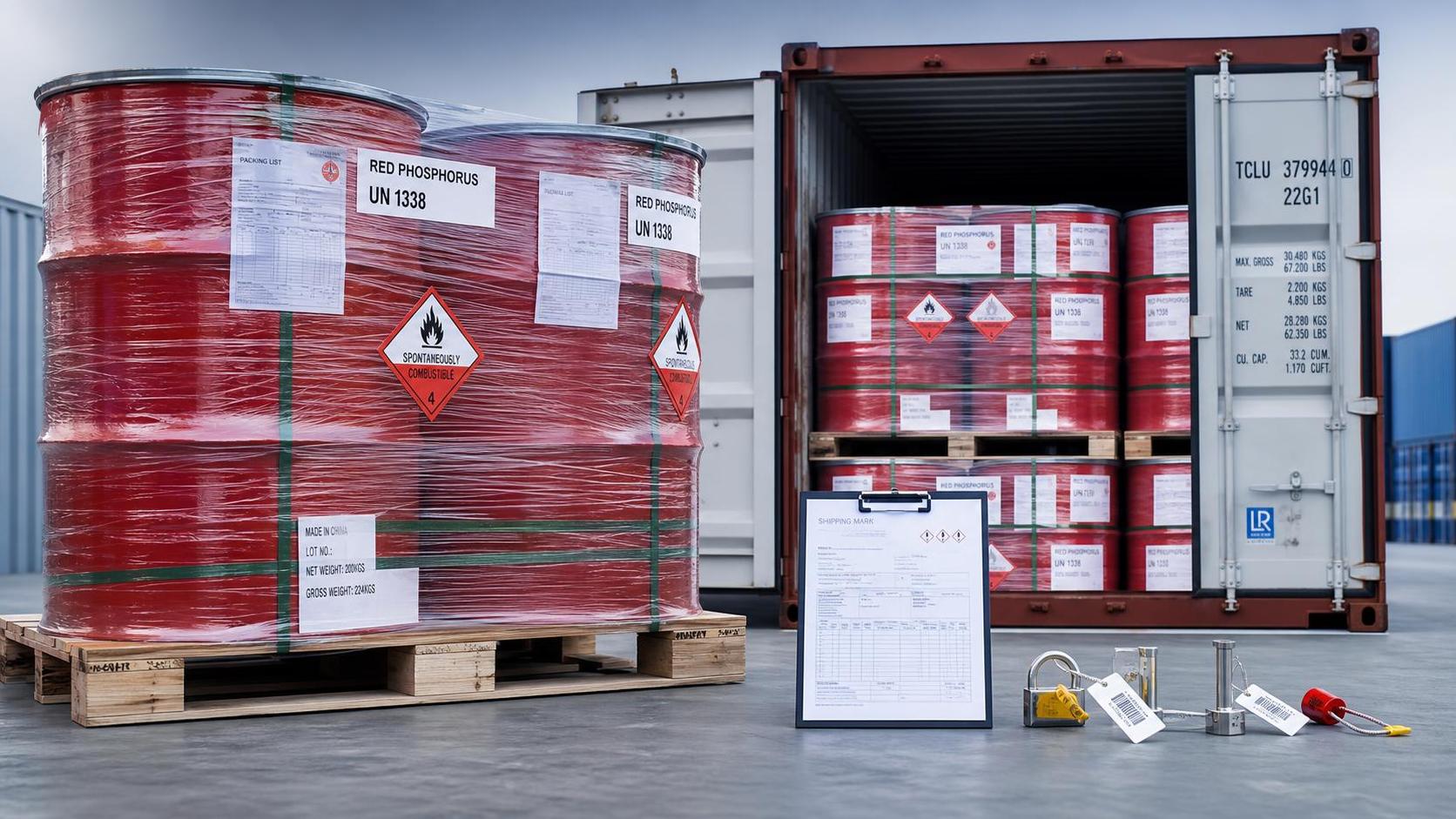
Red Phosphorus Compliance Checks for Storage and Cross-Border Shipment
The first mistake many teams make with Red Phosphorus is treating it as a routine bulk chemical once the purchase order is issued. It is not. In practice, compliance checks begin long before loading, because red phosphorus sits at the intersection of hazardous materials control, fire risk management, customs scrutiny, and supply chain reliability. For project managers, that means the real question is rarely “Can we ship it?” but “Can we prove that every storage, packing, and document decision matches the applicable transport and handling rules?”
That distinction matters because red phosphorus is not judged only by its chemical identity. Authorities and logistics partners typically look at condition, packaging integrity, contamination risk, classification, and route-specific transport requirements. A compliant shipment is built from consistent details: correct hazard communication, suitable containers, controlled storage conditions, complete shipping papers, and alignment between supplier data and the actual cargo. If one of those elements is weak, delays tend to appear at handover points such as port inspection, bonded warehousing, or destination customs review.
What compliance checks really cover
In operational terms, Red Phosphorus compliance checks usually cover four layers at once.
- Material identification: product name, grade, composition statement, and supporting safety documentation must match across internal records, SDS, packing list, and transport declaration.
- Storage control: segregation from incompatible materials, protection from ignition sources, moisture management where relevant, and warehouse conditions that prevent package deterioration.
- Transport readiness: approved packaging, proper marking and labeling, verified gross weight, and route-appropriate dangerous goods handling.
- Cross-border paperwork: export and import document consistency, customs descriptions, and any destination-specific restrictions on hazardous substances.
That is why experienced buyers do not separate compliance from procurement. A low-price source that cannot maintain stable batch documentation or cannot coordinate with qualified dangerous goods forwarding often becomes the highest-cost option once storage interruptions and demurrage risk are factored in.
Storage is where many shipment problems actually begin
For red phosphorus, warehouse compliance is not a background issue. It directly affects whether the cargo remains acceptable for onward shipment. Packages that absorb contamination, show external damage, or sit in unsuitable conditions may trigger reinspection or repacking. Even when the product itself remains within specification, visible handling defects can create doubt during dangerous goods checks.
Project teams often focus on transit regulations and underestimate pre-shipment storage discipline. Yet inspectors, carriers, and receiving plants usually read storage quality through evidence: packaging condition, traceability labels, batch references, sealed closures, and clean loading records. If a supplier cannot show a controlled process from warehouse release to container stuffing, the shipment may be technically available but commercially unreliable.
This is also where supply chain management becomes practical rather than administrative. Shandong JunTeng Chemical, based in Jinan, has spent ten years in chemical trading, and that background matters because hazardous cargo moves well only when sourcing, warehouse coordination, and logistics are treated as one system. Stable supplier relationships and predictable dispatch capability reduce the kind of avoidable mismatch that causes customs questions or carrier rejection.
Cross-border shipment is a documentation test as much as a logistics test
When Red Phosphorus crosses borders, compliance is often decided on paper before the cargo is physically examined. Customs brokers, freight forwarders, and carriers need consistent declarations. Product naming, dangerous goods description, package count, net and gross weights, and supporting safety information must align. A common operational problem is not outright non-compliance, but inconsistency between commercial documents and dangerous goods documentation. That inconsistency is enough to hold cargo.
Another misunderstanding is assuming that one complete SDS resolves everything. It does not. The SDS is important, but shipment acceptance also depends on packaging approval, marking, labeling, declaration accuracy, and destination-specific import handling. Some routes are more sensitive than others, especially where transshipment ports apply stricter review to hazardous cargo or where local authorities pay close attention to chemical end use.
For project managers, the practical standard is simple: every party in the chain should be working from the same product identity and hazard logic. If procurement, warehouse, freight forwarder, and consignee each describe the cargo slightly differently, problems tend to surface late and expensively.
A useful way to judge supplier readiness
A capable chemical trading partner is not only a source of product. It should be able to support compliance execution. That means coordinated document control, access to dependable upstream manufacturers, and logistics planning that reflects hazardous cargo realities. JunTeng Chemical’s long-term cooperation with major domestic and international enterprises is relevant here because source stability affects more than price and supply. It supports consistency in documentation, product traceability, and delivery scheduling, which are all critical when handling regulated materials.
In broader project procurement, many buyers apply the same logic across different chemical categories. For example, a product such as Monoethanolamine(ETA), used in gas purification, surfactant manufacture, pharmaceutical intermediates, and cement grinding aids, requires its own parameter-based handling discipline. With a CAS No. of 141-43-5, purity typically listed at not less than 99.0%, and a flash point of 93°C closed cup, it is evaluated through a different risk profile than red phosphorus. The comparison is useful because it reminds procurement teams that “chemical compliance” is never generic; storage controls, transport review, and documentation depend on the specific hazard and physical properties of the substance being shipped.
What experienced teams check before release
Before authorizing shipment, strong teams usually verify a short set of issues with unusual discipline:
- Whether the supplier’s product description is consistent across commercial and safety documents.
- Whether packaging is suitable for dangerous goods transport and remains in sound physical condition.
- Whether storage history and warehouse release records support clean, traceable handover.
- Whether the forwarder is prepared for route-specific hazardous cargo handling.
- Whether destination import requirements have been checked before dispatch rather than after arrival.
None of these checks are complicated on their own. The difficulty is that they must all be correct at the same time.
So the practical reading of Red Phosphorus compliance checks is this: they are not a final administrative hurdle, but a control process that starts with sourcing and ends only when the receiving side can accept the cargo without reclassification, repacking, or document dispute. For project managers responsible for schedule, safety, and commercial continuity, that is the level where compliance becomes useful knowledge rather than paperwork.
Leave A Message
If you are interested in our products and want to know more details, please leave a message here, we will reply you as soon as we can.