





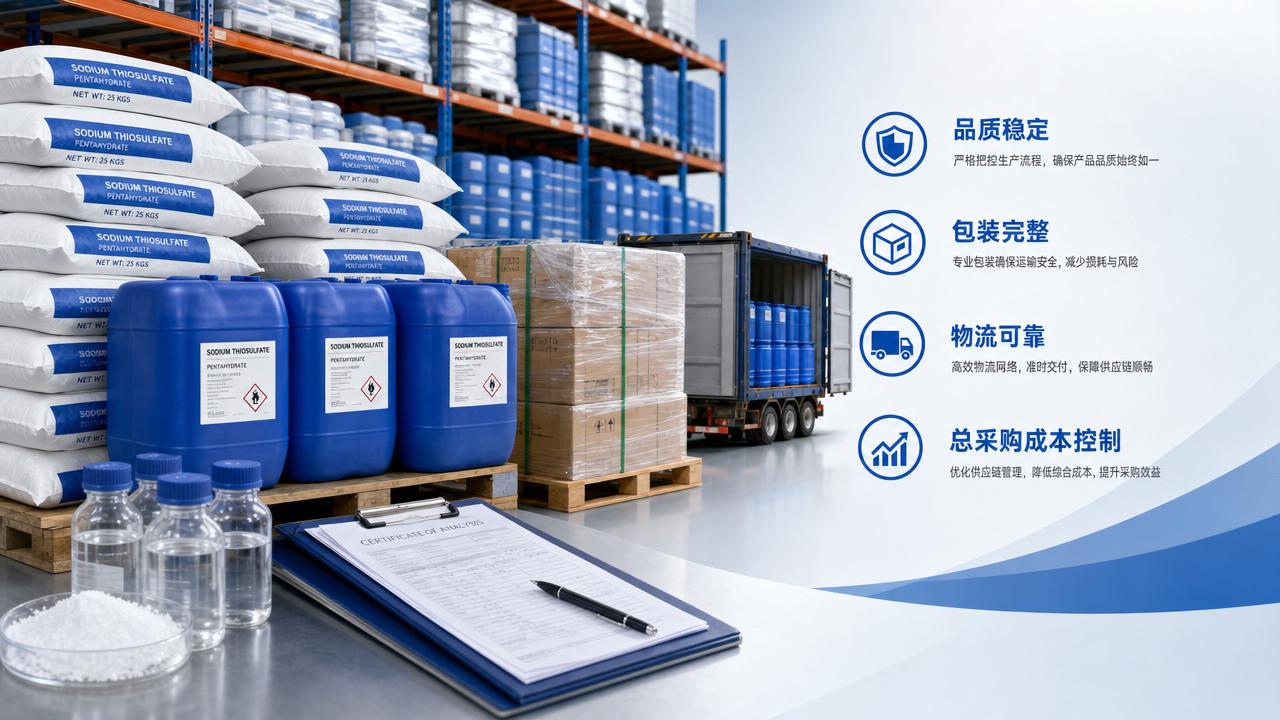
Sodium Thiosulfate Buying Mistakes That Raise Total Cost
Buying Sodium Thiosulfate at the lowest quoted price often creates avoidable downstream cost. Short-term savings can disappear through unstable quality, delivery delays, repacking losses, and supplier inconsistency.
In chemical procurement, total cost matters more than unit price. A stable Sodium Thiosulfate source helps control production efficiency, treatment performance, compliance risk, and inventory planning.
Basic Cost Factors Behind Sodium Thiosulfate Procurement
Sodium Thiosulfate is widely used in water treatment, chemical processing, photography, mining, and pharmaceutical support applications. Its value depends on purity, consistency, packaging integrity, and delivery reliability.
When buyers compare offers, visible price is only one part of total procurement expense. Hidden cost usually appears after goods arrive, enter storage, or move into production.
Key hidden cost drivers
- Off-spec purity causing process instability
- Moisture exposure from weak packaging
- Late shipment increasing safety stock
- Inadequate documents creating compliance delays
- Unclear supplier communication during claims
Common Buying Mistakes in the Chemical Market
The first mistake is choosing Sodium Thiosulfate only by low quotation. A cheaper batch may require higher dosage, create residue, or fail internal quality checks.
The second mistake is ignoring packaging and storage conditions. Damaged bags or drums increase contamination risk, handling loss, and warehouse management cost.
The third mistake is overlooking supplier network strength. Weak logistics coordination can interrupt continuous supply and force urgent spot purchases at higher rates.
The fourth mistake is failing to compare technical support. In broader solvent sourcing, products like sec-Butyl Acetate show how application data improves purchasing accuracy.
Industry Signals That Affect Total Cost
Practical Value of Stable Supply and Source Control
A reliable chemical trading partner reduces uncertainty across sourcing, transport, and after-sales coordination. This is especially important for Sodium Thiosulfate with recurring industrial demand.
Shandong JunTeng Chemical Co., Ltd. combines ten years of trading experience with supplier resources, supply chain management, and efficient logistics support.
Long-term cooperation with recognized enterprises helps strengthen source authenticity, quality consistency, sufficient supply, and timely delivery across multiple chemical application sectors.
Practical Steps Before Placing an Order
- Request COA, specification limits, and batch consistency records
- Confirm packaging type, loading method, and storage conditions
- Check lead time stability and emergency replenishment ability
- Evaluate landed cost, not only ex-works price
- Test samples against actual process requirements
For related solvent categories, technical detail also matters. For example, sec-Butyl Acetate with purity ≥99.5% and good solvent power suits coatings, inks, adhesives, and synthesis applications.
Next-Step Evaluation
A better Sodium Thiosulfate purchasing decision balances price, quality, logistics, and supplier credibility. Reviewing total cost in this way helps reduce disruption and improve long-term operational value.
If supply stability and source-based quality are priorities, compare specifications, service response, and delivery capability before finalizing the next procurement cycle.
Leave A Message
If you are interested in our products and want to know more details, please leave a message here, we will reply you as soon as we can.