





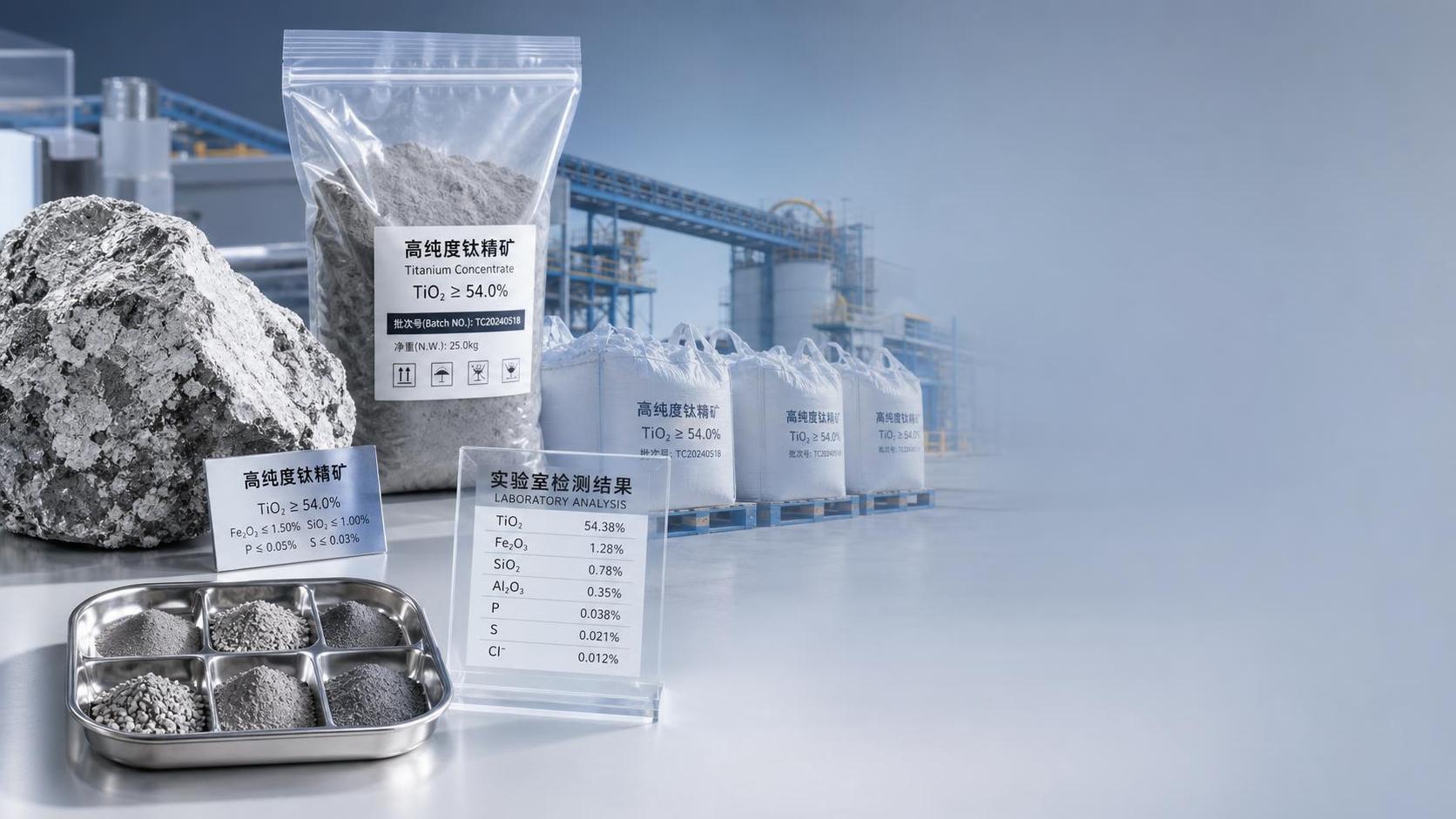
Titanium Concentrate Quality Indicators That Matter Before Procurement
The first mistake many buyers make with Titanium Concentrate is treating it as a single, easily comparable commodity. On paper, two offers may both be described as titanium-bearing concentrate, yet their behavior in downstream use can be very different. What matters is not only the headline grade, but how the material performs once it enters beneficiation, smelting, pigment production, welding electrode feed preparation, or other titanium-related processing routes. Procurement decisions made on price alone often shift cost downstream, where losses show up as lower recovery, higher reagent consumption, unstable furnace operation, or more waste handling.
In practical terms, Titanium Concentrate is usually judged through a combination of TiO2 content, impurity profile, moisture, particle size distribution, and supply consistency. None of these indicators should be read in isolation. A high TiO2 assay may still be a poor buying decision if iron, silica, phosphorus, sulfur, chromium, or other unwanted components sit outside the tolerance of the intended process. The right material is the one that fits the processing route, plant controls, and contractual risk profile.
Grade Is Only the Starting Point
Buyers often focus first on TiO2 percentage because it is the most visible quality indicator and an obvious marker of ore value. That makes sense, but grade alone does not tell the whole story. A concentrate with attractive TiO2 content can still create production issues if the mineralogy is complex or if gangue minerals are difficult to handle in the chosen process. Procurement teams should therefore read assay results as part of a broader technical picture, not as the decision itself.
The more disciplined approach is to ask a simple operational question: what does each extra percentage point of grade actually mean in our plant? In some systems it translates directly into better feed efficiency. In others, impurity management and process stability matter just as much. This is why experienced buyers request not only the certificate of analysis, but also lot-to-lot consistency data, sampling method details, and where relevant, information on mineral composition.
Impurities Decide Whether a Good Offer Stays Good
If there is one area where procurement mistakes become expensive, it is impurities. Silica and alumina may affect slag chemistry and downstream separation efficiency. Phosphorus can be especially sensitive in some titanium processing routes. Sulfur may create handling or process concerns depending on the feed system. Chromium, vanadium, calcium, magnesium, and iron levels can also alter the suitability of a concentrate for a particular end use.
This is where a lot of purchasing discussions become too generic. “Low impurities” is not a usable standard. What matters is whether the impurity profile fits the acceptance range of the specific application. A buyer sourcing feed for one process line may reject material that another line could use without difficulty. That is why technical procurement usually works better when quality clauses are tied to actual process limits rather than broad commercial language.
In chemical trading, this kind of specification matching is often more valuable than chasing the cheapest quotation. Shandong JunTeng Chemical, with a supply chain built around stable supplier relationships and controlled sourcing channels, is positioned for exactly this sort of work: aligning product quality with the buyer’s application instead of reducing the decision to a single headline number.
Moisture and Particle Size Affect Handling More Than Many Buyers Expect
Moisture is often underestimated because it does not look dramatic on a quotation sheet. In reality, excess moisture changes delivered dry basis value, raises transport weight inefficiency, and can create storage and flow issues. Depending on the climate, packaging, and storage conditions, moisture can also affect how reliably the material moves through hoppers, conveyors, or blending steps. A buyer comparing offers should be clear whether pricing and assay are evaluated on a wet basis or dry basis, otherwise the comparison may be misleading from the start.
Particle size distribution matters for similar reasons. Coarse material, excessive fines, or unstable sizing can influence feeding behavior, separation efficiency, dust generation, and even the reproducibility of process results. This does not mean every procurement contract needs an elaborate size specification, but where the downstream process is sensitive, size control should not be left to assumption. A sample that looks acceptable visually may still perform inconsistently batch to batch.
This logic applies across industrial raw materials. Buyers evaluating specialty solvents, for example, do something similar: they do not stop at the product name, but read moisture, acidity, flash point, and purity in relation to the intended use. That is why products such as Diethylene Glycol Monoethyl Ether Acetate (DCAC) are assessed through application-relevant parameters rather than label recognition alone. Titanium raw material purchasing deserves the same discipline.
Consistency Is a Quality Indicator, Not Just a Supply Issue
A concentrate that meets target specification once is not necessarily a reliable procurement choice. Procurement teams should pay close attention to variation between lots, shipment traceability, and the supplier’s ability to maintain stable sourcing. In many plants, operational trouble comes less from average quality than from fluctuation. The process may tolerate a certain impurity level, but repeated swings in grade, moisture, or size can force frequent adjustment and undermine throughput planning.
This is where supplier structure matters. A trader or distributor with weak upstream control may still offer competitive numbers, but if the origin changes often or the quality management chain is thin, the buyer absorbs more hidden risk. JunTeng Chemical’s long-term cooperation with established domestic and international enterprises and its focus on source-based product assurance are relevant here. For procurement, consistency is not a secondary service feature; it is part of material quality because it affects planning, inventory safety, and production reliability.
What Buyers Should Ask Before Approving a Source
A useful procurement review usually includes these questions:
- Is the TiO2 grade suitable for the intended process, not just commercially attractive?
- Which impurities are critical for our application, and what limits are acceptable?
- Are assay values reported consistently, and how are samples taken and tested?
- What is the moisture level, and is the commercial offer evaluated on a dry basis or wet basis?
- Is particle size controlled tightly enough for our handling and processing system?
- Can the supplier maintain the same quality profile across repeated deliveries?
- How strong are the logistics and replacement options if supply disruption occurs?
These are not formalities. They are the difference between buying a number on paper and buying a feedstock that behaves predictably in production.
The most effective Titanium Concentrate procurement decisions usually come from combining commercial comparison with technical screening. Price still matters, of course, but it only becomes meaningful after grade, impurity tolerance, moisture, size, and supply stability are understood in relation to the downstream process. Buyers who work this way tend to avoid the familiar trap of low initial price followed by higher operating cost. That is a better basis for supplier selection than any isolated specification line.
Leave A Message
If you are interested in our products and want to know more details, please leave a message here, we will reply you as soon as we can.