





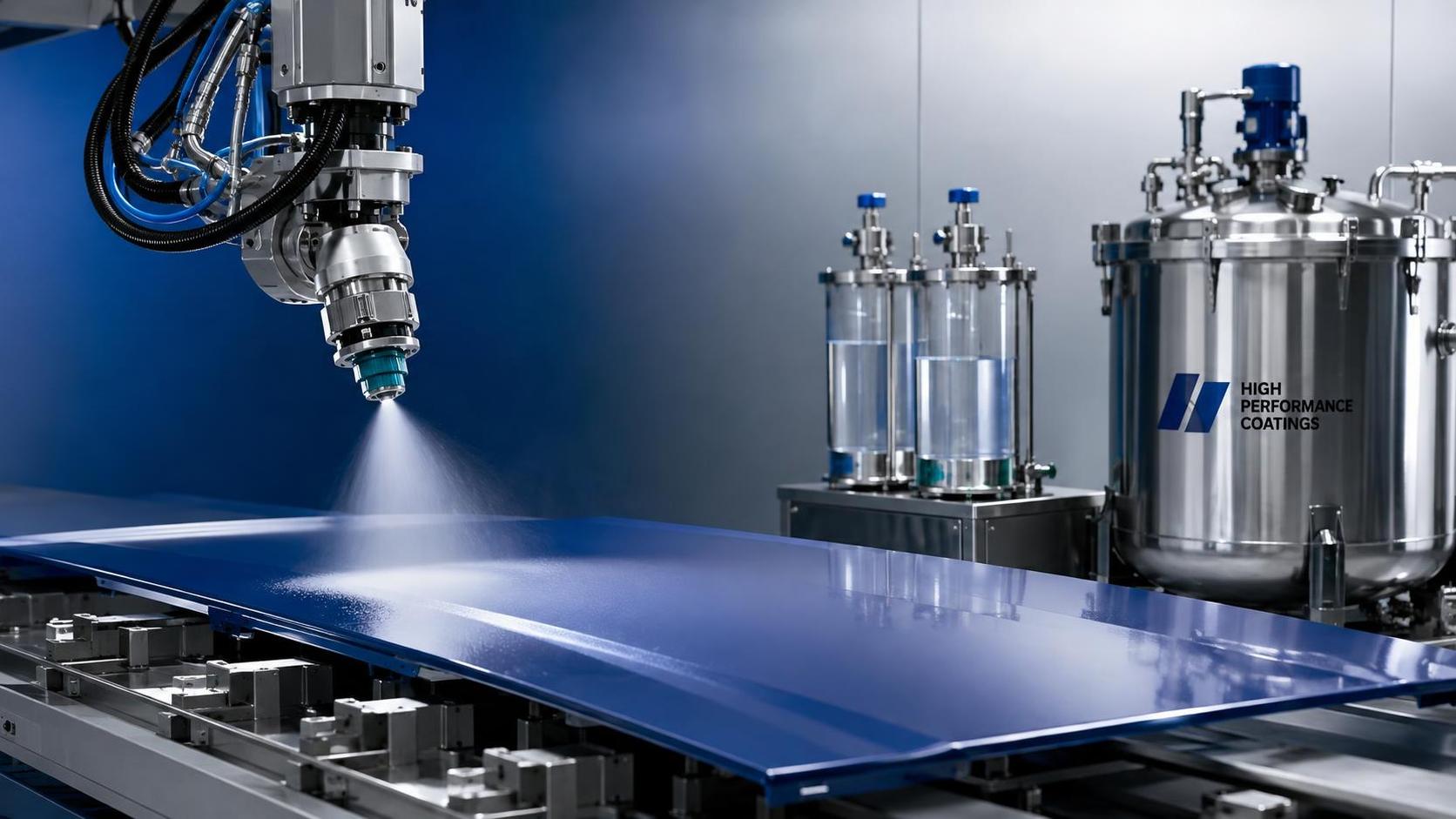
Diethylene Glycol Monoethyl Ether Acetate is worth considering in high-performance coatings when a project is being limited by poor flow, uneven leveling, dry-spray texture, or an application window that closes too quickly. It is most useful as part of a solvent blend, where its relatively slow evaporation and broad resin compatibility can support film formation without forcing the entire system toward an excessively slow dry.
For an engineering or project lead, the decision should not begin with the question, “Can this solvent improve appearance?” It usually can in the right formulation. The more practical question is whether the coating system, application method, drying conditions, and production schedule can accommodate the evaporation profile it introduces. A solvent that improves leveling in the spray booth may create blocking, extended flash-off, or curing variability if the line has insufficient time or temperature control downstream.
Where it can add value in a coating system
High-performance coatings often need to deliver several properties at once: a smooth surface, reliable wetting of the substrate, stable viscosity during application, adequate sag resistance, and predictable film build. These requirements can conflict. Faster solvents can help a coating reach handling strength sooner, but they may leave insufficient time for brush marks, spray pattern variation, entrained air, or surface texture to level out. Very slow solvents can improve open time but may delay the process beyond what the production line can accept.
Diethylene Glycol Monoethyl Ether Acetate can be useful in this middle ground as a higher-boiling, slower-evaporating component of the solvent package. In resin systems that accept it, it can help maintain a workable wet edge and reduce premature surface drying. That may be relevant for industrial spray applications, large fabricated parts, architectural metalwork, wood coatings, maintenance coatings, and other jobs where operators need a more forgiving application window.
Its role is usually more specific than simply “making the coating thinner.” A well-designed solvent package uses different evaporation rates and solvency strengths to control how the coating behaves from mixing through cure. The slower fraction should remain long enough to support leveling and resin flow, while the faster fraction must leave early enough to prevent excessive solvent retention. Using Diethylene Glycol Monoethyl Ether Acetate without considering the full blend can shift a problem rather than solve it.
Start with the failure mode, not the solvent name
Projects often introduce a slow solvent after seeing orange peel, dry spray, pinholes, cratering, or poor gloss. Those symptoms do not always have the same cause. Orange peel may result from atomization, viscosity, film thickness, substrate temperature, or a solvent balance that is too fast. Cratering can point to contamination, surface energy differences, or incompatible additives. Pinholes may come from trapped air, rapid skinning, moisture, or excessive wet film thickness.
Before changing the solvent blend, define when and where the defect occurs:
- Does the coating appear rough immediately after application, or only after baking or ambient cure?
- Is the defect limited to one substrate, one color, one resin grade, or one application line?
- Has ambient temperature, humidity, airflow, nozzle setup, or film build changed?
- Does the issue worsen at the edges, on vertical sections, or in areas with limited oven circulation?
- Are viscosity adjustments being made repeatedly during a shift?
This short review prevents a common mistake: treating every appearance defect as evidence that the coating needs a slower solvent. If the primary issue is poor atomization or silicone contamination, increasing the slow-solvent fraction may reduce throughput while leaving the underlying defect unresolved.
Balance leveling against flash-off and cure
The main trade-off is straightforward. A slower solvent component can improve flow and reduce dry-spray risk, but it also raises the possibility of solvent remaining in the film longer than intended. The consequences depend on the coating chemistry and cure route. In ambient-cure systems, retained solvent may extend dry-to-handle time or increase sensitivity to dust and imprinting. In baked systems, insufficient flash-off can contribute to bubbling, popping, uneven gloss, or variations in film appearance after the oven.
For this reason, evaluation should cover more than a drawdown panel. A laboratory panel may show excellent leveling under controlled conditions while production parts reveal issues caused by spray geometry, higher wet-film thickness, conveyor speed, or oven loading. A useful trial should reproduce the intended application method and measure the properties that matter to the project: viscosity stability, application feel, sag, appearance after cure, adhesion, hardness development, solvent resistance where relevant, and time to handling or packaging.
It is also important to review the solvent package against the resin supplier’s formulation guidance. Compatibility depends on the complete system, including binders, pigments, dispersants, flow additives, crosslinkers, and any co-solvents already in use. A solvent can be compatible with the main resin yet still alter pigment dispersion, additive effectiveness, or crosslinking behavior at the selected dosage.
How to run a practical formulation trial
For a project moving from development to line validation, a staged comparison is more informative than a single replacement. Keep the resin, pigment loading, additives, solids target, and application settings fixed. Then compare a control formula with incremental changes to the slow-solvent portion of the blend. The purpose is to identify the point at which appearance improves without creating an unacceptable drying or curing penalty.
Document ambient conditions and actual wet-film thickness during the trial. These two variables often explain why a formulation performs differently between seasons, shifts, or facilities. The same blend can behave acceptably in a controlled booth and become slow or defect-prone when temperature falls, humidity changes, or airflow is reduced.
Procurement controls matter as much as formulation controls
A coating project can be disrupted by solvent variation even when the product name on the drum remains unchanged. Before approving a material for a critical formulation, align purchasing, quality, and production teams on the specification to be controlled. Purity, water content, color, acidity, and non-volatile residue can all be relevant depending on the sensitivity of the coating system. The required specification should come from formulation and quality requirements rather than from a generic commercial description.
Confirm the packaging format, lot traceability, storage conditions, and lead time needed for the production plan. For projects with extended qualification cycles, retain reference samples from approved lots so that later appearance changes can be investigated against a known baseline. Receiving checks should also be designed around the risks of the formulation; a clear appearance inspection alone may not identify moisture uptake or contamination that affects curing.
Solvent selection should remain application-specific. For example, N,N-Dimethylformamide (DMF) is a high-solvency industrial solvent used in several chemical and polymer-related processes, but it should not be treated as a direct substitute for a coating flow and leveling solvent. Its suitability depends on the resin system, process requirements, exposure controls, and applicable regulatory obligations.
Build safety and compliance review into the approval process
Performance testing does not replace an environmental, health, and safety assessment. Glycol ether derivatives can be subject to hazard classification, workplace exposure requirements, customer restrictions, or market-specific chemical controls. The applicable safety data sheet, local regulatory requirements, customer specifications, ventilation capacity, protective equipment, storage rules, and waste handling procedures should be reviewed before scale-up.
This review is particularly important when a formulation is transferred across regions or supplied into tightly controlled downstream sectors. A solvent acceptable for one facility or market may require additional review in another. Project managers should ensure that regulatory review happens early enough that a promising laboratory result does not become a late-stage qualification issue.
Used carefully, Diethylene Glycol Monoethyl Ether Acetate can give high-performance coatings more time to flow, level, and form a consistent film. Its value is highest when it is selected as part of a controlled solvent strategy, validated under realistic line conditions, and supported by specifications that keep material quality and supply continuity aligned with the coating’s performance requirements.
Leave A Message
If you are interested in our products and want to know more details, please leave a message here, we will reply you as soon as we can.