





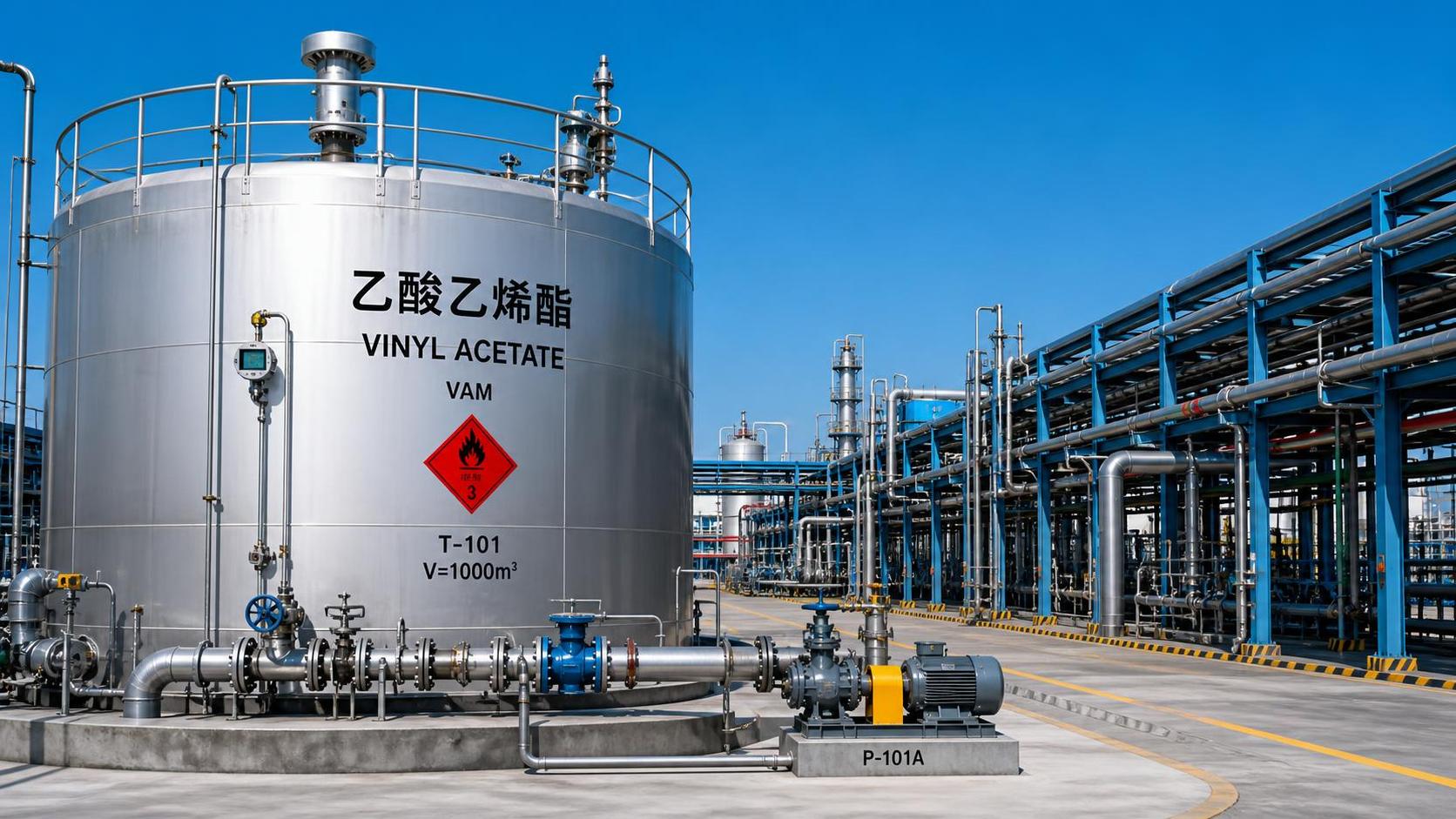
Vinyl Acetate Storage and Handling Factors That Protect Emulsion Polymer Quality
Vinyl Acetate storage and handling directly influence emulsion polymer quality, workplace safety, and production consistency. For quality control and safety managers, understanding key risks such as temperature exposure, inhibitor depletion, contamination, and improper transfer practices is essential.
This guide outlines practical factors that help maintain Vinyl Acetate stability from delivery through use, supporting reliable polymer performance and safer chemical operations.
Why Storage Control Has a Direct Effect on Polymer Quality
Vinyl Acetate monomer is not simply an incoming raw material to be stored until production needs it. Its condition can change during transport, tank storage, sampling, and transfer.
For emulsion polymer production, even small changes in monomer quality may affect reaction rate, particle-size distribution, conversion efficiency, viscosity, color, odor, and finished-product stability.
The central quality-control question is whether the material remains chemically stable, clean, sufficiently inhibited, and within the approved process specification before charging the reactor.
Unexpected polymerization is the most serious storage-related risk. It can create heat, pressure, deposits, blocked transfer lines, reduced usable volume, and a material quality deviation.
Safety managers should view monomer stability as both a process-quality issue and a loss-of-containment prevention measure. Controls that protect quality often reduce operational risk simultaneously.
A strong management approach starts with defined acceptance criteria, verified storage conditions, clear inventory rotation, and documented actions when temperature, inhibitor, or appearance limits are exceeded.
Temperature Is the First Condition to Monitor Closely
Temperature is one of the most important Vinyl Acetate storage and handling factors because elevated temperatures accelerate inhibitor consumption and increase the likelihood of self-polymerization.
Storage tanks should be protected from direct solar exposure, nearby heat sources, steam lines, and poorly ventilated locations that can retain heat during warm weather.
Temperature monitoring should be continuous for bulk tanks whenever practical. Recorded trend data is more useful than occasional manual readings because it reveals gradual heating before an alarm condition develops.
Quality and safety teams should establish normal operating ranges, alert thresholds, escalation thresholds, and clear instructions for production, maintenance, warehouse, and emergency-response personnel.
A sudden temperature increase requires investigation before the material is transferred. Potential causes include chemical reaction, contamination, pump friction, external heat exposure, instrumentation failure, or restricted circulation.
Do not rely on a single temperature reading when evaluating a concern. Compare tank temperature, ambient temperature, recent delivery conditions, inventory age, and the historical temperature profile.
Inhibitor Protection Must Be Managed as a Quality Parameter
Vinyl Acetate is commonly supplied with an inhibitor to reduce the risk of polymerization during storage and transportation. The inhibitor level should remain within the supplier-approved specification.
Inhibitor performance can be affected by temperature, storage duration, oxygen conditions, contamination, and previous handling practices. It should never be assumed that original certification remains sufficient indefinitely.
Incoming inspection should verify the certificate of analysis, inhibitor information, batch identity, packaging condition, delivery temperature, and shelf-life or recommended storage-period requirements.
For long-term storage, establish a retesting schedule based on supplier guidance, site experience, seasonal temperature conditions, and the consequences of a failed reactor charge.
Before adding inhibitor, changing concentration, or blending lots, obtain technical guidance from the product supplier or a qualified chemical specialist. Incorrect treatment can create process or compliance problems.
Operational teams should also understand that inhibitor control does not replace temperature control. A properly inhibited monomer can still become hazardous when exposed to unfavorable storage conditions.
Prevent Contamination During Sampling, Transfer, and Tank Use
Contamination is a frequent cause of unexplained polymerization behavior and variable emulsion polymer performance. Water, oxidizers, acids, alkalis, metal residues, previous cargoes, and cleaning chemicals require careful control.
Dedicated tanks, transfer hoses, pumps, fittings, and sampling equipment are preferred where production volume justifies them. Shared equipment requires documented cleaning, inspection, and line-clearance procedures.
Sampling tools must be clean, dry, compatible, and correctly labeled. Samples should be taken using approved procedures that limit exposure, prevent contamination, and preserve representative material quality.
Return unused samples only when site procedures specifically allow it. In many operations, returning sampled material to the main tank introduces an unnecessary contamination pathway.
Tank cleaning should be planned carefully because residual moisture or cleaning-agent traces can affect the next Vinyl Acetate delivery. Cleaning verification should include drying and compatibility confirmation.
Transfer line dead legs deserve particular attention. Stagnant monomer may age differently from bulk inventory, lose inhibitor effectiveness, form deposits, or contaminate the next production batch.
Control Oxygen and Tank Atmosphere Without Creating New Risks
Tank atmosphere management should follow the supplier safety data sheet, plant engineering standards, and local regulatory requirements. The selected method must support inhibitor performance and safe vapor control.
Some monomer inhibitors require oxygen to function effectively. Excessive inerting without technical review may reduce stabilization performance and create a false sense of protection.
At the same time, uncontrolled air ingress can increase vapor emissions, moisture entry, and flammability concerns. The appropriate balance depends on the inhibitor system and storage design.
Quality managers should confirm that vent systems, flame-arresting devices, pressure-vacuum controls, and emission-control equipment are maintained and suitable for the intended operating conditions.
Any change involving nitrogen blanketing, vent routing, tank pressure settings, or vapor recovery should be assessed through management-of-change procedures before implementation.
Records should identify the tank atmosphere strategy, responsible department, inspection frequency, alarm response, and technical basis. This prevents different shifts from using inconsistent assumptions.
Use Inventory Rotation to Avoid Age-Related Quality Risk
First-in, first-out inventory control is essential for Vinyl Acetate because extended storage can increase exposure to heat cycles, inhibitor depletion, contamination opportunities, and physical handling errors.
Each tank, drum, or intermediate container should be traceable by supplier, batch number, receipt date, test status, storage location, and approved use-by date.
Warehouse personnel need simple visual identification of material status. Labels should clearly distinguish released, quarantined, sampled, retest-required, expired, and nonconforming inventory.
Bulk-storage systems should avoid combining old residual material with new deliveries without review. A small aged heel can influence the condition of a much larger incoming volume.
When inventory age approaches the approved limit, quality personnel should decide whether retesting, priority consumption, supplier consultation, or controlled disposal is appropriate.
This approach reduces avoidable production uncertainty and helps purchasing teams balance supply security with realistic storage capacity rather than over-ordering sensitive monomer inventory.
Transfer Practices Can Protect Both People and Product
Before unloading or transferring Vinyl Acetate, operators should verify the receiving tank identity, available capacity, line alignment, grounding arrangements, material compatibility, and current tank temperature.
Transfer procedures should include positive confirmation between logistics, warehouse, production, and quality teams. Misrouting a monomer into an incompatible tank can rapidly become a major incident.
Because the material is flammable, static-control measures are necessary. Bonding and grounding requirements should be applied consistently to tanks, trucks, pumps, hoses, and portable containers.
Pump selection and operating conditions also matter. Excessive recirculation, mechanical friction, restricted flow, or a dry-running pump can introduce heat and compromise safe handling conditions.
Operators should inspect hoses and connections for leaks, discoloration, swelling, deposits, and damaged fittings before use. Temporary repairs should not substitute for compatible equipment maintenance.
Related monomers may require similar discipline. For example, Styrene also requires inhibitor-aware storage, controlled temperatures, and careful management of polymerization hazards.
Define Release Tests That Reflect Actual Emulsion Polymer Needs
Certificate review alone is not always enough before production use. The release plan should reflect the sensitivity of the emulsion polymer formulation and the risks associated with storage duration.
Typical checks may include appearance, color, water content, inhibitor concentration, purity, acidity, and any customer-specific parameters that influence polymerization behavior or final-product performance.
Testing frequency should increase after abnormal temperature exposure, extended storage, transfer incidents, equipment maintenance, suspected contamination, or deviations in previous polymer batches.
Quality teams should trend incoming and pre-use results by supplier, lot, storage duration, season, tank, and finished-polymer performance. Trends often reveal issues before specifications are exceeded.
When a result is questionable, isolate the material and avoid informal production trials. A structured investigation is usually less costly than contaminating a reactor, line, or finished-goods inventory.
Supplier communication is most effective when supported by facts. Share batch details, storage history, analytical results, photographs, temperature data, and observed process effects.
Build Clear Responsibilities and Emergency Readiness
Reliable storage depends on coordinated responsibilities. Procurement confirms approved sources, quality controls release status, operations manage transfers, maintenance protects equipment integrity, and safety governs risk controls.
Written procedures should define who can authorize use after a deviation. This avoids pressure-driven decisions when production schedules conflict with incomplete quality evidence.
Emergency planning should address spills, vapor releases, fire exposure, tank overpressure, abnormal temperature rise, and suspected polymerization. Personnel need practical escalation instructions, not only general statements.
Drills should test communication between site teams and external logistics providers. Delivery drivers and contractors must understand site-specific unloading rules, emergency contacts, and prohibited actions.
Periodic audits should verify that actual practices match written procedures. Focus on temperature logs, inventory records, sampling discipline, line identification, emergency equipment, and overdue corrective actions.
Stable monomer management is achieved through routine execution, not isolated inspections. Consistency across shifts and locations is what protects polymer quality over time.
Conclusion: Treat Vinyl Acetate Stability as a Controlled Process
For quality control and safety managers, effective Vinyl Acetate storage is a practical way to protect emulsion polymer consistency, reduce incident potential, and prevent avoidable raw-material losses.
The highest-value controls are straightforward: manage temperature, maintain inhibitor protection, prevent contamination, rotate inventory, verify transfer conditions, and retest material when storage history creates uncertainty.
A reliable chemical supply partner also supports these controls through traceable sourcing, complete documentation, stable product quality, and delivery practices aligned with site handling requirements.
When these factors are managed as one connected system, teams can make better release decisions, protect reactor performance, and maintain safer, more predictable chemical operations.
Leave A Message
If you are interested in our products and want to know more details, please leave a message here, we will reply you as soon as we can.