





Why Glacial Acetic Acid prices can shift faster than many budgets expect
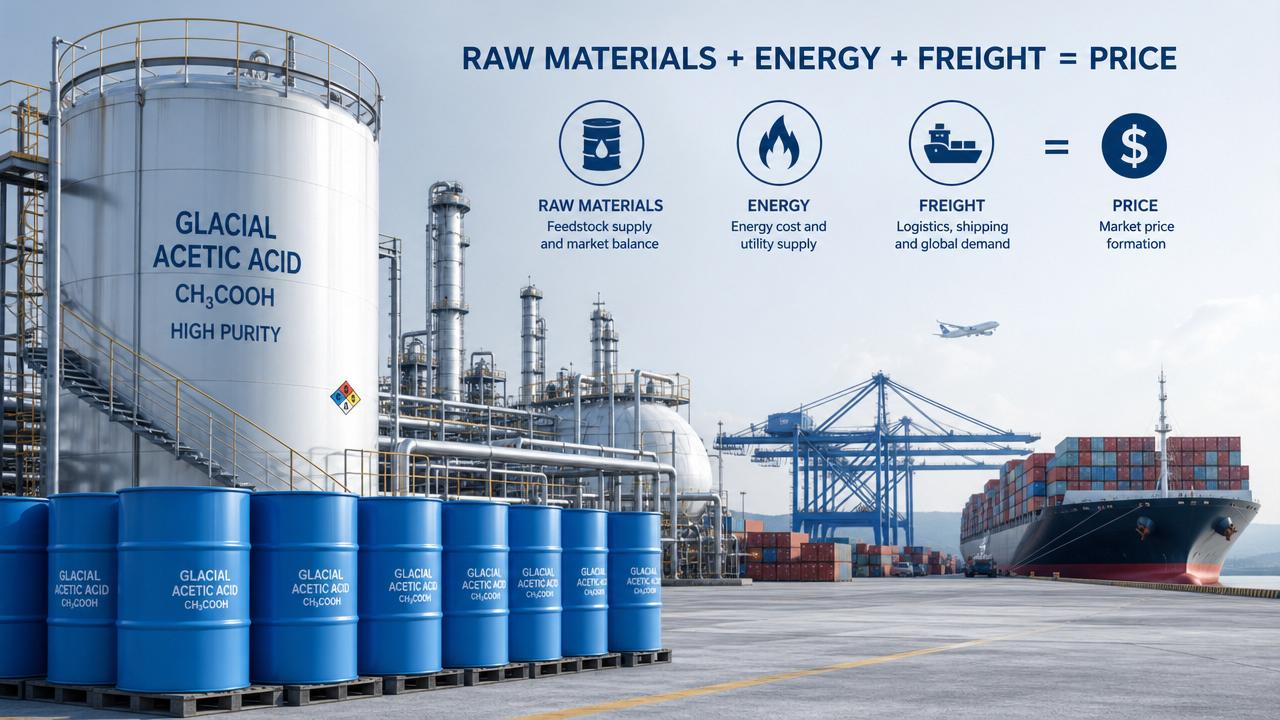
Glacial Acetic Acid pricing rarely moves for one reason alone. In practice, feedstock costs, utility rates, plant operating conditions, and freight all interact at the same time.
That matters when quarterly budgets assume stable replacement costs. A small upstream change can quickly widen delivered price differences across regions, contract terms, and shipment sizes.
In chemical trading, the useful question is not only whether Glacial Acetic Acid is rising or falling. The better question is which cost driver is moving, and how long that move may last.
Companies with diversified end uses often feel this differently. Pharmaceutical, adhesive, wastewater, agrochemical, and plastics applications do not all react to price swings in the same way.
Actual buying conditions change the pricing logic
Glacial Acetic Acid is commonly linked to methanol and carbonylation economics. Yet delivered cost depends on more than upstream chemistry.
A domestic short-haul order may be influenced most by plant supply and trucking. An export lot may be driven more by container availability, port congestion, and currency timing.
This is why two buyers can discuss the same market and still face different numbers. The material is identical, but the procurement scenario is not.
With a supply chain model like Shandong JunTeng Chemical, source access and logistics coordination can reduce these gaps, especially when stable supplier relationships support continuity.
When feedstock costs become the main driver
The first signal usually comes from methanol. If methanol rises on natural gas, coal, or supply disruptions, Glacial Acetic Acid producers often face tighter conversion margins.
Carbon monoxide and catalyst-related operating economics also matter. Even when feedstock changes look modest, they can reshape producer willingness to hold or cut offers.
In short-cycle purchasing, this often appears as rapid quotation updates. In annual planning, it shows up as variance between budgeted and actual procurement cost.
When energy volatility matters more than expected
Acetic acid production is energy sensitive. Electricity, steam, and fuel costs affect plant economics, especially when regional power policy or seasonal energy demand becomes unstable.
This is more noticeable during peak summer power pressure or winter fuel tightening. Producers may maintain output, but pricing flexibility often becomes narrower.
Energy costs also influence downstream materials. In polymer applications, processors sometimes review additive systems together with acid-related cost pressure, including products such as Antioxidant JHSANOX-215/225/220/561 for thermal stability balance.
Different business scenarios focus on different Glacial Acetic Acid risks
The same market movement does not create the same risk in every operation. What matters depends on inventory rhythm, quality sensitivity, and transport distance.
A useful habit is separating market price from delivered price. Many internal reports track only headline acetic acid numbers, while real spend changes through logistics and execution costs.
Freight often becomes the hidden factor in delivered Glacial Acetic Acid cost
Freight is easy to underestimate when the market discussion centers on feedstocks. However, transport swings can erase the benefit of a favorable ex-works offer.
For domestic movement, hazardous chemical transport rules, route availability, and turnaround speed can change truck rates quickly. This becomes more visible during peak demand periods.
For cross-border business, freight can become the leading variable. Port waiting time, vessel schedule changes, and container shortages may delay cargo and distort landed cost calculations.
That is why experienced traders build procurement around both source quality and movement efficiency. Strong supplier ties mean less if delivery timing cannot be protected.
Where misjudgments usually happen
- Watching methanol only, while ignoring plant maintenance and regional inventory.
- Comparing suppliers on unit price, but not on lead time and batch stability.
- Assuming all freight surcharges are temporary, even when route constraints remain structural.
- Treating similar end uses as identical, despite very different purity or documentation requirements.
A more practical way to judge Glacial Acetic Acid purchasing windows
In real operations, timing decisions should combine upstream indicators with usage patterns. Fast-moving consumption usually benefits from shorter review cycles and clearer replenishment triggers.
Where quality continuity matters, source reliability may outweigh a small price gap. Long-term cooperation with established producers can reduce hidden loss from requalification or delayed use.
This approach fits broad chemical portfolios. A supplier network covering petrochemicals, pharmaceuticals, plastics, detergents, and construction chemicals can respond more flexibly when acetic acid conditions tighten.
Even adjacent materials deserve coordinated review. In polymer processing, for example, additive packages such as JHSANOX-215, JHSANOX-225, JHSANOX-220, or JHSANOX-561 may be evaluated alongside resin and acid-related cost pressure.
Before the next order, focus on the drivers that match your situation
Glacial Acetic Acid prices are shaped by feedstock trends, energy economics, operating rates, and freight execution. The important point is identifying which factor dominates your next purchasing cycle.
A practical next step is to map actual consumption rhythm, delivery distance, specification sensitivity, and acceptable inventory cover. That creates a clearer basis for quote comparison.
It also helps to review landed cost rather than invoice price alone, then confirm source stability, logistics readiness, and replacement risk before committing volume.
When these checks are built into routine sourcing, Glacial Acetic Acid budgeting becomes less reactive and far more predictable.
Leave A Message
If you are interested in our products and want to know more details, please leave a message here, we will reply you as soon as we can.