





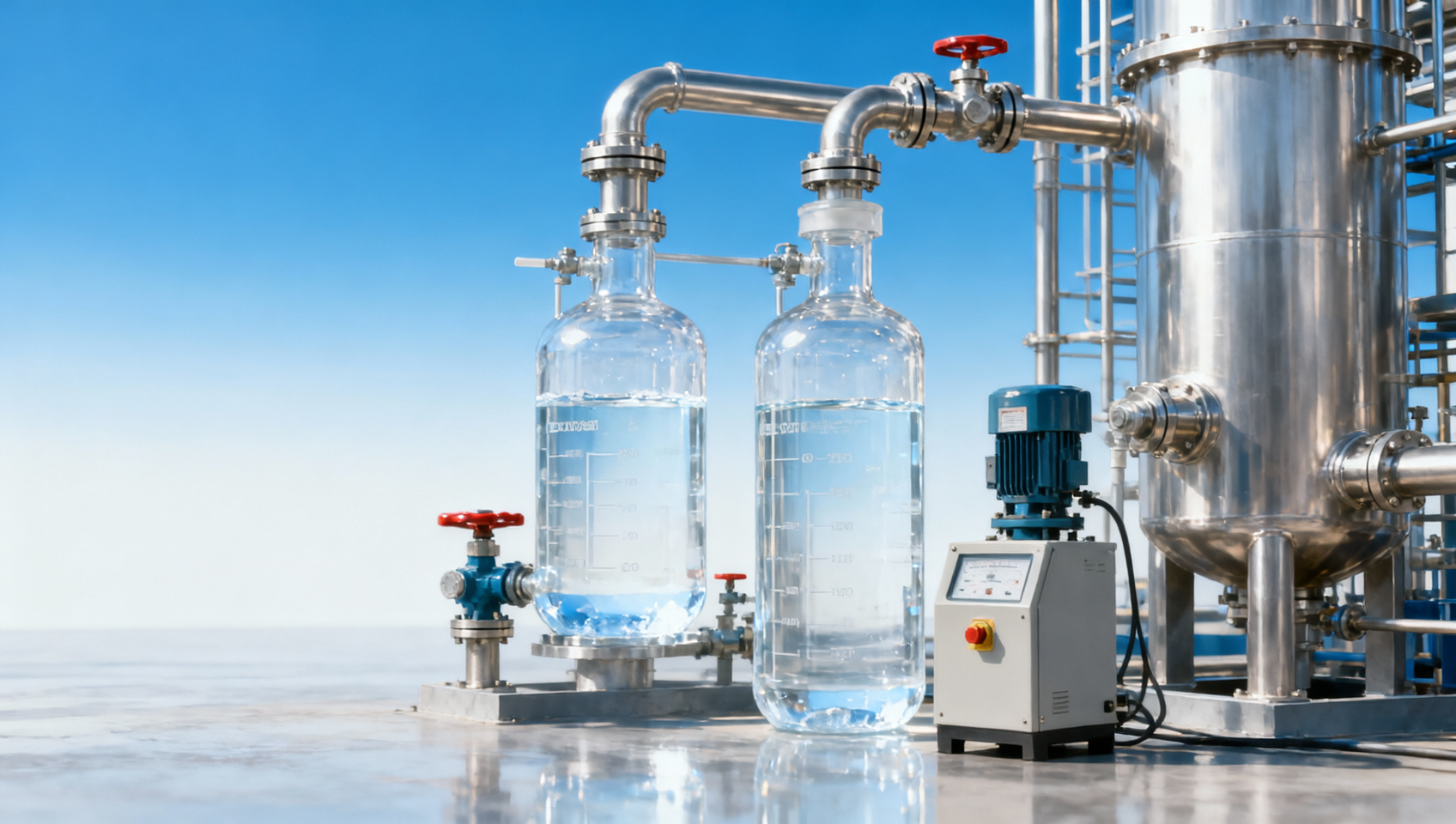
What Glacial Acetic Acid Means in Real Production Settings
Glacial Acetic Acid is the nearly water-free form of acetic acid, usually around 99% or higher concentration.
Diluted acetic acid contains a lower percentage of acetic acid mixed with water for easier handling or direct process use.
The difference sounds simple, but in actual chemical operations it affects reactivity, dosing accuracy, storage, transport, corrosion behavior, and safety control.
That is why Glacial Acetic Acid is not chosen only by price or concentration. It must match the process condition, downstream standard, and site capability.
In supply-driven industries, stable sourcing also matters. Consistent quality and timely delivery reduce process variation, especially where acid purity directly affects batch results.
Why the Same Acid Is Judged Differently Across Applications
Different industries do not use acetic acid in the same way.
Some need Glacial Acetic Acid as a reaction raw material, where water content can interfere with conversion, selectivity, or intermediate stability.
Others use diluted acetic acid for pH adjustment, cleaning, neutralization, or blending, where convenience may matter more than absolute concentration.
A pharmaceutical synthesis line, for example, may care about trace impurities and moisture.
A wastewater treatment process often focuses more on dosing control, compatibility, and operator safety.
This is where an experienced chemical trading partner becomes useful. Supply chain stability helps ensure the selected grade remains available across repeated production cycles.
Where Glacial Acetic Acid Is Usually the Better Fit
Reaction systems that cannot tolerate extra water
In pharmaceuticals, pesticides, and fine chemicals, Glacial Acetic Acid is often chosen because water can change reaction speed or reduce yield.
When acetic acid acts as a reagent, solvent, or catalyst component, the concentration difference becomes a process issue, not just a specification detail.
Applications needing accurate formulation flexibility
Some plants prefer high-purity acid because it can be diluted on site to exact working strength.
This approach works well when multiple concentration targets are used across different batches or production lines.
Still, it only makes sense if the site has proper dilution procedures, resistant equipment, and ventilation safeguards.
Raw material systems linked to product purity
In adhesives, petrochemical intermediates, and some specialty formulations, consistent feed purity supports stable downstream performance.
A similar logic appears in personal care chemistry. Mild surfactant systems such as Lauramidopropyl Betaine rely on controlled raw material quality for stable appearance, pH behavior, and compatibility.
When Diluted Acetic Acid Makes More Practical Sense
Not every application benefits from Glacial Acetic Acid.
For cleaning, pH correction, buffering, or routine treatment steps, diluted acetic acid may be easier to handle and simpler to dose.
In these settings, the main target is often operational convenience rather than maximum concentration.
Water treatment is a common example. If the acid is only used to adjust acidity, pre-diluted material can lower handling risk and reduce on-site mixing errors.
Food-related or cleaning-related processes may also prefer a prepared concentration where the specification is tied to direct use conditions.
Different Scenarios Change the Buying Decision
A useful way to compare Glacial Acetic Acid with diluted acetic acid is to link the material choice to the actual process requirement.
Mistakes That Often Cause Trouble Later
A common mistake is treating Glacial Acetic Acid and diluted acetic acid as interchangeable because both are acetic acid.
The chemistry may be related, but the operating consequences are different.
- Choosing only by concentration, without checking whether water changes the process outcome.
- Focusing on unit price, while ignoring storage cost, dilution workload, and safety measures.
- Assuming all acid-resistant equipment performs equally well at higher concentration.
- Overlooking supply consistency when the application depends on repeatable purity.
Glacial Acetic Acid can also solidify at relatively cool temperatures, which is another point some sites overlook during storage planning.
How to Match the Right Grade to the Right Process
A practical selection process starts with four checks.
- Confirm whether water content affects reaction efficiency, stability, or final specification.
- Review storage temperature, container compatibility, and ventilation conditions.
- Compare delivered concentration with actual dosing habits on site.
- Check whether long-term supply reliability supports uninterrupted production.
Companies with broad chemical coverage across pharmaceuticals, petrochemicals, detergents, wastewater treatment, and construction chemicals usually see these differences more clearly.
With ten years in chemical trading, Shandong JunTeng Chemical combines supplier resources, logistics efficiency, and source-based quality control to support that kind of matching work.
That matters not only for Glacial Acetic Acid, but also for other formulation materials where compatibility and stability are important, including LAB-grade surfactants supplied in 200 KG drums or 1000 KG IBC packaging.
Final Judgment Should Be Process-Based, Not Name-Based
Glacial Acetic Acid is more concentrated, more reactive in certain systems, and more demanding in storage and handling.
Diluted acetic acid is often easier to use, but it may not fit moisture-sensitive or precision-driven applications.
The right choice comes from comparing process sensitivity, operating conditions, safety controls, and supply stability together.
Before finalizing a grade, it helps to map the exact use point, required concentration, equipment condition, and storage environment. That usually prevents the most expensive mistakes later.
Leave A Message
If you are interested in our products and want to know more details, please leave a message here, we will reply you as soon as we can.