





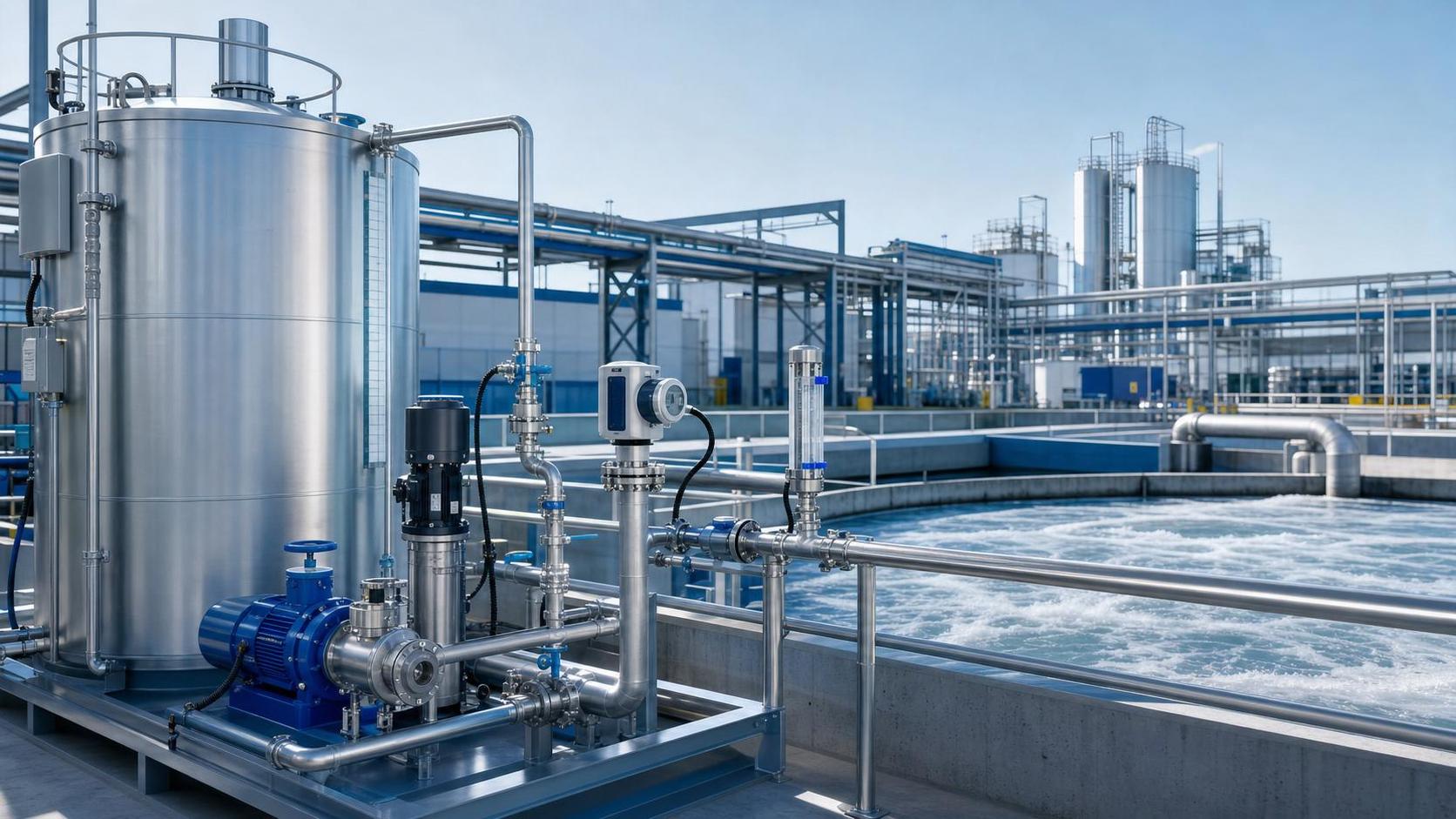
Absolute Ethanol for Wastewater Treatment Starts With Process Reality
Absolute ethanol for wastewater treatment is usually selected as an external carbon source, not a generic solvent decision.
What matters in practice is whether the dosing strategy matches the biology, hydraulics, and load fluctuation of the system.
A low unit price can still create unstable denitrification, excess sludge, or avoidable operating adjustments.
That is why absolute ethanol for wastewater treatment is often judged together with supply continuity, purity consistency, and logistics timing.
In chemical trading, those supply factors affect process stability as much as the material specification itself.
Shandong JunTeng Chemical has built its wastewater treatment business around that operating logic.
With established upstream relationships and coordinated delivery, the company supports projects that cannot afford dosing interruption or quality drift.
Different Wastewater Systems Do Not Use Ethanol the Same Way
The same absolute ethanol for wastewater treatment can behave differently across municipal, pharmaceutical, and chemical effluent systems.
The reason is simple.
Influent composition, nitrate level, residence time, and microbial condition all change the real carbon demand.
A plant with stable low-COD influent may only need fine correction.
A high-strength industrial stream may need staged feeding and tighter monitoring to prevent overreaction.
More operators now compare carbon sources by response speed, safety handling, and compatibility with existing control systems.
That wider view usually gives a more reliable basis than purity and price alone.
Where the demand pattern changes
In Stable Denitrification Loops, Precision Matters More Than Aggressive Feeding
For mature biological systems, absolute ethanol for wastewater treatment is often used to close a carbon deficit during denitrification.
Here, the key issue is not whether ethanol works, but how narrowly it can be controlled.
When influent nitrate is predictable, smaller dosing increments usually outperform heavy correction.
This reduces residual COD carryover and limits unnecessary oxygen demand downstream.
A common mistake is to size dosage from design data only.
Actual temperature shifts, sludge age, and return flow changes can move the carbon balance faster than expected.
In these systems, dependable replenishment also matters.
A delayed delivery can force abrupt source substitution and destabilize a previously balanced loop.
High-Strength Industrial Effluent Needs a Broader Compatibility Check
Absolute ethanol for wastewater treatment is also used where industrial wastewater shows nutrient imbalance or intermittent toxicity.
This is common in pharmaceutical, pesticide, petrochemical, and mixed chemical production lines.
In these cases, operators usually care less about textbook dosage ratios and more about process fit during upset conditions.
If influent swings sharply, front-end equalization and staged carbon addition often work better than one-point feeding.
The same logic applies when other treatment chemicals are already present.
For example, acid adjustment, cleaning chemistry, or synthesis residues can influence biomass response and storage safety.
In broader chemical supply programs, materials such as Formic Acid may appear in adjacent operations like cleaning products, textile dyeing, or chemical synthesis.
That does not make those products interchangeable, but it does show why chemical sourcing should be reviewed across the whole plant, not in isolation.
Useful checks before final dosing strategy
- Confirm influent nitrate and biodegradable COD trends by shift, not only monthly average.
- Review whether the tank arrangement supports contact time for denitrification.
- Check storage, transfer pumps, and fire-safety requirements for ethanol handling.
- Match delivery frequency to site consumption and buffer capacity.
What Often Gets Misjudged Before a Project Goes Live
One frequent error is treating all low-carbon systems as identical.
Two plants may show similar nitrate results while needing very different ethanol control windows.
Another error is focusing on ethanol purity while ignoring operational rhythm.
If unloading, storage turnover, and dosing calibration are weak, a good product still performs poorly.
Cost is often misread as well.
A lower purchase price may lead to more manual intervention, unstable effluent, or emergency freight later.
The better comparison is total operating fit.
That includes dosing accuracy, supply reliability, source traceability, and the ability to keep the same grade available over time.
A Practical Way to Assess Absolute Ethanol for Wastewater Treatment
A workable evaluation starts with the process, then moves to procurement.
Map where carbon deficit appears, how often load changes, and which control signals are already available onsite.
Then compare absolute ethanol for wastewater treatment against the required response speed and handling conditions.
For projects with continuous operation, source stability becomes part of process design.
JunTeng Chemical’s supply chain model is relevant here because consistent product origin, sufficient stock coordination, and timely logistics reduce avoidable process interruptions.
A sensible next step is to review actual nitrate load, storage limits, dosing equipment range, and delivery cycle together.
That approach usually gives a clearer answer on whether absolute ethanol for wastewater treatment is the right fit, and how it should be applied.
Leave A Message
If you are interested in our products and want to know more details, please leave a message here, we will reply you as soon as we can.