





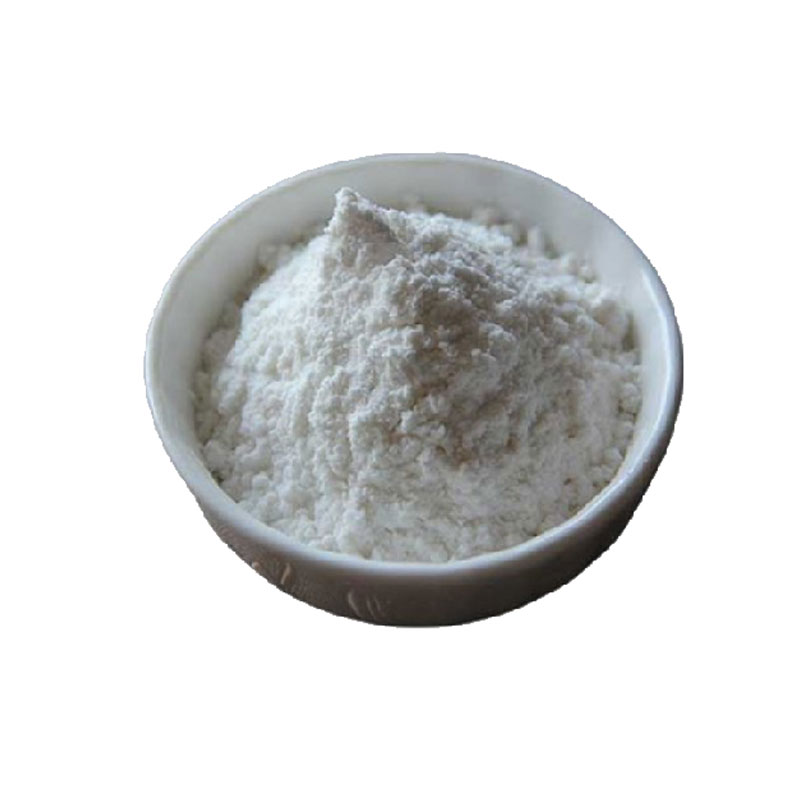
Many buyers compare calcium carbonate suppliers by checking a few line-item specs and assume the materials will behave the same in production. In practice, that assumption often leads to inconsistent processing, unstable product quality, customer complaints, or avoidable cost increases. For procurement teams, project managers, and distributors, the real issue is not whether two products look similar on paper, but whether they deliver the same performance in the actual application.
That is the core search intent behind this topic: buyers want to understand why similar calcium carbonate specifications can still produce different results, what hidden variables matter most, and how to evaluate suppliers more effectively before purchasing. The most useful answer is therefore not a generic description of calcium carbonate, but a practical guide to performance differences, purchasing risks, and evaluation criteria that support better sourcing decisions.
Why Similar Calcium Carbonate Specs Can Still Lead to Different Results
Two calcium carbonate products may appear nearly identical on a standard specification sheet. They may list similar whiteness, calcium content, mesh size, moisture, and even purity. Yet in real production, one may disperse smoothly while the other agglomerates; one may improve stiffness and surface finish while the other causes brittleness, poor gloss, or unstable processing.
This happens because a basic specification sheet often does not fully reflect the performance-driving details that matter during manufacturing and end use. In many industrial applications, especially plastics, rubber, adhesives, coatings, construction materials, and wastewater treatment systems, material behavior depends on more than headline numbers.
The gap between “spec compliance” and “application performance” is where most purchasing mistakes happen.
What Procurement Teams and Project Managers Actually Need to Check
For buyers and project leaders, the key question is simple: what factors affect output, consistency, and total cost beyond the visible specs? The answer usually includes the following:
1. Particle size distribution, not just average particle size
Many suppliers provide a nominal mesh or average micron value, but this alone is not enough. Two materials with the same average size can have very different particle size distributions. A broader distribution may affect dispersion, viscosity, packing density, opacity, reinforcement effect, and surface quality.
For example:
- In plastics, poor particle distribution may reduce mechanical consistency and processing stability.
- In coatings or sealants, it may affect smoothness, gloss, and suspension performance.
- In construction mixes, it may influence flowability, water demand, and final strength.
2. Surface treatment quality
Coated and uncoated calcium carbonate can perform very differently, especially in polymer applications. Surface treatment influences compatibility with resin systems, dispersion quality, moisture resistance, and processing efficiency.
Two products may both be labeled as coated calcium carbonate, but the actual treatment agent, coating uniformity, and treatment level may differ significantly. This is one of the most common reasons similar products deliver different performance in plastics and rubber compounding.
3. Purity and impurity profile
High calcium carbonate content is important, but the type and level of impurities can be just as important. Magnesium, iron, silica, and other trace minerals may influence color stability, wear on equipment, thermal behavior, or reactivity in sensitive formulations.
In applications requiring stable appearance, high whiteness, or controlled chemistry, impurity management matters more than many buyers initially expect.
4. Moisture control and storage stability
Moisture content affects handling, feeding, blending, and processing. In powder systems, even small moisture variations can increase caking, reduce flow, and affect downstream consistency. This is especially important for distributors and plants managing inventory across different climates or storage conditions.
5. Ore source and production process consistency
Not all calcium carbonate is produced from the same raw material source or through the same grinding and classification process. Source stability can directly affect batch-to-batch consistency. A supplier may meet the same target spec range while still delivering wider fluctuations over time.
For industrial buyers, long-term consistency is often more valuable than a slightly lower purchase price.
Performance Differences That Matter Most in Real Applications
When end users complain that one calcium carbonate “works better” than another, they are usually referring to one or more measurable performance outcomes. These include:
Processing behavior
- Dispersion speed
- Dusting tendency
- Mixer or extruder stability
- Viscosity impact
- Flow characteristics
Final product properties
- Whiteness and appearance
- Gloss or matte effect
- Tensile strength and stiffness
- Impact resistance
- Dimensional stability
- Surface smoothness
Commercial performance
- Yield stability
- Reduced reject rate
- Lower formulation adjustment frequency
- Improved customer consistency
- Better total production economics
This is why experienced sourcing teams do not evaluate calcium carbonate only by unit price. They evaluate it by cost-in-use.
Why “Cheaper per Ton” Can Be More Expensive in Practice
One of the biggest purchasing traps is selecting material based on a lower quoted price without fully evaluating performance impact. A lower-priced calcium carbonate may create hidden costs in several ways:
- Higher dosage needed to achieve the same result
- Slower processing or reduced throughput
- More machine cleaning or downtime
- Higher defect or complaint rates
- More formulation correction work
- Inventory risk from unstable quality
For project managers, this directly affects delivery schedules, line efficiency, and quality KPIs. For distributors, inconsistent product performance can damage customer trust and make repeat business harder to secure.
In short, the best buying decision is rarely based on the lowest invoice price alone. It is based on the lowest total operational risk.
How to Evaluate Calcium Carbonate More Effectively Before Purchase
If your team wants to reduce sourcing risk, a more practical evaluation method is to combine specification review with application verification.
Ask for more than the standard datasheet
In addition to routine specs, ask suppliers about:
- Particle size distribution curve
- Top cut and fine fraction control
- Surface treatment type and dosage
- Raw material origin
- Batch consistency history
- Recommended application range
- Packaging and moisture protection method
Run application-specific trial tests
Lab or pilot testing is essential if the product will be used in quality-sensitive production. Compare candidate materials under actual formulation and process conditions. Focus on measurable indicators such as dispersion, viscosity, mechanical properties, appearance, and production stability.
Evaluate supplier reliability, not only product data
A strong supplier should be able to provide:
- Stable sourcing channels
- Clear quality documentation
- Responsive technical communication
- Consistent delivery capability
- Support for large-volume or ongoing orders
For many chemical buyers, supply chain performance is as important as technical performance. A material that tests well but cannot be supplied consistently is still a risk.
What Distributors and Industrial Buyers Should Ask Suppliers Directly
To make supplier comparisons more meaningful, consider asking these practical questions:
- What application industries is this grade most commonly used in?
- How stable is the raw ore source over time?
- What are the critical control limits during production?
- How is batch-to-batch consistency monitored?
- Is this grade optimized for cost reduction, performance, or both?
- What common customer issues has this grade been designed to solve?
- Can you provide trial quantity support and technical follow-up?
These questions help uncover whether the supplier understands application value or is only selling to a general specification.
Why Supply Chain Strength Matters in Chemical Procurement
In industrial purchasing, technical suitability and supply reliability must work together. A trusted chemical trading partner can help buyers reduce sourcing uncertainty by coordinating quality assurance, supplier resources, and delivery execution across multiple products and industries.
For example, companies working across chemical raw materials often need dependable access not just to mineral fillers but also to upstream and downstream intermediates. In broader procurement planning, many buyers also source essential industrial chemicals such as Phenol, a versatile chemical intermediate used in phenolic resins, caprolactam, bisphenol A production, epoxy systems, disinfectant applications, and more. When a supplier can support both product quality and supply continuity across categories, procurement becomes more efficient and easier to scale.
Shandong JunTeng Chemical Co., Ltd., based in Jinan, Shandong Province, has built its business around this kind of supply assurance. With ten years of experience in chemical trading, a complete supply chain management system, strong supplier partnerships, and efficient logistics support, the company helps customers secure stable quality, sufficient supply, and timely delivery for a wide range of industrial applications.
The Smarter Buying Conclusion
If two calcium carbonate products look similar on paper, do not assume they will perform the same in your process. Similar specs can hide major differences in particle distribution, surface treatment, impurity profile, moisture control, raw material consistency, and batch stability. Those differences can directly affect processing efficiency, final product quality, customer satisfaction, and total cost.
For procurement personnel, project managers, and distributors, the best approach is to move beyond basic specification comparison and focus on application fit, supplier consistency, and cost-in-use. When you evaluate calcium carbonate this way, you make better sourcing decisions, reduce operational risk, and create more reliable outcomes across construction, plastics, chemical processing, and other industrial uses.
In practical terms, the right calcium carbonate is not just the one that meets the datasheet. It is the one that performs consistently where your business actually needs it.
Leave A Message
If you are interested in our products and want to know more details, please leave a message here, we will reply you as soon as we can.