





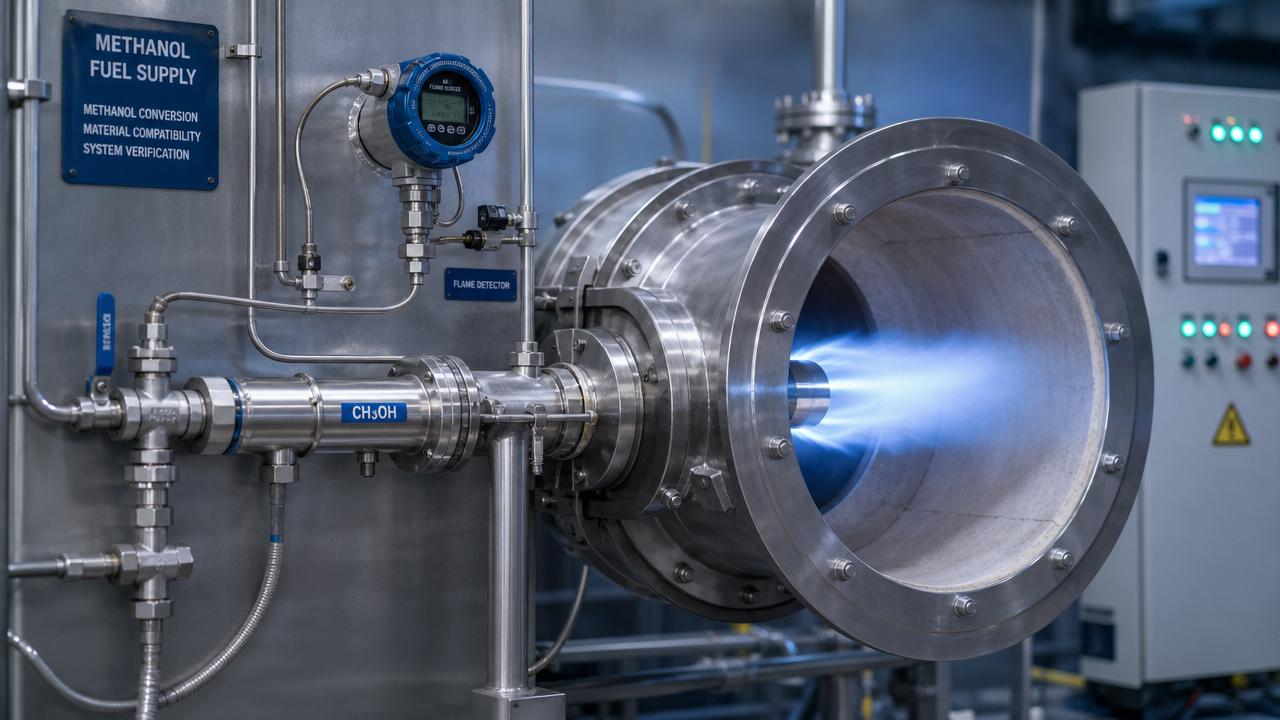
Switching an existing burner to Methanol fuel can be practical, but it is rarely a simple fuel swap. Combustion behavior, fuel properties, control settings, and material compatibility all change. In chemical processing, where uptime, safety, and emissions matter together, retrofit decisions should be based on equipment checks rather than assumptions.
Why burner conversion to Methanol fuel is getting more attention
Methanol fuel is drawing interest because it offers a cleaner-burning alternative in many thermal applications. It can support decarbonization planning, diversify energy sourcing, and fit facilities already handling liquid chemicals.
For chemical plants, boilers, thermal oxidizers, and process heaters, the appeal is not only environmental. Storage, transport, and supply chain flexibility also influence the discussion.
That said, methanol has a lower heating value than many conventional fuels. A burner designed for diesel, heavy oil, or natural gas may not deliver stable flame performance without modification.
What changes when a burner uses Methanol fuel
Methanol fuel has distinct physical and chemical properties. It burns differently, atomizes differently, and places different demands on the fuel train.
Its flame can be less luminous and harder to detect with systems tuned for hydrocarbon fuels. Ignition energy, air-fuel ratio, and flame supervision often need review.
Because methanol is polar and can attract water, sealing materials, elastomers, coatings, and some metals may degrade faster than expected. This is where many retrofit risks begin.
A quick comparison framework
Key retrofit points to check before conversion
1. Burner head, nozzle, and spray pattern
Start with combustion hardware. Existing nozzles may not provide suitable droplet size or distribution for Methanol fuel. Poor atomization can reduce efficiency and increase unburned losses.
Check burner turndown range as well. A retrofit that works at full load may become unstable at low load.
2. Pumping, piping, and seal materials
Material compatibility should be verified item by item. Tanks, pumps, valves, flexible hoses, seals, and sight glasses may all respond differently to Methanol fuel.
Common retrofit reviews include stainless steel selection, gasket replacement, and contamination control. Water ingress deserves special attention because it changes combustion consistency.
3. Ignition and flame detection
Methanol flames can be less visible than oil flames. That affects flame scanners, UV sensors, and safety shutdown logic.
Reliable ignition trials should confirm startup response, flame stability, and safe cutoff under abnormal conditions.
4. Air-fuel ratio and control logic
A burner can use Methanol fuel only if control tuning is updated for the new stoichiometric and thermal profile. Legacy settings often cause excess air or incomplete combustion.
Review flow meters, control valves, oxygen trim, and combustion management logic together. Isolated adjustments rarely deliver stable performance.
Performance, emissions, and maintenance implications
In many cases, Methanol fuel can help reduce soot and some particulate concerns. However, actual emissions outcomes depend on burner design, excess air, residence time, and process temperature.
Thermal efficiency should be evaluated on a system basis, not by fuel price alone. Lower volumetric energy density may require higher flow rates, larger nozzles, or different storage planning.
Maintenance patterns may also change. Some facilities see cleaner combustion surfaces, while others face more frequent seal inspection, moisture management, and calibration checks.
Why supply quality matters as much as retrofit design
A technically sound retrofit can still underperform if fuel quality varies. Methanol fuel projects need stable sourcing, traceable specifications, and logistics that protect purity during transport and storage.
This is especially relevant in chemical trading environments. Shandong JunTeng Chemical Co., Ltd., based in Jinan, supports customers through established supplier networks, source-verified products, and organized delivery coordination.
That broader supply capability matters when plants handle multiple chemicals, not only fuels. For example, oxidation-related process materials such as Sodium persulfate are often selected with the same focus on purity, storage stability, and application fit.
With content of at least 99.0%, active oxygen of at least 6.65%, and a white crystalline powder form, it is used across environmental remediation, polymerization, metal treatment, textiles, and chemical synthesis.
A practical evaluation path before committing
A useful retrofit review usually combines document checks, hardware inspection, and controlled testing. The goal is to confirm whether the burner can use Methanol fuel safely across the full operating range.
- Verify burner model limits and original fuel design basis.
- Review methanol specification, water content, and storage conditions.
- Check nozzle sizing, pump capacity, and recirculation arrangement.
- Confirm gasket, seal, hose, and valve compatibility.
- Retune combustion controls and validate emissions performance.
- Run startup, low-load, full-load, and shutdown safety tests.
If several checkpoints remain uncertain, a pilot retrofit or burner bench test is usually more informative than a paper review alone. That approach reduces risk before wider rollout.
The best next step is to map existing burner data against fuel properties, control limits, and material compatibility. Once those three areas align, the case for Methanol fuel becomes much clearer.
Leave A Message
If you are interested in our products and want to know more details, please leave a message here, we will reply you as soon as we can.