





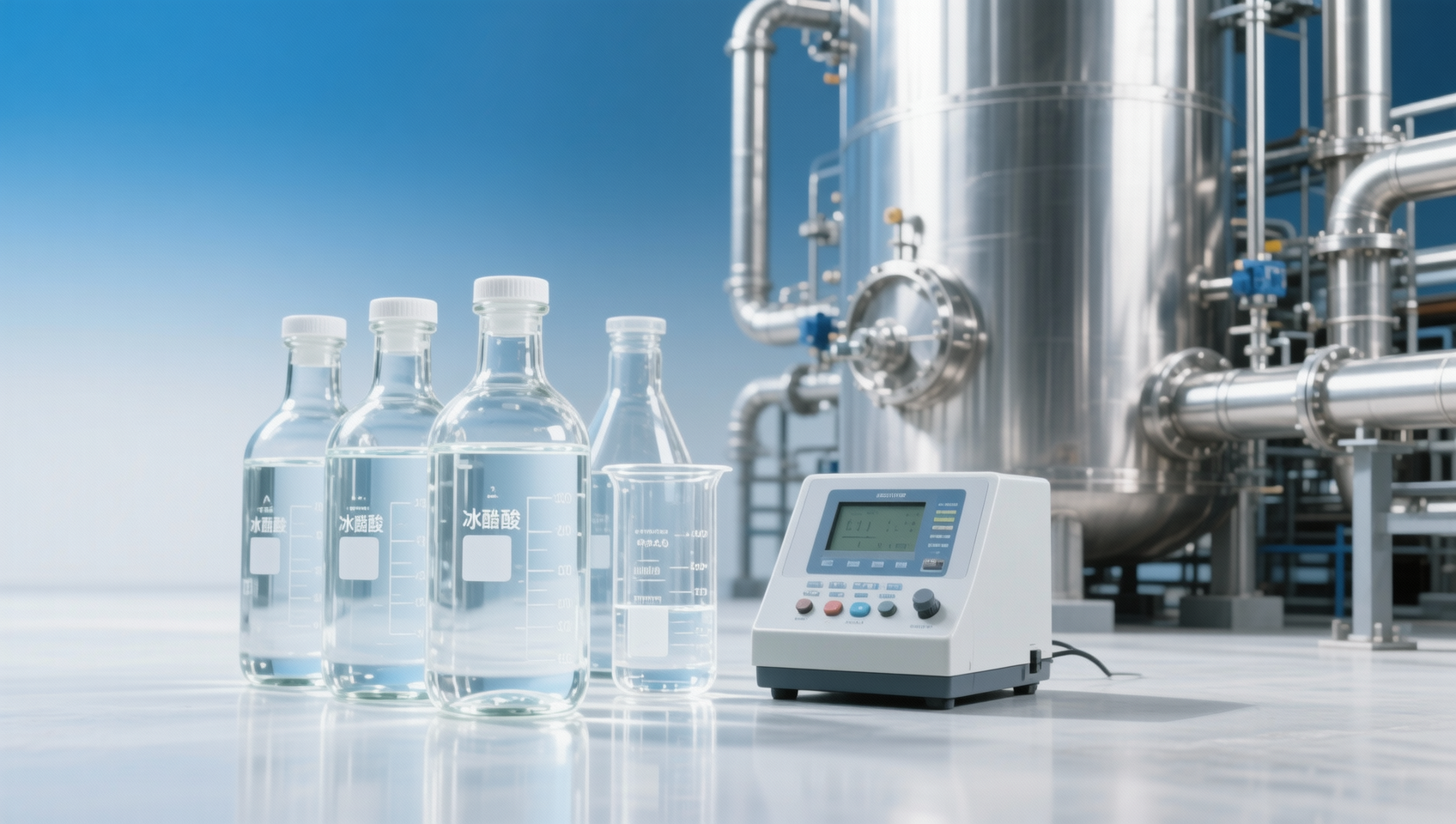
When evaluating Glacial Acetic Acid for industrial use, understanding key specifications such as purity, color, and water content is essential for consistent performance and compliance. For technical assessment teams, these indicators directly affect process stability, product quality, and application suitability across pharmaceuticals, petrochemicals, adhesives, and more.
In practical procurement and plant qualification work, Glacial Acetic Acid is rarely assessed by price alone. Technical teams usually compare at least 4 dimensions: chemical purity, impurity profile, storage and transport stability, and supplier consistency across multiple batches.
For buyers serving regulated or performance-sensitive sectors, even small deviations in color or water content can change reaction yield, solvent balance, or downstream product appearance. A clear specification review helps reduce rework, batch rejection, and avoidable process adjustments.
Shandong JunTeng Chemical Co., Ltd., based in Jinan, Shandong Province, supports industrial customers with one-stop chemical sourcing backed by 10 years of trading experience, stable upstream partnerships, and an efficient logistics network designed for timely and dependable delivery.
Why Core Specifications Matter in Glacial Acetic Acid Evaluation
Glacial Acetic Acid is commonly specified at high concentration, often 99.5% or above, for industrial and technical applications. However, a single assay number does not fully describe material suitability. Technical assessment requires reviewing how purity, color, and moisture interact with the intended process.
Purity: More Than a Pass-or-Fail Number
Purity is the first screening point because it directly affects stoichiometric accuracy, solvent strength, and by-product control. In esterification, pharmaceutical intermediates, and specialty synthesis, the difference between 99.0% and 99.8% can influence catalyst behavior, residence time, and post-treatment load.
For technical teams, the key question is not only whether the assay meets a minimum threshold, but whether the supplier can maintain that range over 3, 6, or 12 consecutive shipments. Batch-to-batch consistency is often more important than an isolated high-value certificate.
Typical technical concerns linked to purity
- Reaction selectivity in fine chemicals and intermediates
- Residual impurity accumulation in closed-loop production systems
- Higher distillation or purification cost when off-spec material is introduced
- Increased validation burden in regulated manufacturing environments
Color: A Fast Indicator of Material Condition
Color is often treated as a secondary parameter, yet it provides useful information during incoming inspection. For Glacial Acetic Acid, a low color value generally supports cleaner formulation performance, especially in adhesives, coatings, pharmaceuticals, and food-related process chains where appearance or purity perception matters.
A color increase may indicate contamination, oxidation, poor storage history, or variation in manufacturing control. While some heavy-process applications can tolerate broader appearance ranges, high-value applications often prefer stricter incoming standards to reduce formulation risk.
Water Content: A Critical Variable in Moisture-Sensitive Systems
Water content is one of the most important hidden cost factors in Glacial Acetic Acid selection. Even a small moisture increase can shift equilibrium in acid-catalyzed reactions, reduce effective concentration, or interfere with drying-sensitive downstream systems.
In applications such as acetylation, solvent preparation, and specialty blending, technical teams may define tighter internal moisture limits than general market specifications. This is especially true when the process operates within narrow tolerance windows of 0.1% to 0.3% water.
The table below summarizes how these 3 core indicators are commonly interpreted during technical review and what operational impact they may have.
For most technical assessment teams, these specifications should be read together rather than separately. A material with acceptable assay but unstable water content or abnormal color may still create operational risk, particularly in multi-step or validation-heavy production environments.
How Technical Teams Assess Fitness for Different Industrial Applications
The required specification profile for Glacial Acetic Acid changes by use case. A pesticide intermediate plant, a pharmaceutical processor, and an adhesive manufacturer may all purchase the same chemical, but their acceptance criteria, test frequency, and risk tolerance can differ significantly.
Application-specific evaluation priorities
In pharmaceuticals and high-purity intermediates, technical teams often require tighter review of assay stability, appearance, and impurity traceability. In petrochemicals or bulk processing, the focus may shift toward supply continuity, tank compatibility, and predictable behavior at larger volumes such as 10 to 25 metric tons per batch.
Adhesives and construction chemicals usually pay close attention to color and moisture because these parameters may influence viscosity profile, curing conditions, and final product uniformity. Wastewater treatment and cleaning chemical sectors may place more emphasis on handling efficiency and consistent acid strength.
Common review points before approval
- Confirm the target purity range against process requirements
- Compare color value limits with end-product appearance needs
- Set maximum water content based on reaction sensitivity
- Review packaging, storage temperature, and transport conditions
- Request COA alignment across at least 2 to 3 sample batches
Below is a practical comparison framework technical teams can use when matching Glacial Acetic Acid to different chemical industry applications.
This type of matrix helps prevent over-specifying material where it is unnecessary or under-specifying it where process failure costs are high. In procurement terms, the right specification fit often improves total cost control more effectively than simply targeting the lowest unit price.
Key Procurement and Quality Control Checks Before Ordering
A sound Glacial Acetic Acid purchasing process should combine specification review with supplier capability verification. Technical teams usually look beyond a single certificate and assess whether the supplier can deliver repeatable quality, timely logistics, and responsive documentation support over the full contract cycle.
What to ask suppliers during technical qualification
- Can the supplier provide recent COAs from multiple production lots?
- What is the normal lead time: 3 to 7 days, 7 to 15 days, or longer for bulk orders?
- What packaging formats are available for drums, IBCs, or tanker delivery?
- How is moisture increase controlled during storage and transportation?
- What is the escalation process if one lot shows specification deviation?
Incoming inspection recommendations
For most industrial users, incoming inspection should cover at least 6 items: identity, assay, color, water content, package integrity, and document consistency. Where the material enters regulated or high-value synthesis, retaining samples from each lot for trend review over 3 to 6 months is often beneficial.
Storage conditions also matter. Because Glacial Acetic Acid has freezing behavior near its solidification point, technical teams should verify local ambient conditions during winter transport and warehouse staging. Temperature planning can help avoid handling delays or non-uniform transfer during unloading.
Related product consideration in broader chemical sourcing
In many procurement programs, buyers assess acids, solvents, plasticizers, and specialty additives together rather than individually. For example, facilities serving plastics, coatings, or flame-retardant formulations may also source Triphenyl Phosphate, a white flaky crystal with assay ≥99%, commonly used as a flame-retardant plasticizer for cellulose resins, vinyl resins, synthetic rubber, and engineering plastics such as PPO.
This matters because technical procurement efficiency often improves when one supplier network can support multiple chemical categories with stable documentation and delivery coordination. For assessment teams, that can reduce communication steps from 5 separate contacts to 1 integrated sourcing workflow.
Supplier Stability, Logistics, and Decision Support
Even when Glacial Acetic Acid specifications look acceptable on paper, supplier execution determines whether the material performs consistently in real operations. Technical buyers should assess source reliability, delivery planning, and cross-industry supply capability before long-term approval.
Why supplier depth reduces technical risk
Shandong JunTeng Chemical works with a broad network of recognized domestic and international enterprises, including Luxi Chemical, Binzhou Petrochemical, Yanshan Petrochemical, Lihuayi Group, BASF Germany, Qilu Petrochemical, and Sinopec. For buyers, this kind of upstream reach helps strengthen source traceability and supply continuity.
With a complete supply chain management system and efficient logistics network, the company supports customers across pharmaceuticals, pesticide production, petrochemicals, adhesives, wastewater treatment, construction chemicals, food additives, detergent raw materials, agricultural fertilizers, and plastics and rubber. This broad application coverage is useful when technical teams need both product matching and delivery coordination.
A practical decision checklist
Before finalizing an order, technical assessment personnel can use a 4-point checklist: confirm purity against process tolerance, define a maximum acceptable water limit, align color expectations with product sensitivity, and verify supplier response time for documents and replacement handling. These steps help turn specification review into a workable purchasing standard.
For companies running continuous or semi-continuous production, stable delivery may be as important as analytical performance. A one-stop sourcing partner with coordinated warehousing and logistics can help reduce supply interruptions, especially when multiple chemicals must arrive within the same 7 to 15 day production window.
Glacial Acetic Acid selection should be based on measurable technical fit, not broad assumptions. Purity affects reaction performance, color supports condition screening, and water content influences process reliability across many chemical applications. When these indicators are reviewed alongside supplier consistency, packaging options, and delivery capability, technical teams can make more confident and lower-risk purchasing decisions.
If you are evaluating Glacial Acetic Acid for pharmaceuticals, petrochemicals, adhesives, or other industrial uses, Shandong JunTeng Chemical can support your sourcing process with stable supply channels, dependable quality coordination, and responsive service. Contact us now to discuss specifications, request product details, or obtain a sourcing solution tailored to your application.
Leave A Message
If you are interested in our products and want to know more details, please leave a message here, we will reply you as soon as we can.