





In high-whiteness manufacturing, every additive must justify its cost—especially for finance decision-makers balancing product quality, customer expectations, and margin pressure. Is Optical Brightener OB truly worth the investment, or does it simply raise formulation costs without proportional return? This article examines how Optical Brightener OB affects whiteness performance, procurement value, supply reliability, and long-term cost efficiency in commercial chemical applications.
Understanding Optical Brightener OB in Commercial Chemical Use
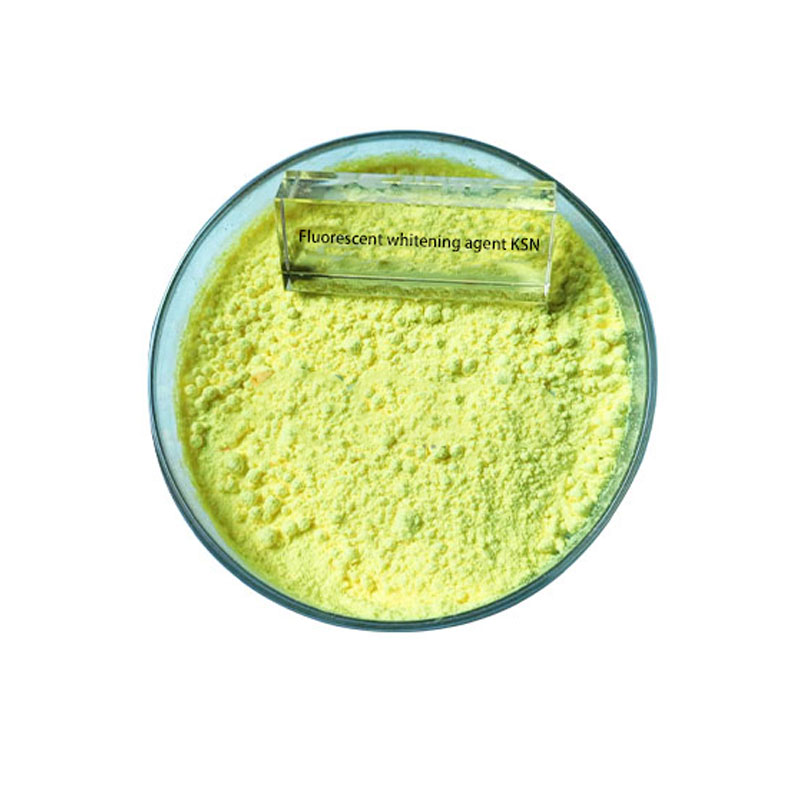
Optical Brightener OB is a fluorescent whitening agent widely used when manufacturers need a cleaner, brighter visual appearance in plastics, coatings, inks, fibers, and selected formulated chemical systems. It does not create whiteness by adding bulk pigment alone; instead, it absorbs ultraviolet light and re-emits visible blue light, helping offset yellow tones that become noticeable in high-whiteness products.
For financial approvers, the practical question is not whether the chemistry works, but whether the added cost improves sellable product value. In many commercial settings, even a dosage range of 0.01% to 0.05% can influence perceived whiteness, batch consistency, and customer acceptance. That is why Optical Brightener OB often enters discussions where premium appearance, reduced rejection rates, or stricter visual standards are part of the revenue model.
The material becomes most relevant when whiteness is part of the product promise. In lower-visibility applications, it may be optional. In higher-visibility applications, the additive can affect whether a product passes customer inspection in the first 24 to 48 hours after delivery, especially where visual comparison is done under standard lighting conditions.
Why the market pays attention to it
High-whiteness applications are under pressure from three directions at once: customer expectations, raw material variation, and cost control. Base resins, solvents, fillers, and auxiliary agents can introduce slight yellow undertones from batch to batch. Optical Brightener OB helps manufacturers compensate for those variations without always increasing titanium dioxide loading or redesigning the full formulation.
This matters in industries where appearance affects brand value. A small visual difference can lead to claims, slower inventory turnover, or discount pressure. For a finance team, that means the additive should be evaluated not only as a line-item cost, but also as a factor in scrap reduction, customer retention, and price protection over a 3- to 12-month sales cycle.
In practical sourcing, consistency is as important as unit price. A slightly cheaper brightener that performs unevenly may create hidden costs through reformulation time, quality complaints, and delayed shipments. That is why supplier stability, lot-to-lot reliability, and logistics response often matter as much as the quoted price per kilogram.
Where Optical Brightener OB Creates Measurable Business Value
The value of Optical Brightener OB depends on whether whiteness influences conversion efficiency or marketability. In premium plastics, light-colored masterbatch, synthetic fibers, and bright surface coatings, a small formulation adjustment can improve visual appeal enough to support a stronger selling price or reduce the need for costly pigment compensation.
For financial review, it helps to classify applications by sensitivity. If the product is judged by color, gloss, and shelf appearance, the additive often has a clearer return profile. If the product is industrial, hidden, or not customer-facing, the return may be weaker unless the brightener also supports process stability.
The following overview can help determine where the additive is most likely to justify its cost.
The key takeaway is that Optical Brightener OB is rarely evaluated in isolation. It makes the most commercial sense when the value of improved appearance is higher than the additive cost, the reformulation cost, and the quality-control effort required to maintain consistent results.
Cost-sensitive decision points
A finance-oriented review should look at at least four variables: additive dosage, offset against other whitening inputs, effect on reject rate, and impact on customer acceptance. If the brightener reduces pigment use by even a small fraction or lowers out-of-spec batches from 2% to 1%, the annual savings can become more meaningful than the initial price increase.
There is also working capital value in stable quality. Fewer disputed lots mean less inventory aging, fewer urgent replacements, and smoother forecasting. In chemical distribution and manufacturing, a 7- to 15-day delay caused by quality issues can be more expensive than a moderate additive premium.
For some systems, support materials also influence brightness outcomes. In detergent and industrial cleaning formulations, builders and water conditioners can improve final visual performance. For example, Trisodium Phosphate (TSP) is used in detergent additives, water treatment, papermaking, and metal surface treatment, with functions such as alkalinity, dispersion, emulsification, and water softening. In adjacent applications where whiteness and cleanliness are linked, formulation economics should be assessed as a system rather than a single ingredient decision.
How Finance Teams Should Evaluate Total Cost, Not Just Purchase Price
A narrow cost-per-kilogram approach can misread the economics of Optical Brightener OB. The better method is total cost of ownership: purchase cost, trial cost, dosage efficiency, quality stability, logistics reliability, and replacement risk. An additive that costs more upfront but performs consistently over 6 to 12 months may be financially safer than a lower-cost source with unstable supply.
This is especially relevant in chemical procurement where multiple upstream variables can affect the final result. Shandong JunTeng Chemical Co., Ltd., based in Jinan, Shandong Province, operates with an integrated supply chain management system, established supplier resources, and an efficient logistics network. For finance decision-makers, such supply support matters because delivery reliability and source consistency directly influence production scheduling and cash flow stability.
The evaluation model below helps compare direct and indirect cost effects in a practical way.
For many companies, the best decision is not “lowest quoted price,” but “lowest stable delivered cost.” If lead times are predictable within a normal 3- to 10-day dispatch window and quality remains steady across lots, budgeting becomes more accurate and operational risk falls.
A practical approval checklist
- Confirm the target dosage range and compare it with current whitening or pigment cost per ton.
- Review whether customer specifications require consistent high whiteness under standard light conditions.
- Estimate possible savings from lower rejects, fewer complaints, and reduced reformulation cycles.
- Check supplier response time, lot traceability, and backup supply options for at least 2 procurement cycles.
This checklist helps prevent a common finance mistake: approving or rejecting an additive using only visible price, while ignoring process cost, customer risk, and inventory impact.
Typical Usage Considerations and Adjacent Formulation Factors
Optical Brightener OB performs best when the surrounding formulation supports brightness rather than undermines it. Yellowing from impure raw materials, incompatible solvents, excessive heat history, or poor dispersion can limit the perceived effect. In other words, the additive is valuable, but it cannot fully compensate for a weak base system.
That is why procurement and technical teams should review the full recipe. In some cleaning, paper-related, or treatment systems, support chemicals contribute to a brighter or cleaner final appearance by controlling alkalinity, hardness ions, or dispersion. One example is Trisodium Phosphate (TSP), available in Grade I, Grade II, and anhydrous grade, typically appearing as a white crystalline powder or granules. Its common functions include chelation, buffering, and improving detergency through water softening and alkalinity control.
Although TSP serves a different purpose from Optical Brightener OB, finance teams should recognize the formulation principle: value often comes from the interaction of additives, not just one material. In systems where washing efficiency, bleaching dispersion, or cleaner substrate appearance matters, the commercial outcome may depend on several coordinated components rather than a single whitening agent.
Points to review before scale-up
- Run pilot trials for at least 2 to 3 batches to test lot consistency and visual stability.
- Check whether processing temperature, storage time, or UV exposure changes brightness performance.
- Validate compatibility with pigments, fillers, surfactants, or alkaline builders already in the system.
- Translate technical results into finance terms such as cost per ton, complaints avoided, and margin preserved.
When these checks are completed early, companies can avoid the more expensive scenario of approving a low-cost additive that later creates hidden quality losses.
A Balanced Conclusion for Financial Decision-Makers
So, is Optical Brightener OB worth the added cost in high-whiteness applications? In many cases, yes—but only when whiteness directly affects customer acceptance, premium positioning, or process stability. Its value is strongest in products where appearance is measurable in commercial terms, not only aesthetic terms.
For finance teams, the right decision framework is simple: compare additive cost against the combined value of dosage efficiency, reduced waste, steadier quality, and dependable supply. If the additive supports fewer out-of-spec lots, faster customer approval, or more stable pricing, the return can be justified even when unit cost is higher.
In chemical sourcing, execution matters as much as formulation. Stable supply, real product traceability, and timely logistics can protect margin just as effectively as the right ingredient choice. That is especially important when procurement cycles, inventory plans, and production commitments are tightly linked.
Why choose us
Shandong JunTeng Chemical Co., Ltd. brings 10 years of experience in chemical trading, supported by supplier coordination, logistics efficiency, and long-term relationships with well-known domestic and international enterprises. This helps customers secure stable product quality, sufficient supply, and timely delivery across multiple chemical categories.
If you are evaluating Optical Brightener OB or related formulation materials, contact us for practical support on parameter confirmation, product selection, delivery cycle planning, sample requests, application matching, and quotation discussion. We can also help you review adjacent materials used in detergents, water treatment, coatings, plastics, and other chemical applications so your purchasing decision aligns with both technical performance and financial control.
A well-judged additive decision is rarely about cost alone. It is about choosing the right material, from the right source, with the right delivery support, at the right commercial timing.
Leave A Message
If you are interested in our products and want to know more details, please leave a message here, we will reply you as soon as we can.