





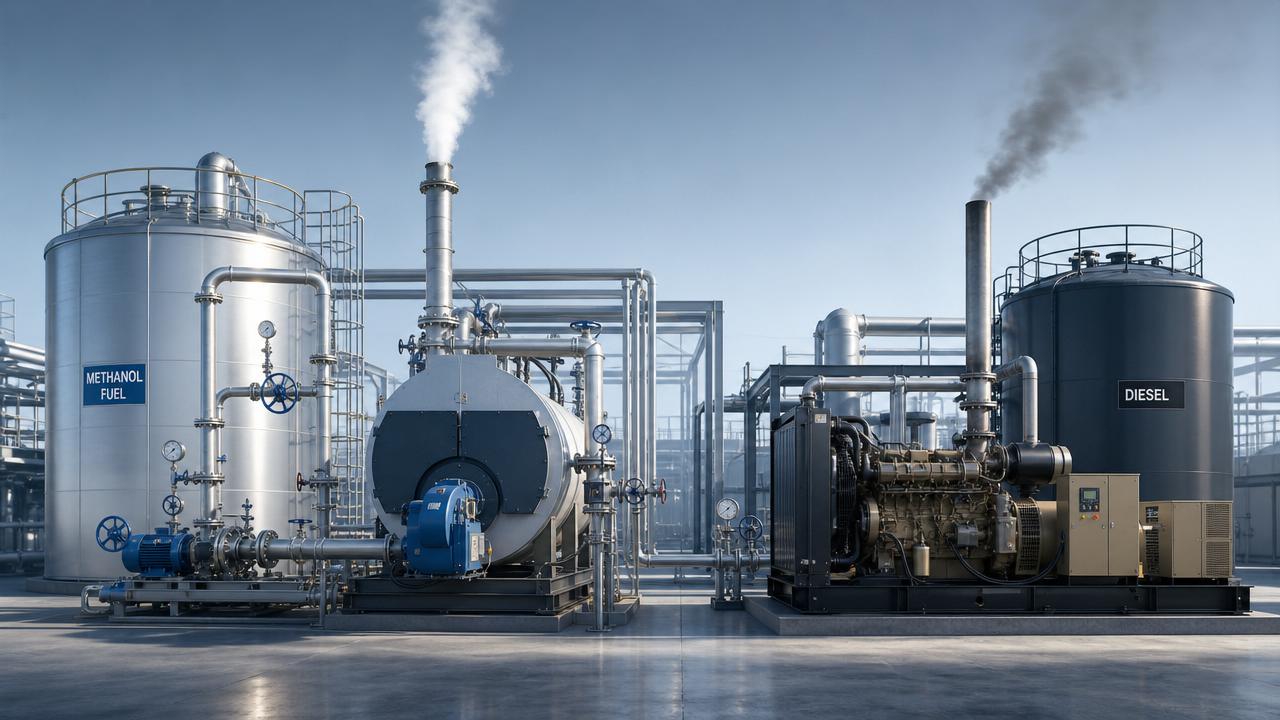
For businesses evaluating reliable energy options, choosing between Methanol fuel and diesel for backup power and boiler systems can directly affect cost, supply stability, emissions, and operational efficiency. With growing pressure on industrial buyers to balance performance and sustainability, understanding the practical differences between these two fuels is essential for making a smarter procurement and long-term energy strategy.
For enterprise decision-makers in chemicals, pharmaceuticals, petrochemicals, construction additives, and wastewater treatment, fuel selection is rarely just a technical issue. It influences storage design, procurement planning, burner compatibility, startup reliability, and compliance risk over 12 to 36 months of operation.
In practice, Methanol fuel is increasingly discussed as an alternative energy source where cleaner combustion, diversified sourcing, and lower sulfur content matter. Diesel, however, still remains the default choice in many backup generators and industrial boiler systems because of its mature infrastructure and strong low-temperature ignition behavior.
How Methanol Fuel and Diesel Differ in Industrial Energy Use
Before comparing costs or emissions, buyers need to understand that Methanol fuel and diesel behave differently at the chemical, combustion, and equipment levels. These differences affect tank materials, calorific value, maintenance cycles, and retrofit requirements.
Basic fuel properties that matter in real operations
Diesel offers high energy density and is widely used in backup power units from 100 kW to several MW. Methanol fuel has lower volumetric energy content, so the same duty often requires higher fuel flow or larger storage volume. That does not automatically make methanol less practical, but it changes engineering assumptions.
For boiler users, flame temperature, combustion stability, and burner design are key. Methanol burns cleaner with very low sulfur and particulate output, while diesel generally provides easier ignition and simpler adaptation in older systems. In many projects, the decision comes down to whether the site values cleaner exhaust over easier drop-in use.
The table below highlights several purchasing and technical factors that industrial buyers typically compare during the first 2 to 4 weeks of evaluation.
The key takeaway is simple: diesel often wins on immediate compatibility, while Methanol fuel can deliver stronger environmental performance if the system is designed or retrofitted properly. Buyers should not compare fuel price alone without considering total system adaptation cost.
Where chemical industry users see the biggest impact
In chemical plants, backup generators may run only 10 to 50 hours per year, but boilers can run daily. This means the same fuel may be suitable for one application and less attractive for another. For standby generation, reliability under emergency startup usually ranks first. For boilers, ongoing fuel economics and emissions control often matter more.
Typical decision points
- Whether existing tanks, gaskets, and pumps are chemically compatible
- Whether local emission targets require lower sulfur or cleaner combustion
- Whether the site has 7-day, 15-day, or 30-day backup fuel storage targets
- Whether procurement prefers single-source fuel contracts or multi-fuel flexibility
Companies such as Shandong JunTeng Chemical Co., Ltd., with 10 years of experience in chemical trading and a complete supply chain management system, can support buyers not only with sourcing logic but also with delivery continuity, specification coordination, and upstream supplier stability. That becomes especially important when plants cannot afford delays in feedstock or energy-related chemicals.
Which Fuel Fits Backup Power Systems Better?
For backup power, the central question is not theoretical efficiency. It is whether the generator starts in seconds, carries the required load, and remains serviceable after months of standby. In this category, diesel still has a practical advantage in many facilities.
Why diesel remains common for standby generators
Most industrial diesel gensets are designed around mature fuel injection systems and established maintenance routines. Spare parts, operator familiarity, and emergency service support are usually easier to access. For a site with 500 kW to 2 MW emergency demand, that reduces commissioning and operational uncertainty.
If a business needs immediate deployment within 2 to 6 weeks and has existing diesel tanks, the total switching cost to methanol may outweigh its fuel-side advantages. This is especially true when the generator only runs during outages, monthly testing, or limited peak shaving.
When Methanol fuel makes sense for power backup
Methanol fuel becomes more attractive when a company is building a new energy system, targeting cleaner combustion, or planning a dual-fuel strategy. New projects can integrate compatible storage materials, revised burner settings, and controls from day one, reducing retrofit inefficiencies.
Sites with internal sustainability targets may also consider methanol if they want to lower visible smoke, reduce sulfur-related concerns, and diversify away from pure diesel dependence. The business case improves further when fuel logistics are stable and engineering support is available before commissioning.
The checklist below can help procurement, EHS, and engineering teams align on the right backup fuel path.
For most brownfield standby projects, diesel remains the lower-risk path. For greenfield developments or companies pursuing a broader transition strategy, Methanol fuel deserves serious evaluation rather than being dismissed on legacy assumptions.
Which Fuel Performs Better in Boiler Systems?
Boiler applications usually involve longer operating hours, making lifecycle cost and emissions more visible than in backup generation. Here, Methanol fuel can be more competitive, especially when the plant values stable combustion, lower soot deposition, and reduced cleaning intervals.
Operational advantages in boilers
In many industrial boilers, cleaner-burning fuels can help reduce fouling in heat exchange sections and simplify flue gas management. Lower soot can improve heat transfer consistency over time, particularly in systems operating 8 to 20 hours per day. This may reduce unplanned maintenance, though actual results depend on burner tuning and load pattern.
Methanol is also relevant in plants already handling oxygenated solvents and bulk chemicals. These sites often have stronger chemical handling discipline, making the adoption of alternative fuels more manageable from a safety and training standpoint.
Procurement and engineering checks for boiler conversion
- Review boiler load range, such as 1 t/h to 20 t/h steam demand.
- Confirm burner compatibility and ignition configuration.
- Verify tank, seal, and pipeline material resistance.
- Estimate fuel storage volume based on 7-day or 14-day consumption.
- Align procurement, EHS, and maintenance teams before trial operation.
Some buyers also review adjacent alcohol-based products when assessing broader fuel and solvent sourcing strategies. For example, Ethanol(absolute ethanol) is widely used in food, medical, industrial, and fuel applications. With a molecular formula of C₂H₅OH, density of 0.789 g/cm³, boiling point of 78.37°C, and flash point of 13°C, it is a colorless transparent liquid valued as a solvent, disinfectant, extraction solvent, fuel additive, and chemical feedstock.
Where diesel still holds value in boiler service
Diesel remains practical for facilities that need rapid deployment, simple burner configuration, and familiar operator workflows. If the boiler operates intermittently or serves only seasonal heating loads, the economics of conversion may be less compelling. In these cases, fuel security and operational simplicity can outweigh the benefits of switching.
A balanced decision should compare not only fuel purchase price but also 4 additional factors: retrofit cost, maintenance frequency, emissions management, and storage compliance. Over a 1-year to 3-year horizon, these items often determine the real cost of ownership.
Supply Stability, Safety, and Procurement Strategy
For enterprise buyers, the best fuel is not simply the one with the best combustion profile. It is the one that can be sourced consistently, delivered on schedule, stored safely, and supported by reliable upstream partners. This is where chemical trading capability becomes a competitive factor.
Why supplier depth matters
Shandong JunTeng Chemical Co., Ltd. operates from Jinan, Shandong Province and supports customers through a complete supply chain management system, high-quality supplier resources, and an efficient logistics network. Long-term cooperation with major enterprises such as Luxi Chemical, BASF Germany, Sinopec, Qilu Petrochemical, and Binzhou Petrochemical helps reduce sourcing uncertainty for industrial buyers.
For plants running continuous production, even a 3-day fuel delay can affect steam supply, standby preparedness, or utility cost planning. A supplier with stable upstream relationships and one-stop procurement capability can help buyers manage not just price, but also delivery rhythm, batch consistency, and coordination across multiple chemicals.
Recommended sourcing criteria
- Check whether the supplier can support regular and urgent delivery windows
- Confirm packaging, storage, and transport alignment with site requirements
- Review product origin consistency and quality documentation process
- Evaluate whether the supplier can support related chemical procurement in one channel
In addition, buyers evaluating alcohol-based fuel pathways may compare methanol with products such as Ethanol(absolute ethanol), especially where solvent, fuel additive, and feedstock sourcing overlap. Absolute ethanol is miscible with water and many organic solvents, supplied here in 160 KG/drum specification, and known for broad industrial versatility.
If your facility prioritizes immediate standby reliability with minimal retrofit, diesel often fits backup power better. If your goal is cleaner combustion, diversified energy procurement, and stronger long-term boiler economics, Methanol fuel may offer a better path when supported by correct engineering and dependable supply.
The most effective decisions come from evaluating 5 dimensions together: fuel performance, equipment compatibility, storage safety, emissions impact, and supplier reliability. With extensive chemical trading experience, stable upstream partnerships, and efficient logistics support, Shandong JunTeng Chemical can help industrial buyers assess practical options across fuel and related chemical categories.
If you are comparing Methanol fuel, diesel, or related alcohol-based chemical products for backup power, boilers, or integrated industrial procurement, contact us now to get a tailored sourcing plan, discuss product details, and explore a more resilient energy and chemical supply solution.
Leave A Message
If you are interested in our products and want to know more details, please leave a message here, we will reply you as soon as we can.