





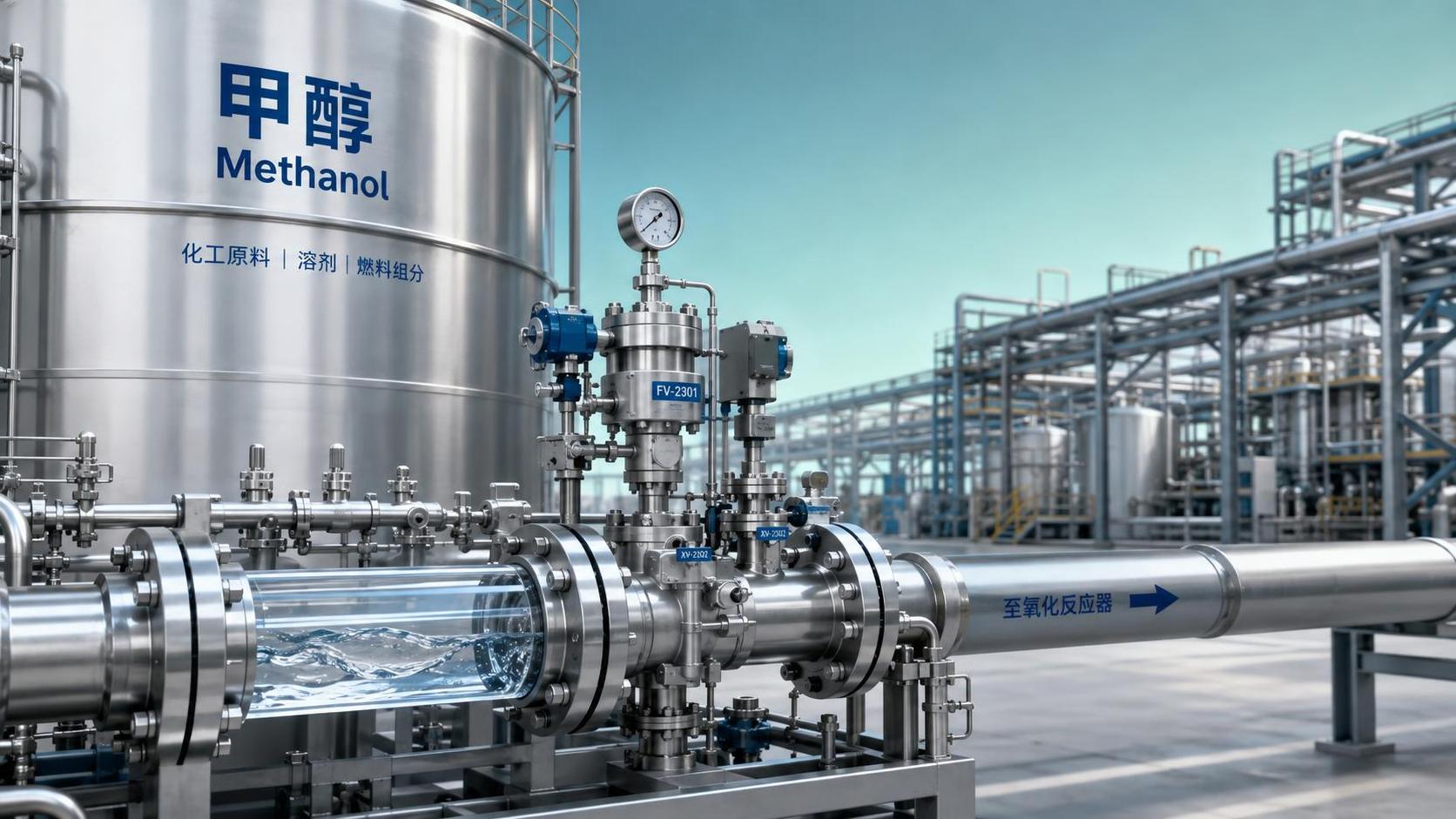
Methanol uses extend far beyond a single chemical application, making it a strategic material for project managers across manufacturing, energy, and process industries. As a versatile feedstock, solvent, and fuel component, methanol supports production planning, formulation flexibility, and cost-conscious sourcing. Yet its apparent simplicity can be misleading: the right grade, handling system, storage arrangement, and supply plan depend heavily on where methanol sits in the process.
For an engineering or procurement lead, the practical question is rarely “What is methanol used for?” More often, it is: “What function will it perform in this unit, what impurities can the process tolerate, and what controls are required to keep the project safe and reliable?” Answering those questions early prevents expensive revisions after construction or commissioning has begun.
Methanol as a Chemical Building Block
The largest industrial methanol uses begin with its role as a feedstock. Its simple molecular structure makes it a useful starting material for a wide range of downstream chemicals. In many projects, methanol is not the final product but the material that enables the final product to be made at scale.
A major route is formaldehyde production. Formaldehyde is subsequently used in resins, engineered wood products, adhesives, coatings, textiles, and several construction-related materials. A methanol oxidation unit therefore has implications well beyond the chemical plant itself: fluctuations in methanol availability may affect adhesive producers, board manufacturers, and resin formulators downstream.
Methanol is also used to produce acetic acid, methylamines, chloromethanes, methyl methacrylate intermediates, and other organic chemicals. In China and other major manufacturing regions, it additionally supports methanol-to-olefins and methanol-to-propylene processes, where it is converted into hydrocarbon feedstocks for plastics and chemical intermediates. These applications demand close attention to purity because contaminants can affect catalyst activity, corrosion behavior, separation performance, or product specifications.
For project teams, feedstock use should be evaluated as a complete material-balance issue rather than a purchase-order item. Consumption rate, startup inventory, tank turnover, recovery streams, and off-spec material management all influence the actual volume required. A unit may appear adequately supplied on paper but still be vulnerable if delivery scheduling does not account for tank cleaning, weather delays, or unplanned operating swings.
Why Methanol Is Chosen as a Solvent
Among the most flexible methanol uses is solvent service. Methanol is polar, miscible with water, and capable of dissolving or carrying numerous organic substances. These characteristics make it useful in pharmaceuticals, pesticide intermediates, laboratory processes, extraction operations, cleaning formulations, inks, and selected coating systems.
Its high evaporation rate can be valuable where rapid drying is required, but that same property can create formulation challenges. A coating or ink may dry too quickly at the surface, reducing flow or increasing the risk of uneven film formation. Process teams should therefore consider methanol not as an isolated solvent, but as part of a solvent blend. The right balance with water, alcohols, esters, ketones, or other co-solvents depends on resin chemistry, coating method, ambient conditions, and required drying profile.
This is particularly relevant in pigment dispersion. In compatible resin and solvent systems, methanol may be involved in the preparation or cleaning stages of coatings and ink production. Pigment selection still remains decisive. For example, a rutile grade such as General titanium dioxode CHR-760 is intended for paint, paper, ink, plastics, rubber, leather, and related applications. Its high whiteness, strong hiding power, and surface treatment with zirconia, alumina, and organics are designed to support dispersion and weather-resistant performance. When specifying both solvents and pigments, formulators should test the complete system instead of assuming that good pigment dispersibility automatically means compatibility with every solvent package.
Methanol’s solvent role also requires a careful review of water sensitivity. Because it readily mixes with water, even minor moisture pickup during storage or transfer can matter in reactions and formulations that require tightly controlled water content. Sampling plans, closed transfer systems, dry nitrogen blanketing where justified, and clear acceptance criteria help reduce avoidable quality variation.
Fuel, Energy Carrier, and Process Utility Roles
Methanol is increasingly considered as a fuel or fuel component because it is a liquid at ambient conditions and can be handled with established bulk-liquid infrastructure. It can be used in certain marine fuel applications, industrial burners, engines designed for methanol service, and fuel-cell-related systems. It is also used in biodiesel manufacturing through transesterification, where methanol reacts with oils or fats to form fatty acid methyl esters.
In energy projects, methanol is often discussed alongside decarbonization goals. Its environmental profile, however, depends strongly on how it is produced and used. Conventional methanol is generally derived from fossil-based synthesis gas, while renewable or lower-carbon pathways may use biomass, captured carbon dioxide combined with low-carbon hydrogen, or other alternative feedstocks. Project documentation should distinguish the molecule from its production pathway. Calling a fuel “methanol-based” does not by itself establish a lower lifecycle carbon footprint.
Fuel use also changes the engineering conversation. Compared with feedstock service, a methanol fuel project may require different considerations for burner design, combustion controls, emissions monitoring, fuel quality, and compatibility with seals, gaskets, coatings, and piping materials. Equipment suppliers should confirm suitability for methanol rather than relying on assumptions based on gasoline, diesel, or ethanol service.
Designing for Safe Storage and Transfer
Methanol is flammable and toxic. It can be absorbed through ingestion, inhalation, and skin exposure, and its flame may be difficult to see in certain lighting conditions. These facts should shape the project design from the earliest layout stage, not be treated merely as items on a safety data sheet.
A robust methanol handling system commonly includes properly rated storage tanks, ventilation, bonding and grounding, spill containment, controlled loading and unloading points, leak detection where appropriate, emergency shower and eyewash access, and fire-protection measures selected for the site’s risk assessment. Closed sampling and transfer arrangements can reduce operator exposure while also limiting moisture contamination and vapor loss.
Material compatibility deserves specific review. Carbon steel is frequently used in suitable methanol service, but the complete system may contain elastomers, linings, coatings, valves, instruments, and flexible hoses with different resistance characteristics. A project manager should request compatibility confirmation for every wetted component, especially where temperature, pressure, water content, or chemical contaminants differ from standard conditions.
Operational discipline matters as much as hardware. Clear labeling, segregation from incompatible materials, documented unloading procedures, and staff training are essential. Because methanol has a familiar “alcohol” name, inexperienced personnel may underestimate its toxicity. Good procedures make the hazard visible before it becomes an incident.
Choosing the Right Methanol Supply Specification
There is no single purchasing specification that suits every process. A reaction using a sensitive catalyst, a pharmaceutical intermediate line, a general cleaning operation, and a fuel-blending project may each have different limits for water, acetone, ethanol, dissolved solids, and other trace components.
Before issuing a procurement request, define the intended application, required grade, impurity limits, packaging or bulk-delivery mode, expected monthly consumption, minimum safety stock, and receiving capability. For continuous plants, the supplier’s logistics reliability can be as important as the certificate of analysis. A technically compliant cargo arriving after a production interruption is not a successful supply outcome.
Shandong JunTeng Chemical supports chemical procurement through supplier resources, supply-chain coordination, and logistics planning. For project-driven customers, this kind of coordination can simplify the transition from construction-stage demand to routine operating supply, particularly when methanol must be aligned with other materials used in petrochemicals, adhesives, agricultural chemicals, water treatment, coatings, and formulation manufacturing.
A Practical Review Before Finalizing a Methanol Project
- Confirm whether methanol functions as a reactant, solvent, fuel, cleaning medium, or a combination of these roles.
- Set quality limits based on process sensitivity, not on a generic commercial description.
- Calculate operating demand together with startup fill, contingency stock, and delivery lead time.
- Review storage capacity, unloading rate, vapor management, and emergency containment as one system.
- Validate material compatibility for piping, seals, pumps, instruments, and protective equipment.
- Build safe handling requirements into contractor scope, operating procedures, and training plans.
The broad range of methanol uses is precisely what makes it valuable—and what makes disciplined project definition necessary. Whether it is feeding a formaldehyde reactor, carrying ingredients in a formulated product, supporting biodiesel production, or serving as a fuel component, methanol performs best when its chemical behavior, safety profile, and supply requirements are considered together. That approach gives project teams a more dependable path from specification to stable operation.
Leave A Message
If you are interested in our products and want to know more details, please leave a message here, we will reply you as soon as we can.