





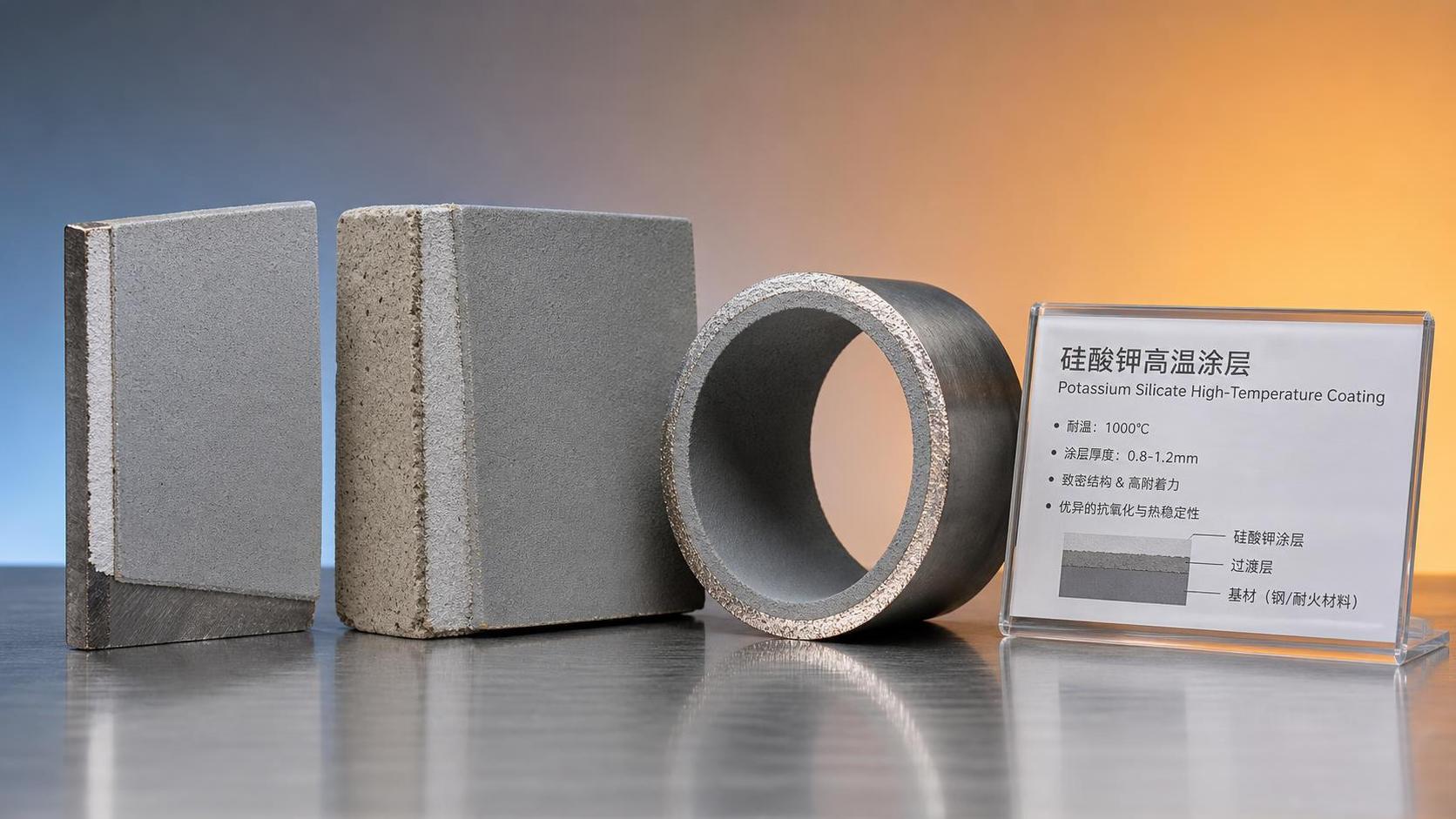
Start with the failure mode, not the ingredient list
When Potassium Silicate comes up in a coating review, the real question is usually simple: are you trying to stop early delamination, hold adhesion through thermal cycling, or keep a film intact when the surface runs hot for long periods? Technical evaluators get better answers when they define that failure mode first. Potassium Silicate can improve bond strength and heat resistance, but its value depends on the substrate, cure conditions, film build, and what else is in the formulation. If those pieces are fuzzy, the evaluation turns into a chemistry discussion instead of a performance decision.
In practice, Potassium Silicate is most useful where the coating needs strong mineral affinity and better stability at elevated temperature than many conventional organic systems can provide. That does not make it a universal fix. It means you should check the fit carefully, in the order below.
Check whether the substrate actually benefits from a silicate system
This is the first screen, and it saves time. Potassium Silicate is generally more at home on mineral or metal surfaces used in high-temperature service than on low-energy plastics or flexible substrates. If the target surface is steel, cast components, refractory material, cementitious board, or another inorganic surface, the chemistry is easier to justify. If the target is a flexible polymer part, powdery wood composite, or a substrate that moves a lot in service, the same binder can become brittle or lose practical adhesion.
A common mistake is treating lab adhesion on a prepared panel as proof of field compatibility. It is not. Ask what the real surface looks like before coating: blasted steel, mill scale, alkaline concrete, oily repair area, or mixed-condition maintenance surface. Potassium Silicate usually rewards clean, well-prepared surfaces and punishes shortcuts in pretreatment.
Look at bond strength as a system result
People sometimes talk about bond strength as if it comes directly from one raw material. In coatings, it rarely works that way. With Potassium Silicate, adhesion depends on at least four things working together:
- surface cleanliness and profile;
- the silicate-to-pigment or filler balance;
- drying and curing conditions;
- topcoat or overcoat compatibility, if the system is multi-layer.
If you are reviewing supplier data, do not stop at a single adhesion value. Check what substrate was used, how long the coating cured, whether the test was done before or after heat exposure, and whether failure was adhesive or cohesive. Those details tell you whether the coating is truly bonding to the surface or just forming a hard but fragile film.
Separate continuous heat exposure from short heat spikes
Heat resistance gets oversimplified all the time. A coating that survives occasional heat spikes may still crack, chalk, or lose adhesion under continuous service temperature. For Potassium Silicate, ask two different questions:
- What is the normal operating temperature?
- What are the startup, shutdown, or upset conditions?
This matters because thermal cycling is often harsher than steady heat. A silicate-based coating can remain chemically stable at elevated temperature, but repeated expansion and contraction across the substrate-coating interface may still cause microcracking. For technical evaluation, that means the best evidence is not a single high-temperature statement on a data sheet. It is adhesion retention and film condition after repeated temperature change.
Do not ignore water, humidity, and cure environment
This is where a lot of otherwise promising formulations lose points. Potassium Silicate systems are sensitive to how they dry and develop their final structure. If the film sees poor curing conditions, excess moisture, or inconsistent air movement, you may get a coating that looks acceptable early on but underperforms later.
When reviewing a product for plant use, check the application window in practical terms: ambient temperature, substrate temperature, humidity, and time to handling or overcoating. Then compare that against the actual jobsite. A coating that performs well in controlled shop conditions may behave very differently during field maintenance on hot equipment, coastal assets, or damp concrete interiors.
Review the full formulation around Potassium Silicate
For evaluators, this is where the real technical judgment sits. Potassium Silicate contributes to the inorganic binder network, but pigments, extenders, corrosion inhibitors, and additives can shift the outcome a lot. A formulation optimized for heat may sacrifice flexibility. One tuned for easy application may give away some high-temperature durability.
If the coating is part of a broader materials package, it helps to watch for adjacent chemistry that serves a different function. For example, Triphenyl Phosphate is used in other industrial material systems as a flame-retardant plasticizer and fire-resistant solvent, with a listed assay of at least 99% and a white flaky crystal appearance. That is useful context when comparing thermal-performance strategies across product families, but it should not be confused with the bonding role that Potassium Silicate plays in a coating binder.
Use this short review table before approving a specification
Watch for these common evaluation errors
Some mistakes come up again and again:
- Approving the coating on heat resistance claims alone without checking post-heat adhesion.
- Using polished lab panels to predict performance on rough or variably contaminated plant surfaces.
- Ignoring the overcoat system. Some failures blamed on the silicate primer are really compatibility problems higher in the stack.
- Treating dry film hardness as proof of bond strength. Hard films can still fail at the interface.
A practical decision path
If you are screening Potassium Silicate for a coating specification, the fastest reliable path is this: confirm the substrate class, confirm the thermal duty, review cure conditions, then read adhesion evidence after realistic heat exposure rather than before it. Only after that should you weigh application convenience or cost.
That sequence keeps the decision tied to service reality. In coating work, bond strength and heat resistance are not separate boxes to tick. They rise or fall together under actual operating conditions, and Potassium Silicate earns its place when the full system supports both.
Leave A Message
If you are interested in our products and want to know more details, please leave a message here, we will reply you as soon as we can.