





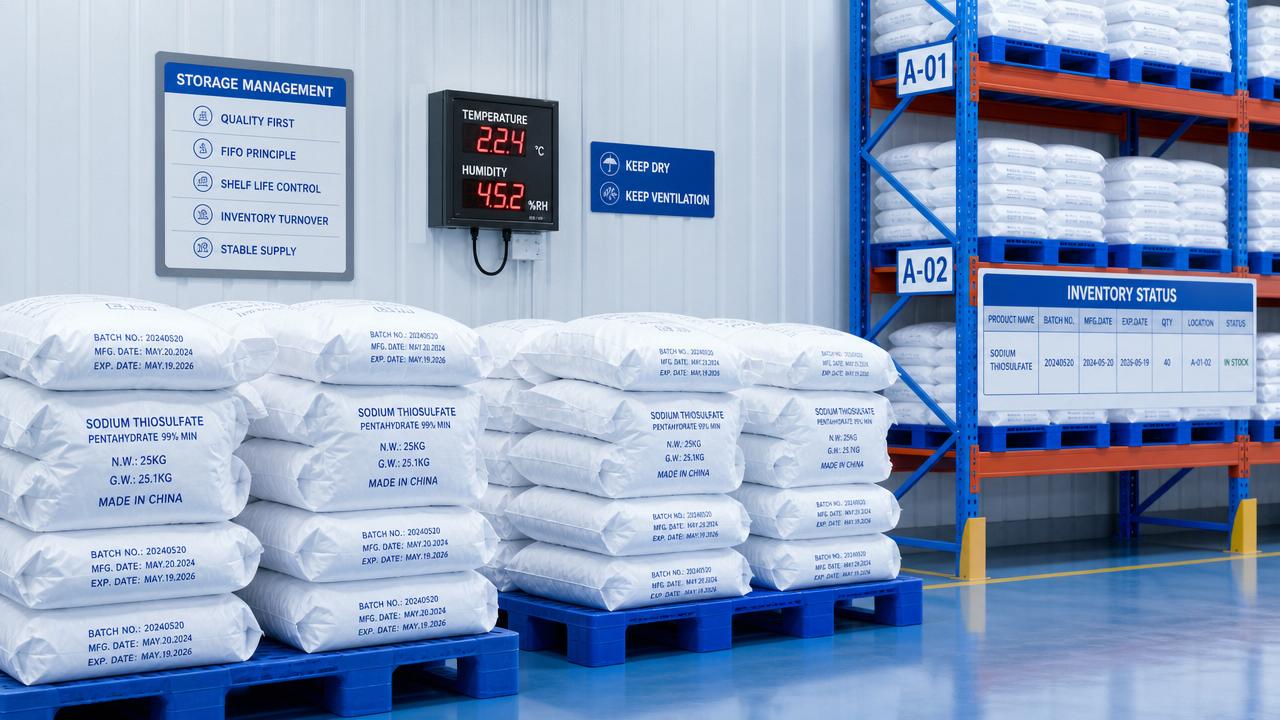
Managing chemical inventory means balancing product quality, storage risk, and supply continuity. For many operations, Sodium Thiosulfate shelf life shapes purchasing cycles, warehouse turnover, and delivery reliability.
A clear view of Sodium Thiosulfate stability helps reduce waste, avoid off-spec material, and improve planning across chemical procurement and storage management.
Sodium Thiosulfate Shelf Life Basics
Sodium Thiosulfate is widely used in water treatment, photography, mining, and chemical processing. Its shelf life depends on packaging condition, moisture exposure, temperature control, and product purity.
In stable storage conditions, Sodium Thiosulfate can remain usable for an extended period. However, shelf life is never only a date on a label.
It is a performance issue linked to caking, decomposition risk, solution clarity, and consistency in downstream applications.
Current Inventory Signals in the Chemical Sector
In the chemical industry, storage decisions are increasingly tied to delivery speed, seasonal demand, and compliance expectations. For Sodium Thiosulfate, several signals deserve attention:
- Long storage periods can increase moisture-related quality changes.
- Frequent warehouse transfers may damage packaging integrity.
- Bulk purchasing without usage forecasting can raise aging stock risk.
- Climate variation affects dry product stability during transport and storage.
A reliable supplier network helps control these variables. Shandong JunTeng Chemical Co., Ltd. supports stable sourcing through integrated supply chain management and efficient logistics coordination.
Why Sodium Thiosulfate Shelf Life Matters Operationally
Sodium Thiosulfate shelf life directly affects inventory value. Short planning cycles may increase freight cost, while excessive stocking can create avoidable disposal or reinspection expenses.
These issues matter especially where production continuity depends on consistent chemical input quality.
Related Chemical Storage Considerations
Inventory planning often covers multiple chemicals with different stability profiles. For example, liquid acids need separate packaging, handling, and temperature review.
A common example is Formic acid 85%/90%/94%/99%, available in PE drums, IBCs, and ISO tanks for organic synthesis, pharmaceuticals, rubber, and preservation uses.
Its high solubility and multiple concentration grades show why inventory strategies must match each chemical’s physical form and application demands.
Practical Storage and Planning Guidance
- Store Sodium Thiosulfate in a cool, dry, ventilated environment.
- Keep packaging sealed to limit moisture absorption and contamination.
- Use batch labeling and first-in, first-out rotation.
- Review stock levels against actual monthly consumption.
- Confirm shelf life data with supplier documents and test requirements.
Long-term supply works best when sourcing, warehousing, and application schedules are aligned. With experienced supplier partnerships and verified sources, storage risk becomes easier to manage.
If Sodium Thiosulfate shelf life is affecting inventory decisions, the next step is to review packaging options, turnover speed, and delivery frequency together with a dependable chemical supply partner.
Leave A Message
If you are interested in our products and want to know more details, please leave a message here, we will reply you as soon as we can.