





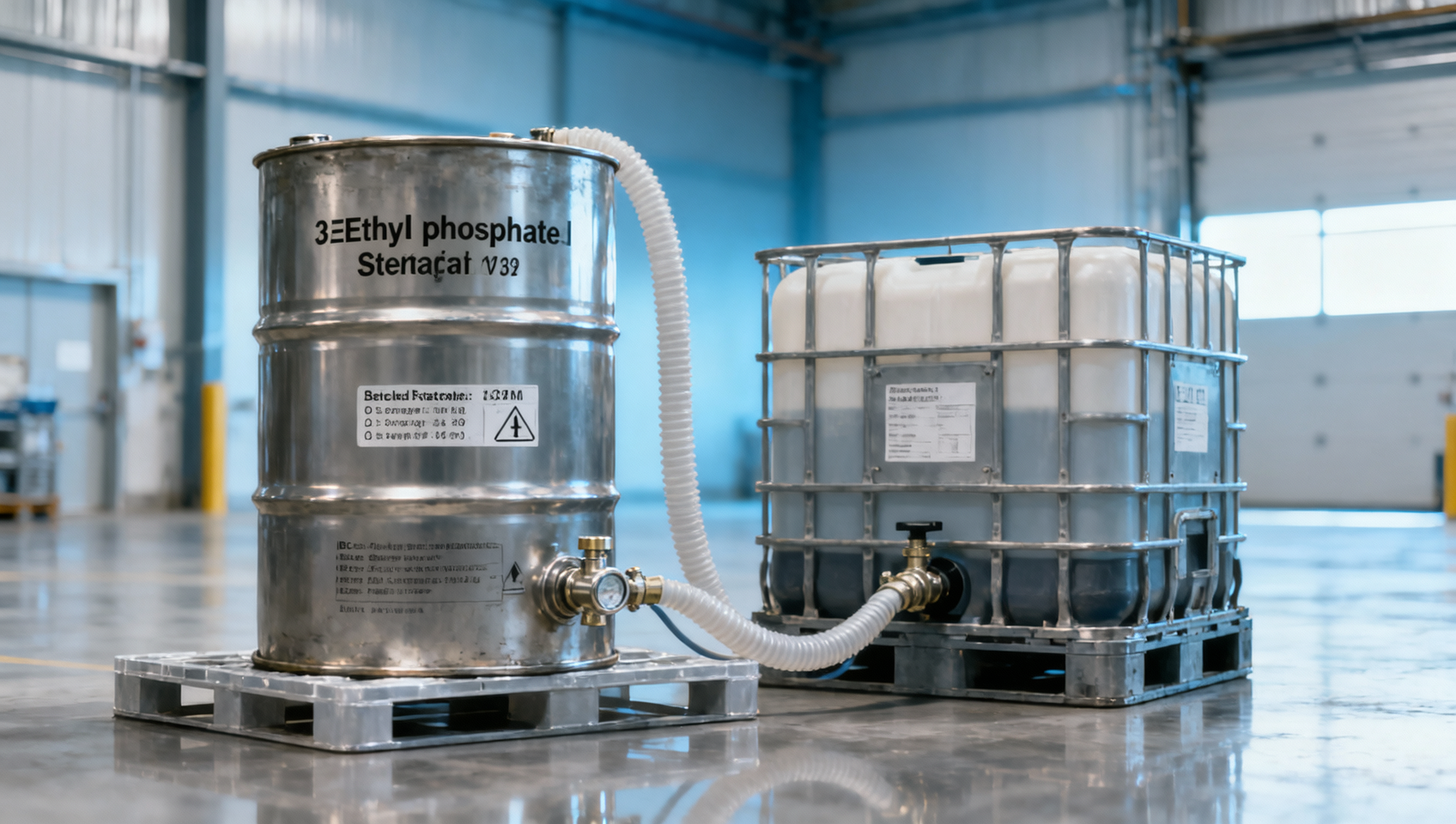
Why Triethyl Phosphate Handling Matters in Daily Operations
Proper Triethyl Phosphate handling is essential for maintaining product quality, workplace safety, and operational efficiency. Small mistakes in storage or transfer can quickly lead to contamination, odor issues, and unstable downstream performance.
In real plant conditions, Triethyl Phosphate is often exposed to air, moisture, mixed containers, and rushed handling steps. That is why clear routines matter more than theory alone.
For stable use, the goal is simple: keep Triethyl Phosphate clean, dry, sealed, and traceable from receipt to final application. The points below focus on what actually helps on site.
Storage Conditions That Support Stable Triethyl Phosphate Quality
Start with the storage area. Even a qualified product can lose consistency if the environment is poorly controlled.
- Store Triethyl Phosphate in a cool, dry, and well-ventilated area. Avoid heat sources, steam lines, and direct sunlight, because temperature swings increase container stress and contamination chances.
- Keep drums and IBCs tightly sealed after each use. A half-open cap during shift change can allow moisture, dust, and foreign odors to enter the material.
- Use dedicated storage positions with clear labels, batch records, and opening dates. This reduces mix-ups, supports FIFO practice, and makes abnormal quality easier to trace.
- Place containers on clean pallets and away from floor water, washdown zones, or leaking walls. Secondary exposure often starts from the environment, not the product itself.
- Separate Triethyl Phosphate from strong oxidizers, reactive chemicals, and strongly odorous materials. Nearby incompatible goods can affect both safety management and product purity over time.
If the warehouse handles multiple liquid chemicals, separation is especially important. A reliable supply partner such as Shandong JunTeng Chemical Co., Ltd. can help by providing stable sourcing, clear batch control, and timely delivery, which reduces unnecessary long-term storage pressure.
A simple storage check that works
At the start of each shift, check seal condition, label clarity, container surface, and the surrounding floor area. These four points catch many Triethyl Phosphate handling issues before they grow.
Common Contamination Risks During Triethyl Phosphate Use
Most contamination does not happen in storage alone. It often appears during sampling, pumping, repacking, or line switching.
- Moisture is one of the most common risks. Wet funnels, damp hoses, or humid open-air transfers may change product condition and affect sensitive formulations downstream.
- Residue from previous chemicals in pumps, valves, and transfer lines can contaminate Triethyl Phosphate fast. This is a frequent issue when shared equipment lacks proper cleaning verification.
- Dirty sampling tools create misleading quality complaints. If a bottle, dipper, or sample valve is not clean and dry, the test result may not reflect the actual batch.
- Using unapproved containers for temporary holding increases risk. Unknown plastics, reused drums, or uncovered buckets can introduce particles, odors, and compatibility problems.
- Human factors matter too. Missing labels, rushed reconnection, and poor handover between shifts often cause cross-contact more than equipment failure does.
A practical way to lower risk is to standardize one transfer path for Triethyl Phosphate whenever possible. Fewer hose changes usually mean fewer quality surprises.
In drum unloading areas
During drum unloading, keep the lid opening time short. Connect the transfer line first, then open and pump. This simple order helps reduce air exposure and accidental debris entry.
Also check whether the drum top is clean before opening. Dust or dried residue around the bung can easily fall into Triethyl Phosphate during connection.
In shared production lines
When Triethyl Phosphate is used on a shared line, line clearance is non-negotiable. Confirm the previous material, cleaning status, and dryness of the line before charging.
This matters even more in plants handling acids, additives, or solvent systems. For example, other chemicals such as Propionic Acid have very different properties, including corrosivity and pungent odor, so cross-contact risks should never be assumed harmless.
Handling Habits That Make Triethyl Phosphate Safer and Cleaner
Good Triethyl Phosphate handling is built on repeatable habits. The best routines are usually simple and easy to audit.
- Use dedicated, dry, and clearly marked tools for transfer and sampling. If shared tools must be used, verify cleaning and dryness before every contact with the product.
- Open only the container being used, and close it immediately after transfer. Leaving multiple containers open at once raises confusion and contamination risk.
- Record batch number, opening date, transfer destination, and abnormal observations. Clear records support quality follow-up and help identify where contamination may have started.
- Train operators to notice early warning signs, such as unusual odor, color change, suspended matter, or unexpected residue near closures and valves.
- If anything seems off, isolate the material first and confirm status later. Using questionable Triethyl Phosphate to save time often creates larger process losses.
Many sites also benefit from keeping one backup chemical option available for other applications. In laboratories, preservatives, or intermediate use, Propionic Acid is commonly supplied in 180 KG/drum and used across food, feed, and chemical processes, showing why product segregation and labeling must stay strict.
Small Details That Are Easy to Miss
A few overlooked details often cause repeated Triethyl Phosphate handling problems.
One is reusing partially emptied containers without confirming closure integrity. Another is storing opened stock too long without a review date. Both increase uncertainty around product condition.
Another common gap is weak communication between warehouse and production teams. If receiving, storage, and use records are not aligned, contamination investigations become slow and unclear.
Working with an experienced chemical supplier helps here. With ten years in chemical trading, JunTeng Chemical supports stable sourcing through strong supplier partnerships, complete supply chain management, and efficient logistics, which helps keep material flow more controlled from source to site.
What to Do Next on Site
If Triethyl Phosphate is used regularly, review three things first: storage temperature control, sealing practice, and transfer line cleanliness. These checks usually deliver the fastest improvement.
Then look at sampling tools, batch records, and shift handover habits. When these basic steps are consistent, Triethyl Phosphate quality is easier to protect and daily operation becomes more predictable.
In short, cleaner handling means fewer surprises. Keep Triethyl Phosphate dry, sealed, separated, and traceable, and most contamination risks become much easier to prevent.
Leave A Message
If you are interested in our products and want to know more details, please leave a message here, we will reply you as soon as we can.