





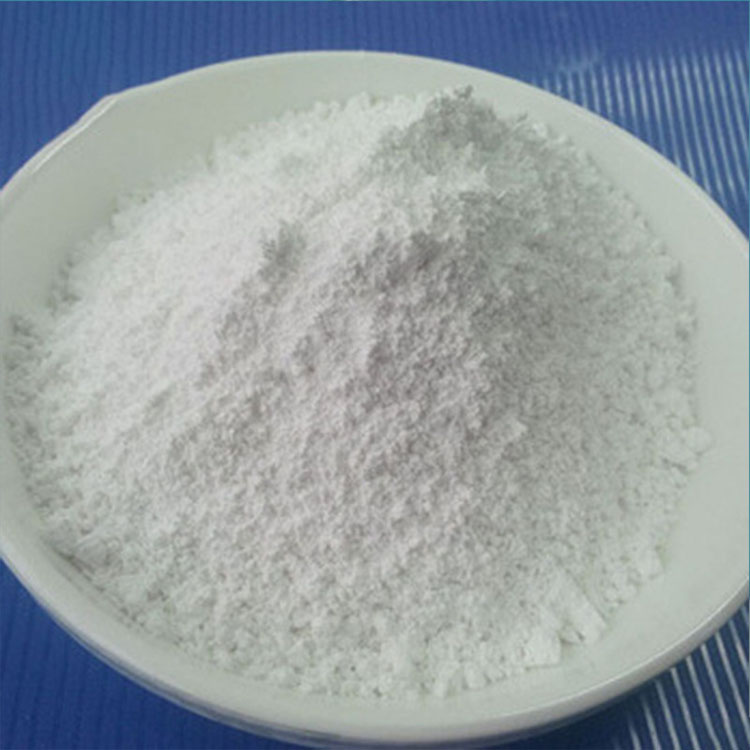
High moisture in Calcium Carbonate can quietly increase storage risks, processing instability, transportation losses, and overall procurement costs. For buyers, project managers, and distributors, understanding this issue is essential to maintaining product quality, supply consistency, and operational efficiency. This article explains the real cost impact of excess moisture and why reliable sourcing matters in chemical procurement.
In chemical purchasing, moisture is often treated as a secondary indicator, yet in practice it can influence flowability, packaging performance, dosing accuracy, and warehouse life. For industries such as construction chemicals, plastics, rubber, adhesives, wastewater treatment, and fillers, even a small increase in water content can trigger avoidable process variation across multiple stages.
For procurement teams and project managers working under fixed delivery schedules, the issue is not just technical. It becomes a cost-control problem tied to rework, delayed production, complaint risk, and unstable lot-to-lot quality. That is why calcium carbonate moisture should be evaluated together with particle size, whiteness, bulk density, packaging integrity, and supplier consistency.
Why Moisture in Calcium Carbonate Matters More Than Many Buyers Expect
Calcium carbonate is widely used as a filler, extender, pH regulator, and performance-adjusting mineral in many downstream systems. In dry powder applications, buyers usually expect stable powder flow, uniform blending, and consistent feeding rates. When moisture rises above the workable range, these assumptions can quickly break down and create chain reactions in manufacturing.
A moisture increase from around 0.2%–0.3% to 0.8%–1.2% may sound minor on paper, but in real handling conditions it can promote caking, bridging in hoppers, and poor discharge from bags or silos. In automated lines, this can interfere with dosing precision and force operators to stop the line for manual intervention, especially when throughput is high and residence time is limited.
The impact is more visible in humidity-sensitive formulas. In sealants, dry mixes, masterbatches, and some detergent blends, excess moisture may disturb dispersion and lead to lumps or uneven product texture. In construction chemicals, it can also shorten storage stability of blended powders if other hygroscopic ingredients are present in the same formulation.
Typical operational problems caused by excess water
- Reduced powder flowability during bag unloading, screw conveying, or pneumatic feeding.
- More frequent caking in 25 kg bags and higher rejection rates during incoming inspection.
- Unstable blending behavior in batches that require tight filler ratios within ±1% to ±2%.
- Greater risk of warehouse deterioration when storage exceeds 30–60 days in hot or wet seasons.
The table below shows how moisture content can affect common procurement and plant-side concerns. The figures are practical reference ranges used in many purchasing discussions rather than universal legal limits.
The key point is simple: moisture is not just a lab number. It affects the total delivered value of the material, especially when purchases are repeated monthly, annual demand is large, or plant operations rely on predictable powder behavior.
The Real Cost of High Moisture: Storage, Transport, Processing, and Claims
Many buyers compare quotations on a per-ton basis, but high moisture changes the true economics of calcium carbonate purchasing. If part of the shipped weight is excess water rather than usable mineral content, the effective cost per active dry solid rises. On a 20-ton purchase, even a 0.5% avoidable moisture difference means about 100 kg of non-productive weight.
Warehouse losses can also be underestimated. Once bags absorb or retain moisture, they may harden during 2–8 weeks of storage, making manual unloading slower and less complete. This creates residue in bags, lowers real utilization, and can add labor cost during peak production periods when staff time is already limited.
Transport creates another hidden layer of expense. Long-distance shipment during rainy seasons or cross-regional delivery with fluctuating temperatures can worsen condensation risk if packaging is weak. For distributors and agents, this can increase complaint frequency because materials may leave the supplier in acceptable condition but arrive with visible lumping or poor flow.
Cost categories that buyers should quantify
- Direct material value loss from excess wet weight.
- Extra labor for unloading, screening, or breaking hardened material.
- Production interruption caused by feed blockage or inconsistent blending.
- Complaint handling, replacement logistics, and delayed project schedules.
- Inventory quality decline when stock turns exceed 45–60 days.
The following table helps convert moisture concerns into practical procurement language that purchasing managers and project leaders can use in supplier evaluation.
When viewed this way, moisture becomes a total-cost indicator rather than a single specification. Buyers who evaluate only unit price often miss the larger cost created after delivery, especially in high-volume or project-driven chemical supply.
How Procurement Teams Should Evaluate Calcium Carbonate Beyond Price
A more reliable procurement strategy starts with defining a realistic moisture threshold by application. Not every formula requires the same limit, but many industrial buyers benefit from setting an internal acceptance band, such as ≤0.3%, ≤0.5%, or another process-based target. This prevents ambiguity between purchasing, warehouse teams, and production supervisors.
Sampling discipline matters as much as the number itself. For routine incoming inspection, teams can use a 3-point or 5-point sampling method per lot, depending on volume and bag count. This reduces the chance of approving a shipment based on a non-representative sample taken only from a dry outer layer or a single bag near the loading door.
Four procurement criteria that should be reviewed together
- Moisture and packaging: ask whether the supplier controls both production dryness and moisture-proof packing.
- Batch stability: review whether lot-to-lot variation stays within your workable processing window.
- Logistics capability: check delivery speed, palletization, seasonal transport precautions, and inventory turnover support.
- Complaint response: confirm how quickly nonconforming lots are handled, ideally within 24–48 hours for clear cases.
For large buyers, supplier selection should also include operational reliability. Shandong JunTeng Chemical Co., Ltd., based in Jinan, Shandong Province, has built its chemical trading business over 10 years with supply chain management, qualified supplier resources, and an efficient logistics network. For buyers managing multiple product lines and tight delivery cycles, this type of coordination helps reduce sourcing friction and supply interruption.
What project managers should require before final approval
Before releasing a long-term order, project managers should confirm at least 6 items: moisture range, packaging format, loading quantity per batch, delivery lead time, inspection documents, and complaint handling process. For recurring monthly supply, a trial order of 1–2 lots is often a safer step than jumping directly to annual volume commitments.
Distributors and agents should take an additional step by checking how the product behaves after secondary warehousing. If material sits in stock for 30 days or more before resale, moisture resilience, packaging strength, and storage instructions become critical to protecting downstream reputation.
Practical Risk Control: Storage, Delivery, and Quality Coordination
Even a well-selected calcium carbonate grade can perform poorly if storage and logistics controls are weak. The first priority is keeping bags or drums away from direct floor moisture and wall condensation. In many warehouses, a pallet clearance of 10–15 cm from the floor and at least 20 cm from walls can reduce exposure to damp zones and improve airflow.
Temperature swings also matter. When material moves from a cool truck to a warm warehouse, condensation may form on packaging surfaces and gradually transfer inward if seals are compromised. This is one reason why buyers should discuss transit time, rainy-season dispatch plans, and unloading procedures with suppliers instead of relying on documents alone.
Recommended control steps for buyers and warehouse teams
- Inspect outer bags, pallet wrap, and sealing condition immediately upon arrival.
- Use first-in-first-out rotation and avoid long idle stock beyond 60–90 days where possible.
- Store in dry, ventilated areas and separate from water-based chemicals or steam-prone zones.
- Record lot number, arrival date, and moisture test result for traceability.
- Recheck material before use if bags were opened and resealed or if storage exceeded the planned cycle.
The next table summarizes practical control points that help reduce moisture-related loss after procurement. These actions are often more economical than dealing with production stoppage or customer complaints later.
Reliable chemical supply is rarely about a single product spec. It depends on how sourcing, packaging, transport, and after-sales coordination work together. That is particularly relevant for buyers sourcing across pharmaceuticals, petrochemicals, construction chemicals, wastewater treatment, plastics, and rubber where supply continuity is as important as analytical compliance.
Moisture Control as a Wider Procurement Principle Across Chemical Products
The concern around moisture is not limited to calcium carbonate. In many chemical categories, water content directly affects shelf life, reactivity, transport suitability, and end-use performance. This is why experienced procurement teams often apply similar evaluation logic across powders, oxidizers, additives, and specialty intermediates.
For example, when purchasing oxidizing chemicals used in polymerization, etching, bleaching, or water treatment, moisture control can influence stability and handling quality. A relevant example is Ammonium Persulfate, a strong oxidizing agent used in emulsion polymerization, printed circuit board etching, textile and hair bleaching, organic synthesis, and pollutant degradation applications.
Why this matters for cross-category buyers
The purchasing logic is similar: define critical specs, verify packaging, and match material characteristics to use conditions. For ammonium persulfate, technical parameters such as purity ≥98.0%, active oxygen ≥6.5%, chloride ≤0.001%, heavy metals as Pb ≤0.002%, iron ≤0.001%, and moisture ≤0.10% help buyers judge whether the material is suitable for sensitive industrial use.
Its physical profile also matters in storage planning. It is typically supplied as a white crystalline powder or granules, odorless, readily soluble in water, insoluble in ethanol, with decomposition at 120°C and density around 1.98 g/cm³. Standard packaging may include 25 KG/drum with inner plastic bag or 25 KG/fiber drum, which shows how packaging design and moisture control often go hand in hand in specialty chemical procurement.
A broader sourcing lesson for distributors and industrial users
Whether the material is a mineral filler or an oxidizing agent, hidden procurement cost usually comes from mismatch between specification, packaging, and application environment. Buyers who review only headline price miss the larger operating picture. Those who compare 4 dimensions—specification stability, packaging quality, logistics execution, and complaint response—usually achieve better long-term supply performance.
JunTeng Chemical supports this kind of practical sourcing approach through one-stop chemical procurement solutions, supported by long-term cooperation with well-known domestic and international enterprises such as Luxi Chemical, BASF Germany, Sinopec, Qilu Petrochemical, and others. For B2B buyers, that supply-side coordination can make a visible difference when delivery reliability and genuine source assurance are priorities.
FAQ for Buyers, Project Leaders, and Distributors
How should buyers set an acceptable moisture limit for calcium carbonate?
The right limit depends on the application, storage cycle, and feeding system. For many dry blending operations, a lower target such as ≤0.3% or ≤0.5% is easier to manage than a wider range. If your line includes automatic dosing, long storage above 30 days, or humid-season transportation, stricter internal limits are usually justified.
What is the biggest mistake in evaluating moisture-related cost?
The most common mistake is comparing only invoice price per ton. That ignores lost dry-content value, labor needed for unloading hardened material, downtime from poor flow, and risk of customer complaints. A slightly lower-moisture product may deliver better total cost over 3–12 months even if the unit price is somewhat higher.
How often should incoming lots be checked?
For new suppliers or seasonal changes, every lot should be checked until performance is stable. For established supply, many plants still inspect key indicators on each batch or on a defined frequency such as every delivery or every 20–50 tons, depending on internal quality systems and risk tolerance.
What should distributors pay special attention to?
Distributors should focus on secondary storage time, repacking risk, and complaint turnaround. If stock may remain in the warehouse for 45–90 days, packaging durability and moisture resistance become especially important. It is also helpful to maintain lot traceability so downstream issues can be identified and resolved faster.
High moisture in calcium carbonate is not a minor quality detail; it can influence usable value, process efficiency, warehouse stability, and customer satisfaction across the full procurement cycle. Buyers, project managers, and distributors who assess moisture together with packaging, logistics, and supplier responsiveness are better positioned to control hidden cost and secure more reliable production outcomes.
With 10 years of experience in chemical trading, a structured supply chain, quality supplier resources, and efficient logistics support, Shandong JunTeng Chemical Co., Ltd. is equipped to help customers source chemical products with greater consistency and delivery confidence. If you need support on calcium carbonate procurement, moisture-sensitive chemical sourcing, or broader industrial chemical supply planning, contact us now to get product details, discuss your application, and obtain a practical procurement solution.
Leave A Message
If you are interested in our products and want to know more details, please leave a message here, we will reply you as soon as we can.