





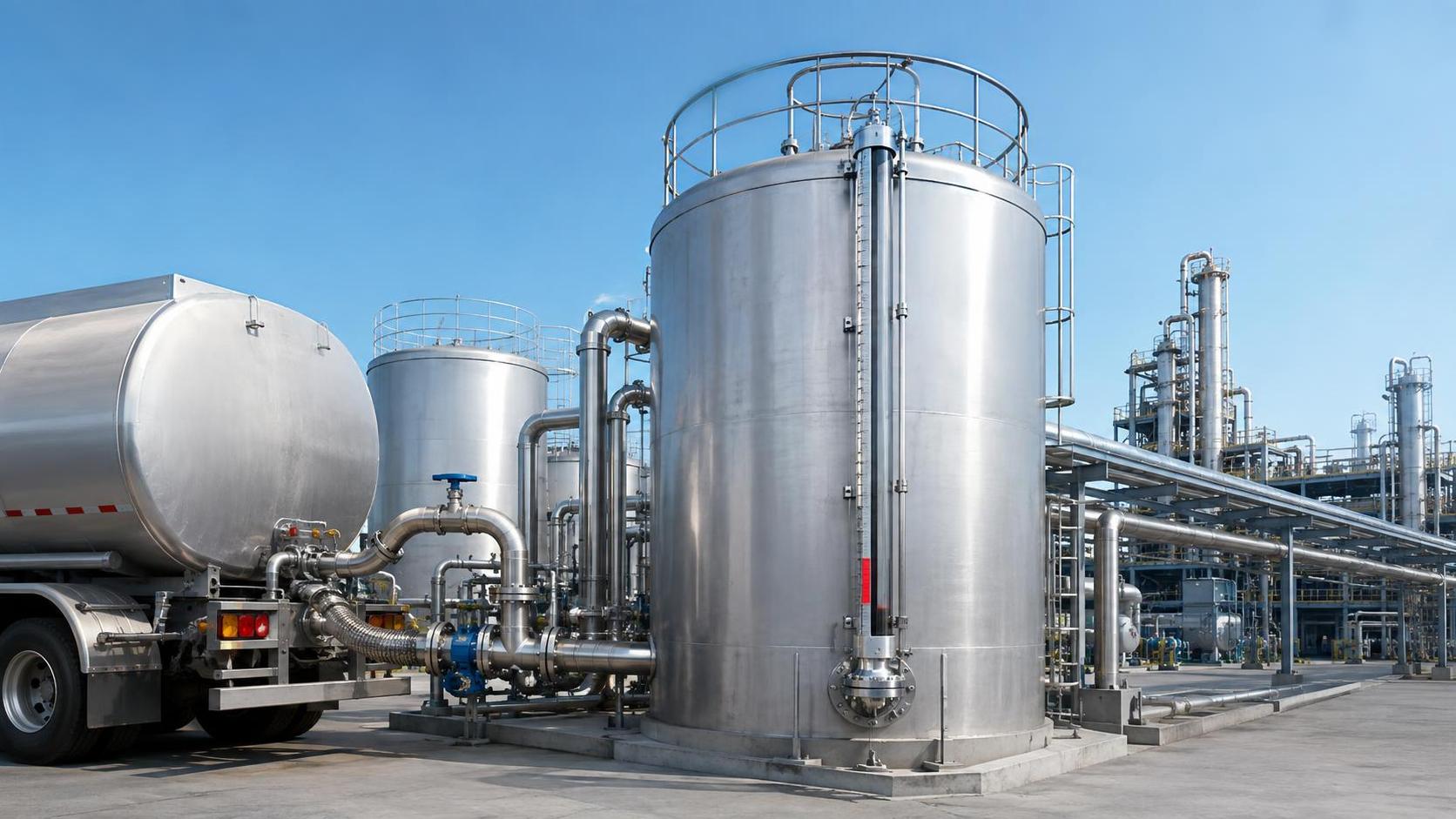
For a finance team, paying more for Methanol quick delivery can look like an avoidable purchasing premium. Expedited transport, smaller emergency loads, weekend unloading, and additional handling may all raise the landed cost per tonne. Holding more stock to avoid those charges also ties up working capital and increases storage exposure. Yet the cheaper option on a freight quotation is not always the lower-cost decision once a plant, contract commitment, or downstream customer is at risk.
The practical question is not whether fast delivery costs more. It usually does. The question is whether the extra logistics and inventory cost is lower than the financial consequence of running short. In methanol procurement, that consequence can include a halted production line, idle labor, lost batch time, off-spec restart material, missed shipment windows, or the loss of a customer order that cannot simply be recovered next month.
Start With the Cost of a Stockout, Not the Freight Rate
Methanol is used across formaldehyde-based resins, solvents, pharmaceuticals, pesticides, petrochemicals, adhesives, and other chemical processes. Its commercial importance varies sharply by site. A distributor with flexible demand may tolerate a delayed truck; a continuous-process user with little substitute feedstock may not. Financial approval should therefore begin with the cost of one missed delivery day at the receiving plant.
That calculation should be site-specific. Include the gross margin lost when output cannot be made or shipped, fixed operating costs that continue during downtime, restart and quality-control work, contractual penalties where they genuinely apply, and the cost of sourcing replacement product at short notice. It is also worth asking production whether a partial outage is possible. Some facilities can reduce rates safely; others reach a point where a low tank level becomes an operational stop.
A common approval mistake is comparing an expedited freight charge only with standard freight. The relevant comparison is broader: expedited freight versus the expected cost of a supply interruption. If an urgent shipment prevents even a short disruption with material commercial consequences, the premium may be rational. If the plant has several days of usable coverage and no near-term dispatch commitment, the same premium may simply be expensive convenience.
When Faster Methanol Supply Is Usually Worth Paying For
There are several situations where Methanol quick delivery deserves serious consideration rather than automatic rejection.
- Inventory has fallen below the site’s operational safety level because of an unexpected increase in consumption, delayed inbound material, or a tank measurement discrepancy.
- A customer shipment is committed and the finished product cannot be produced without methanol or a methanol-derived intermediate.
- The normal supplier route has become uncertain due to carrier availability, port congestion, weather disruption, or a temporary loading constraint.
- A planned maintenance shutdown or restart has narrowed the receiving window, making a late delivery operationally awkward rather than merely inconvenient.
- The plant’s approved substitute options are limited, technically unsuitable, or more costly than securing the required methanol promptly.
Urgency should not be confused with poor planning in every instance. Demand changes, transport interruptions, and customer schedule revisions happen. But repeated “emergency” buying is a warning sign. When quick deliveries become routine, the right financial response is not to negotiate each premium harder; it is to investigate forecast quality, reorder points, storage capacity, supplier lead-time assumptions, and communication between procurement and operations.
Inventory Carrying Cost Has a Limit
The alternative to urgent freight is often holding more methanol on site. That reduces the chance of a stockout, but it is not free insurance. Extra inventory consumes cash, needs suitable storage capacity, may require additional tank management, and can create exposure when market prices move after a purchase. The physical handling and safety requirements of methanol also mean that “just keep more” is not a complete policy unless the facility can receive, store, and manage the quantity appropriately.
A sensible buffer is based on consumption volatility and replenishment uncertainty, not a fixed number copied from another plant. Finance should ask three basic questions: How many days of cover remain at the current consumption rate? How variable is actual lead time, including loading and transport? What is the earliest point at which a replenishment delay would affect production? These answers create a practical reorder trigger.
Build a Decision Rule Before the Emergency Arrives
Fast decisions are better when the approval logic is agreed in advance. Procurement, plant operations, and finance should define a minimum operating inventory level and a separate emergency threshold. The minimum level is the point at which normal replenishment should already be in motion. The emergency threshold is the point at which supply interruption becomes probable unless an alternative delivery option is secured.
For each urgent request, require a short commercial record: current stock, verified consumption rate, normal delivery date, proposed expedited delivery date, premium freight amount, and the operational consequence if the shipment does not arrive. This is not bureaucracy for its own sake. It prevents a buyer from describing every delay as critical and gives finance a clear audit trail for why a higher-cost decision was approved.
Supplier capability matters as much as quoted speed. A promise of rapid dispatch has little value if product availability, documentation, loading access, or transport coordination are uncertain. Shandong JunTeng Chemical Co., Ltd., based in Jinan, works within a supply-chain model supported by established producer relationships and logistics coordination. For buyers, the useful point is not the supplier list itself; it is whether the supplier can confirm source, available quantity, batch consistency, loading schedule, and realistic transit timing before the emergency order is released.
Avoid Narrow Cost Comparisons Across a Chemical Portfolio
The same review discipline can improve purchasing decisions for other chemicals. For example, an oxidizer used in polymerization, metal treatment, textile processing, environmental remediation, or chemical synthesis may need different storage and handling assumptions from methanol. A product such as Sodium persulfate is supplied as a white crystalline powder and is described as stable at room temperature and almost non-hygroscopic, but procurement still needs to check the exact grade, packaging, storage conditions, and site requirements before combining shipments or building stock.
This matters because consolidated purchasing can reduce transport cost on paper while creating an avoidable delay for a critical item. Conversely, splitting every order into urgent shipments can destroy freight efficiency. The best answer is often mixed: protect the materials that can stop production with clearer delivery commitments and contingency options, while using planned consolidation for less time-sensitive products.
The Approval Test That Holds Up
Methanol quick delivery is justified when it protects a larger, reasonably evidenced financial exposure than the added cost of moving or holding the product. It is not justified merely because inventory is uncomfortable, a sales team wants extra reassurance, or a supplier has offered an urgent option.
The strongest procurement decisions separate genuine continuity risk from routine scheduling noise. If urgent freight is approved, record why. If it is repeatedly needed, change the inventory rule or supply arrangement that caused the urgency. That is how finance can support reliable production without allowing “emergency logistics” to become a permanent and invisible cost center.
Leave A Message
If you are interested in our products and want to know more details, please leave a message here, we will reply you as soon as we can.