





Methanol is not approved for intentional use as a food additive because its toxicological profile is fundamentally incompatible with the purpose of food-additive regulation. It is an industrial alcohol with legitimate uses in chemical synthesis, solvents, fuel, and processing operations, but it does not have an authorized food-additive function comparable to a preservative, acidity regulator, carrier, nutrient, or processing aid.
The distinction matters because the phrase “methanol for food additives” can create a dangerous sourcing and documentation error. Methanol may be detected naturally at low concentrations in certain foods and beverages, especially fruit-derived products and fermented alcoholic drinks. That natural occurrence does not permit a manufacturer to add methanol deliberately, use it as a formulation solvent without a specific legal basis, or treat an industrial-grade material as acceptable for food production.
Why food-additive approval and methanol do not align
Food additives are not approved simply because a chemical can be manufactured to high purity or has an industrial function. Approval normally depends on a defined technological need, exposure assessment, toxicological evaluation, identity specifications, purity limits, and conditions of use. The substance must provide a legitimate function in food while remaining safe at the expected dietary exposure.
Methanol fails the central safety test for intentional food addition. Once ingested, it is metabolized through pathways that produce formaldehyde and formic acid. Formate accumulation can cause metabolic acidosis and can damage the optic nerve; severe poisoning may result in visual impairment, permanent blindness, central nervous system injury, or death. Toxic effects are therefore not limited to irritation, off-odour, or quality defects that can be managed through ordinary finished-product controls.
This is also why methanol cannot be justified by arguing that the proposed dose is small. Safety management for food additives is built around controlled, repeatable use under authorized conditions. A substance with severe dose-dependent toxicity, an uncertain contribution from background exposure, and no necessary food function creates an unacceptable compliance position. The relevant question is not whether a batch contains “only a little” methanol, but whether its intentional use is legally authorized and scientifically supported. In normal food-additive practice, the answer is no.
Natural presence is not the same as permitted addition
Methanol can form naturally when pectin-containing plant materials are processed, fermented, or enzymatically degraded. Fruit juices, wines, spirits, and some fermented products may therefore contain endogenous methanol. Regulatory controls for alcoholic beverages and other foods may set limits or require monitoring of methanol that arises from production. These controls are designed to manage unavoidable formation, not to authorize methanol as an ingredient.
This distinction is frequently missed during supplier qualification. A certificate of analysis showing a low methanol value in a finished beverage is not evidence that methanol is an approved additive. Likewise, a legal limit for naturally occurring methanol is not a formulation allowance. The compliance basis must be traced to the exact function of the substance: ingredient, additive, processing aid, extraction solvent, contaminant, fermentation by-product, or residual solvent. These categories are regulated differently and should never be treated as interchangeable.
Some jurisdictions recognize narrowly defined uses of certain solvents in extraction or processing, subject to strict residue limits and technical conditions. Such provisions do not create general permission to use methanol in food formulation. A processing exemption, where one exists, must be checked against the applicable market’s current legislation, the specific commodity, process conditions, residual level, and labeling requirements. It cannot be inferred from an industrial safety data sheet or from a supplier’s statement that the material is “high purity.”
The most serious risk is often misidentification in the supply chain
Methanol is colorless and may be confused with ethanol or other alcohol-based materials when receiving controls are weak. The risk increases where chemicals are transferred into secondary containers, purchased through mixed-use distribution channels, or stored near food-grade solvents. A container label reading “alcohol,” “solvent,” or “methyl alcohol” is not a sufficient basis for release into food-related production.
Denatured ethanol presents a related hazard. Denatured alcohol is deliberately made unsuitable for drinking, and methanol may be used as a denaturant in certain formulations. It must never be substituted for food-grade ethanol, beverage alcohol, or an approved food processing solvent. Low price, local availability, and apparently similar physical properties are not meaningful qualification criteria.
Quality systems should treat material identity as a critical control point. For alcohols used in any food-contact or food-production step, the purchase specification should identify the chemical name, CAS number, intended use, applicable food-law status, grade, purity requirement, denaturant status, and analytical release criteria. “Food grade” should not be accepted as a stand-alone descriptor; it needs to be supported by a specification tied to the relevant jurisdiction and application.
What documentation should demonstrate
A compliant dossier for a food additive or food-processing material needs more than a certificate of analysis. The certificate confirms a tested lot against stated parameters, but it does not establish that the substance is legally permitted for the intended food use. Release decisions should connect four separate records:
- Identity: full chemical name, CAS number, molecular formula where relevant, and unambiguous packaging and label controls.
- Legal status: the applicable positive list, food-additive standard, processing-aid rule, or other legal provision for the destination market.
- Specification: assay, impurity profile, heavy-metal limits where applicable, residual solvents, microbiological criteria where relevant, and test methods.
- Intended function and use level: the actual food category, processing stage, maximum use level, carry-over assessment, and labeling implications.
If any one of these records is missing, an apparently routine purchase can become a serious nonconformity. This is particularly important in cross-border trade, where a material accepted for industrial use in the exporting country may not be allowed in food applications in the importing country. A supplier’s general declaration cannot replace verification against the destination market’s food law.
Analytical controls: what a methanol result can and cannot prove
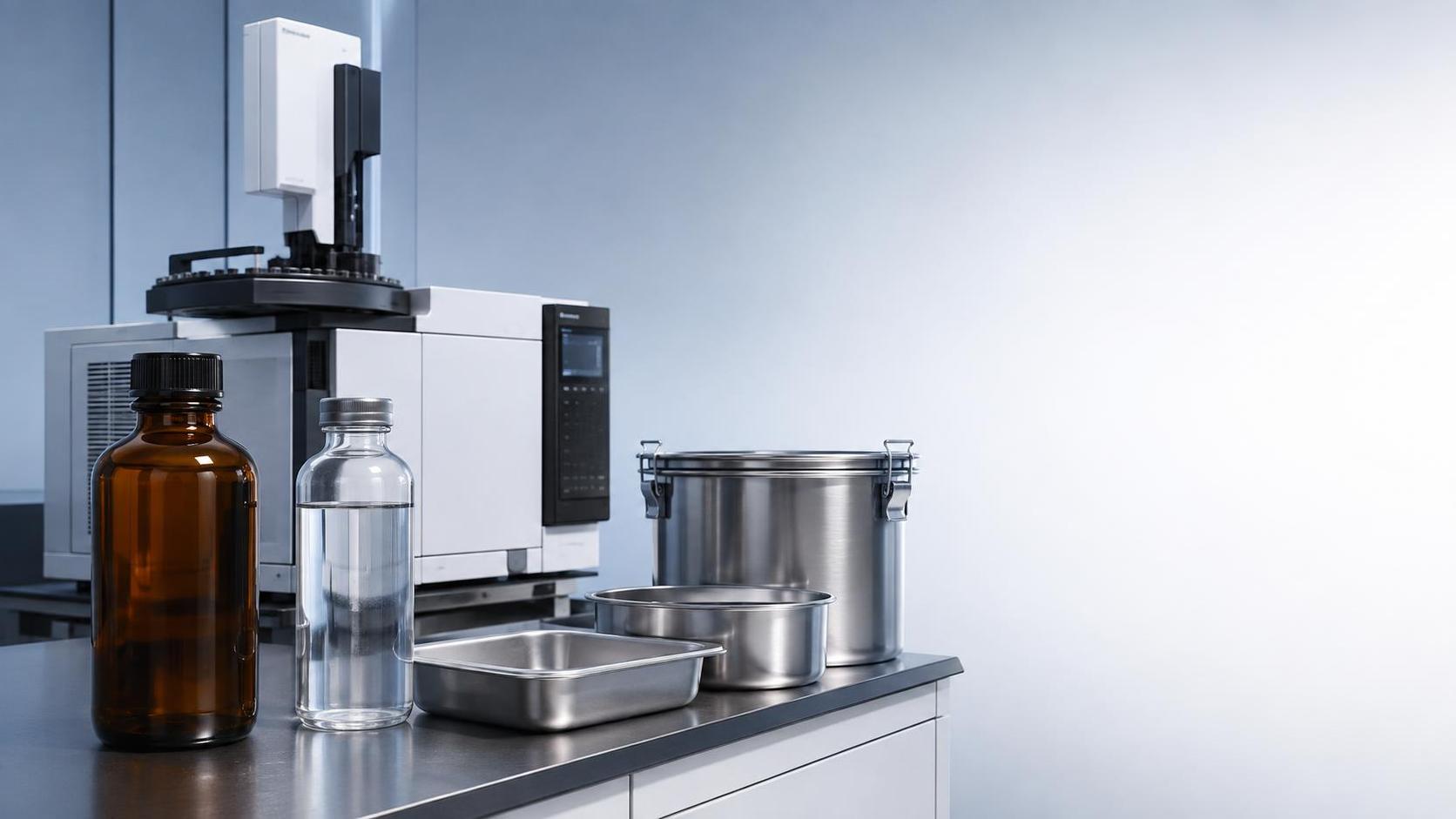
Headspace gas chromatography is widely used for the determination of methanol and other volatile alcohols in beverages, flavor systems, and solvents. The analytical method must suit the matrix and the reason for testing. In a beverage, the concern may be naturally formed methanol and compliance with a category-specific limit. In an incoming solvent, the critical question may instead be whether the received material is ethanol as specified, whether methanol contamination is within an established internal limit, or whether deliberate substitution has occurred.
Method selection should account for sampling integrity. Alcohols are volatile; poor container closure, incorrect headspace handling, sample mix-up, and use of nonrepresentative composite samples can compromise results. A passing result is only meaningful when the sampling point, batch traceability, calibration range, reporting units, and acceptance limit are documented. Testing cannot correct an invalid procurement specification, but it can reveal whether the delivered material matches that specification.
Where a food manufacturer uses ethanol, flavor carriers, botanical extracts, or fermentation-derived ingredients, methanol should be included in the hazard assessment when the process creates a credible route of occurrence. The control approach should be proportionate: assess raw-material origin, process formation potential, concentration effects, and final-product requirements. It is not necessary to test every material indiscriminately, but it is unsafe to exclude methanol merely because it was not intentionally added.
Food-grade classification cannot be transferred between chemicals
A recurring documentation failure is the assumption that a chemical used somewhere in the food chain can be substituted with another chemically similar material. This is not valid. Methanol and ethanol are both simple alcohols, yet their toxicology, regulatory status, and permitted applications are entirely different.
The same principle applies to mineral salts. For example, Monopotassium Phosphate(MKP) may have food-related applications when the applicable food-grade specification, authorized function, purity requirements, and use conditions are satisfied. Its industrial inspection basis or agricultural use, however, would not by itself establish suitability for a food formulation. Chemical identity, grade, and legal use authorization must all match the intended application.
When methanol is found or suspected
A suspected methanol substitution, unexplained methanol result, or use of an unapproved alcohol should trigger immediate segregation of the affected material and any potentially impacted production lots. The investigation should establish whether the result reflects natural formation, process carry-over, contamination, incorrect material receipt, or deliberate adulteration. Retaining samples, receiving records, tank-cleaning records, transfer logs, and supplier batch documentation are central to that determination.
Release should not be based solely on an assumption that dilution makes the issue acceptable. The correct disposition depends on the applicable food law, toxicological risk, product category, measured concentration, and traceability scope. Where product safety may be affected, internal escalation and regulatory reporting obligations should be assessed promptly under the relevant jurisdiction’s food-safety system.
The practical compliance rule is straightforward: methanol belongs in hazard identification and contaminant control, not in food-additive formulation. Its natural occurrence in some foods and its possible role in tightly regulated processing contexts do not change that conclusion. Clear material specifications, verified legal status, identity testing, and disciplined segregation remain the most reliable defenses against an error with potentially severe human and regulatory consequences.
Leave A Message
If you are interested in our products and want to know more details, please leave a message here, we will reply you as soon as we can.