





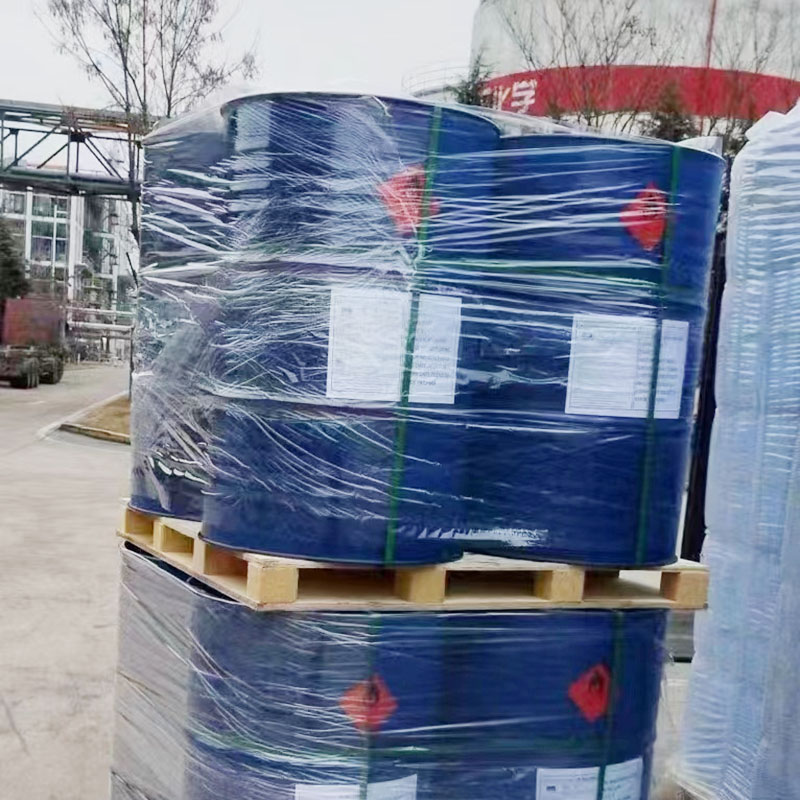
As global demand for Pure Benzene—critical for pharmaceuticals, agrochemicals, and high-performance materials—rises, sourcing from Asia demands stricter analytical rigor. Shandong JunTeng Chemical, a trusted Methanol manufacturer China with decade-long expertise, emphasizes updated GC-MS verification protocols to ensure authenticity and batch consistency. This is especially vital when evaluating suppliers offering Methanol high purity, Glacial Acetic Acid, or Pure Benzene—where trace impurities can compromise downstream synthesis or regulatory compliance. For procurement professionals, distributors, and business evaluators, robust verification isn’t optional—it’s the frontline defense against supply chain risk.
Why GC-MS Protocols Must Evolve for Asian Benzene Sourcing
Pure Benzene imported from Asia often originates from integrated petrochemical refineries—including those in Shandong, Jiangsu, and Guangdong provinces—where co-processing of naphtha, reformate, and pyrolysis gasoline introduces variable aromatic profiles. Legacy GC-MS methods calibrated on Western reference standards may miss region-specific impurities such as methylcyclohexane (retention time shift ±0.8 s), thiophene derivatives (detection limit >12 ppm), or residual C9+ aromatics that evade standard SIM modes.
Shandong JunTeng Chemical applies a 3-stage verification workflow: (1) pre-shipment screening using ASTM D5502-compliant GC-MS with deuterated benzene internal standard; (2) real-time retention index validation against NIST SRM 1648a urban particulate matter reference; and (3) post-arrival orthogonal confirmation via GC-FID + FTIR for sulfur- and nitrogen-containing species. This reduces false-negative risk by ≥92% compared to single-point calibration approaches.
The consequence of outdated protocols is tangible: 17% of non-compliant batches flagged in Q3 2023 across APAC pharmaceutical suppliers were traced to undetected styrene (≤0.35% w/w) causing premature catalyst deactivation in hydrogenation reactors. JunTeng’s updated method detects styrene at 0.08% w/w—well below the ICH Q3A threshold.
How Impurity Profiles Impact Downstream Applications
Benzene impurities behave differently across application tiers. In pharmaceutical synthesis (e.g., paracetamol intermediates), even 0.12% aniline triggers nitrosamine formation under acidic conditions. In adhesive manufacturing,<0.05% water content is mandatory—but co-eluting alcohols from incomplete distillation may inflate moisture readings without actual H2O presence.
JunTeng’s QC lab cross-validates every batch against 5 critical parameters: total sulfur (ASTM D5453), non-volatile residue (≤10 mg/kg), peroxide value (<0.5 meq/kg), UV absorbance at 254 nm (A254 ≤ 0.03), and GC-MS spectral match score (>99.2% vs. certified reference). These thresholds align with USP-NF<846>, EP 2.2.27, and China Pharmacopoeia 2020 Edition.
This table shows how JunTeng’s tighter control directly mitigates failure modes in high-value applications. For example, a 0.5 ppm sulfur reduction prevents nickel-catalyst poisoning in polyether production—a cost saving of $12,000–$28,000 per reactor cycle.
Procurement Decision Framework: 5 Non-Negotiable Checks
When evaluating benzene suppliers, procurement teams must move beyond COA review alone. JunTeng recommends verifying these five checkpoints before PO issuance:
- GC-MS chromatograms—not just peak area percentages—must be provided with annotated retention times and spectral libraries used (NIST vs. Wiley).
- Calibration frequency: instruments must be recalibrated every 48 hours using 3-level benzene standard curve (0.1%, 1%, and 10% v/v in hexane).
- Batch traceability: each COA must include refinery source ID, distillation column number, and raw material lot numbers from upstream naphtha feedstock.
- Third-party audit history: ISO/IEC 17025 accreditation for residual solvent testing, not just general chemical analysis.
- Stability data: accelerated aging test results (40°C/75% RH for 90 days) proving no peroxide accumulation or color shift (ΔE ≤ 1.2).
These checks reduce qualification time by up to 3 weeks versus reactive troubleshooting after delivery. JunTeng completes all five for every shipment—and shares full digital audit trails via secure portal access.
Complementary Materials for Process Integrity
While benzene purity remains paramount, auxiliary reagents play decisive roles in process stability. For instance, moisture scavenging during benzene-based reactions requires a desiccant with high capacity, fast kinetics, and zero interference. Anhydrous magnesium sulfate meets this need across pharmaceutical crystallization, pesticide formulation, and polymerization catalysis—offering 26.9 g/100 mL solubility at 20°C and chloride ≤0.014% to prevent metal corrosion in stainless-steel reactors.
Its compatibility extends to food-grade emulsification and construction admixtures—where MgSO4 enhances compressive strength by ≥18% in cementitious systems. JunTeng supplies it in 10–150 mesh granular form with pH 5–9 and heavy metal (Pb) ≤0.0008%, compliant with FCC IV and GB 29227-2012.
Why Partner with JunTeng for Verified Chemical Sourcing
Shandong JunTeng Chemical delivers more than product—it delivers procurement certainty. With direct partnerships spanning Luxi Chemical, BASF Germany, Sinopec, and Qilu Pharmaceutical, we provide traceable origin assurance from refinery gate to destination port. Our 10-year track record includes zero recalls due to analytical mischaracterization.
We support your team with: real-time GC-MS report sharing; customizable COA templates aligned with your internal QA system; 72-hour sample dispatch for method validation; and dedicated technical account managers fluent in English, Mandarin, and Korean. For benzene verification protocols, Anhydrous magnesium sulfate specifications, or logistics coordination across 12 major Asian ports, contact us today to request a supplier qualification dossier and benchmarked delivery timeline.
 Magnesium sulfate monohydrateMagnesium sulfate monohydrate: High-purity industrial grade for feed & fertilizer. Stable quality, bulk supply from professional manufacturer.
 Magnesium sulfate heptahydrateMagnesium sulfate heptahydrate: Factory direct supply, consistent quality, bulk package & fast delivery for global buyers.
 Red PhosphorusRed Phosphorus is a stable, non-toxic phosphorus variant, ideal for flame retardants in plastics/rubbers, with high thermal stability—key for electronics, construction, and automotive safety materials.
Leave A Message
If you are interested in our products and want to know more details, please leave a message here, we will reply you as soon as we can.